



The fireworks were a little bigger at Boeing’s Independence Day celebrations: On July 3, SSC awarded the company a $2.8B contract to deliver two highly secure communications satellites for nuclear command and control.
The culmination of five years of development saw Boeing beat out rival Northrop Grumman to construct a key piece of national security infrastructure. If the Space Force exercises an option for two more satellites, the deal would be Boeing’s largest public satellite sale.
ESScape velocity: The Evolved Strategic Satellite (ESS) program is designed to provide resilient communications for nuclear command and control. It succeeds the Advanced Extremely High Frequency (AEHF) satellites that currently ensure the US can deploy nuclear weapons from far-flung submarines and missile silos, even in a doomsday scenario.
In 2020, the Space Force hired Boeing, Northrop, and Lockheed Martin to push through several rounds of preliminary designs, before tapping Boeing for the initial spacecraft deliveries. The service expects to spend $12B to purchase at least four satellites for the program; more satellites are planned through planned fixed-price contracts.
Pilot program: “This win validates all the investments and innovations we’ve made in our satellite technology, creating a technically mature and low-risk offering for the government,” Michelle Parker, Boeing’s VP of Space Mission Systems, said in a statement.
The software defined communications payloads in ESS have been proven on-orbit with Boeing-built spacecraft in SES’s O3B mPOWER satellite network—and are destined to fly in Wideband Global SATCOM satellites Boeing is building for the Pentagon.
Decrypted: SSC also announced its decision to cancel the Protected Tactical SATCOM-Resilient program, which saw Boeing and Northrop develop space comms systems intended to resist jamming and hacking. Those payloads are still expected to launch and be brought into operation.
SSC said the decision was intended to speed a new approach to tactical comms acquisition with “lower cost-risk contracts,” but didn’t respond to questions about what that will entail.

Rocket Lab Wins $397M Contract to Build and Launch Threat-Tracking ‘Flatellites’
Rocket Lab’s ($RKLB) strategy to own every aspect of the space value chain—from satellite manufacturing to launch—seems to be paying off.

True Anomaly Chases an Evading Target
True Anomaly said it had become the first company to execute an in-space pursuit of an evading target as part of VICTUS HAZE.
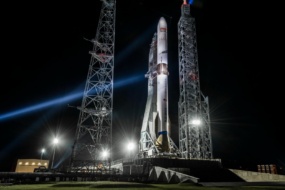
AFRL Adds $11.7M to Blue Origin’s Point-to-Point Cargo Contract
Blue Origin landed a $11.7M increase to its AFRL contract to study how its launcher can be used to complete point-to-point delivery missions.
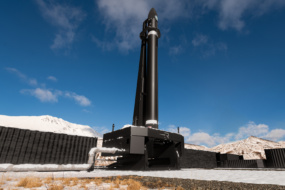
Rocket Lab Expands to Alaska with $266M Launch Contract
Rocket Lab will open up a new launch site at the Pacific Spaceport Complex-Alaska (PSCA) in Kodiak. Launches are expected to begin no earlier than the end of this year.


If Monopoly made a rocket themed board game, Exolaunch would have a hotel on every space.
The Berlin-based launch integrator announced a partnership this week with Orbex to sell satellite operators a ride on the UK launcher’s Prime and Proxima rockets.
The partnership builds up Exolaunch’s capacity, and continues the company’s worldwide expansion. It also comes well ahead of Orbex’s first launch in 2026.
Keep reading