


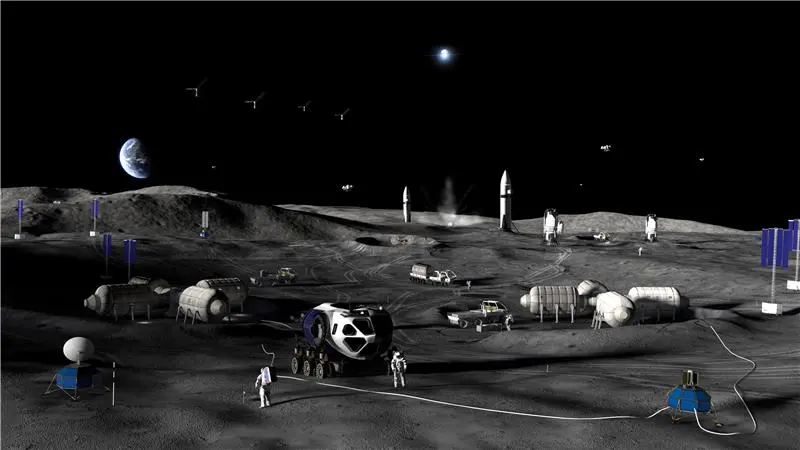
At the start of last week, Carlos Garcia-Galan was working on NASA’s program for a lunar-orbiting habitat. Last Tuesday, however, he became the person overseeing the space agency’s ambitious plan to build a lunar surface base at record speed.
During last week’s Ignition event at NASA HQ, Payload sat down with Garcia-Galan, the program executive of the lunar base, to talk about major changes to CLPS and Lunar Terrain Vehicle (LTV) acquisitions, how Gateway’s tech will be repurposed for the surface, and the culture aspect of a team shifting gears on short notice.
This transcript has been edited for length and clarity.
How will you balance crewed and robotic missions to the lunar base?
For the first couple of phases, there’s going to be a large robotic element to be able to understand where we are. We need the presence and the shots on goal to be able to reach all the areas we want to prospect, and try out the technology that we want to try. We just don’t have enough crew missions. When you insert the human into that picture, everything gets accelerated. It’s much better, but we just don’t have enough of them. So I think that we’re going to leverage the robotic capability quite a bit, and then the crew missions will come and they will really put the infrastructure to the test.
How will the CLPS program change under NASA’s new plan?
We love what has been happening with commercial innovation. In the spirit of not getting in the way, perhaps we’ve not applied our best expertise to bear. These are people that have landed rovers on Mars. These are people that have built and sent spacecraft 20 days around the Moon. These are people that know how to do guidance, navigation, and control algorithms. NASA also has facilities nobody else has.
So we’re going to start identifying those people, and making a concerted effort to deploy them to the right places so we increase the reliability of those missions. It’s going to be a balance—we want the commercial innovation. We want that to grow. We want them to teach us what we don’t know, but we also want to apply our expertise so they can succeed.
Has NASA been too hands-off with the CLPS program?
That implies that it wasn’t designed that way. The CLPS program was designed to be a high risk, high reward. We’re just using that tool for a completely different objective.
The CLPS program has done what it’s supposed to do, but we want to use it differently. We could always have helped more. I’m not saying we couldn’t have done better, but they were doing what they were designed to do.
The lunar base is obviously a highly technical mission, but how important is the storytelling?
100%. If we’re setting up humanity’s first outpost, and people don’t know about it, what’s the point? People have to know, be excited, learn what we’re learning. I was inspired. I’m a child of that. I wasn’t born during Apollo, but watching those videos of the space shuttle, I wouldn’t be here if it wasn’t for that. So we need the next Carlos.
How is the Gateway team handling the shift to work on the Moon base?
Change is hard. People have poured their hearts and souls. It’s an awesome team. The stuff we were doing until now is very hard. We have a module pretty much built. It has electric propulsion, thrusters of a capacity we’ve never had.
Having said that, who does not want to go to the surface of the Moon and build a Moon base? Everybody’s excited about that.
How will Gateway tech—especially contributions from international partners—transfer to surface operations?
It’s a very different environment, being in orbit rather than being on the ground. But even in the orbit of the Moon, we’re already starting to look at dust contamination. It’s not at the level of the surface. Also the thermal environment, and being able to be in an orbit where you get the sun all the time versus going to the South Pole, where there’s long lunar nights.
There’s a lot of changes. But for example, the HALO module—we have the structure, and we have a bunch of components that we were going to be ready to deliver this year. ECLSS [Environmental Control and Life Support System], power, thermal—all of that stuff is applicable for another hab.
Why did you make changes to the LTV procurement so close to the final contract award?
The original vendors, we gave them all the requirements that were very hard to reach. We’re going to use that vendor pool, and we’re going to change that procurement structure. We’re going to ask them to deliver something much faster, much simpler. Then we’re going to do Part 2 of that, which we’re going to open up to new vendors, which is going to be a more capable LTV.
We are forecasting that we’re actually going to want many LTVs. So I think if you’re an LTV provider overall, you may be disappointed if you thought you may get to build this one. But overall, there’s much more volume. They should be happy that there’s a lot of demand.
Walk me through the decision to resurrect VIPER.
I mean, it’s ready. It’s tested. We’re forecasting [that we’ll need] a significant amount of payload capacity to the surface. We want to use things that are ready. Why not?

UKSA Taps ClearSpace for Country’s First Debris Removal Mission
The UK Space Agency is dressing up as a waste-management company for Halloween.
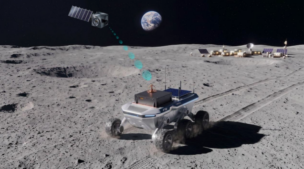
JAXA Taps ArkEdge for Two Lunar Navigation Demos
Today’s Moon explorers won’t have the luxury of GPS-like tech for navigation. But JAXA is trying to change that for future lunar visitors.
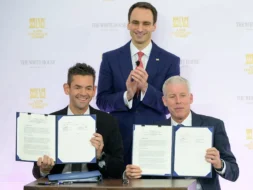
NASA Signs Space Nuclear Pact, Says Moon Base Is Ahead of Schedule
Isaacman gave updates at the White House’s “Science: A New Golden Age Summit.”
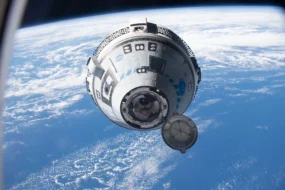
Starliner Targets Uncrewed Flight NET December, Crewed Follow Up in 2028
NASA and Boeing officials announced Monday that they have upgraded and redesigned Starliner following a dicey crewed test flight in 2024, which left NASA astronauts Butch Wilmore and Sunita Williams stuck on ISS for nine months.

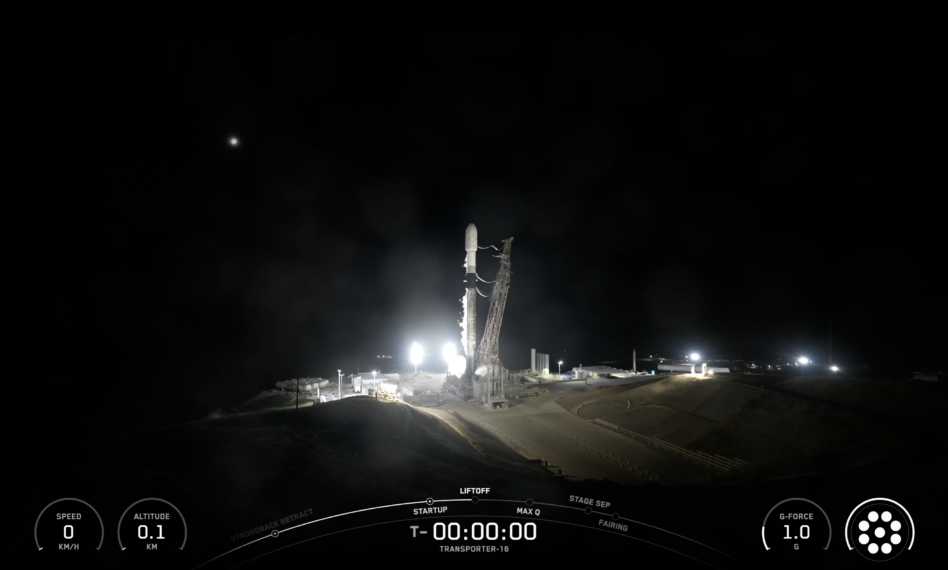
The latest cargo train to orbit has left the station. SpaceX’s Transporter-16 mission lifted off from Vandenberg Space Force Base this morning, bringing 119 payloads to orbit on the company’s first rideshare mission of 2026.
More information will trickle out over the coming hours and days as payloads begin operations, but here’s what we know about the manifest so far:
Eyes in the skies: Many of the satellites and payloads on board T-16 are joining growing EO constellations, including:
Keep reading