



Orbital data center startup Sophia Space will partner with Kepler Communications to deploy Sophia’s operating system—called SOOS—on Kepler’s distributed in-orbit compute network.
The agreement, announced today, is Sophia’s first opportunity to validate its orbital-data-center software in space. If the partnership is successful, Kepler has the opportunity to expand Sophia’s presence in its network, and to offer in-orbit compute services to a broader customer base.
Sophia aims to upload SOOS to the Kepler network by the end of this year—where the network will remain in an isolated container, to test its ability to operate in orbit.
Right time, right place: While the idea of orbital data centers has exploded into the zeitgeist over the past year, Sophia has been working on the problem for years—thereby aiming to position itself to be one of the first companies with operational hardware in orbit.
In February, Sophia raised $10M to build its first “Tiles” in-orbit data center—which features solar arrays, an operating system, and a unique heat distribution system. And after hearing from potential customers, the company says the timing couldn’t be better.
“If our systems were available for sale tomorrow morning, they’d be sold out,” Sophia CEO Rob DeMillo told Payload.
Roll out: Sophia and Kepler expect to use the software to advance AI weather forecasting and EO analytics. The potential pool of use cases, however, also includes SDA data for defense applications.
The partnership also opens the door for Sophia to ramp up its own deployment of orbital hardware. Sophia expects to have its first Tiles center flying in space by the second half of 2027, DeMillo said.
“What we want to be able to do is have a shared infrastructure in orbit. This is the first stage of that. We’re trying to prove out the idea that Sophia and non-Sophia satellites…[can] operate in a way that makes sense,” DeMillo said.

K2 Space Raises $500M Series D at $6.8B Valuation
K2 Space announced a $500M Series D, bringing K2’s total financing north of $1B since 2022.

Hop Aero Wants to Deliver Cargo via Rocket
Hop Aero launched on Y Combinator this week with their autonomous suborbital rocket: Rook.

Outlier Space Raises $7.3M to Build New Zealand’s First Reentry Vehicle
Outlier Space announced a $7.35M round yesterday to develop its microgravity research and return vehicle, scheduled to fly its debut mission in 2028.

ORBES Unveils Exo-ORB Maintenance Spacecraft
Exo-ORB is a ~12U, sub-26-kg spacecraft that’s designed to launch on-board customer infrastructure for ready-to-go inspection.

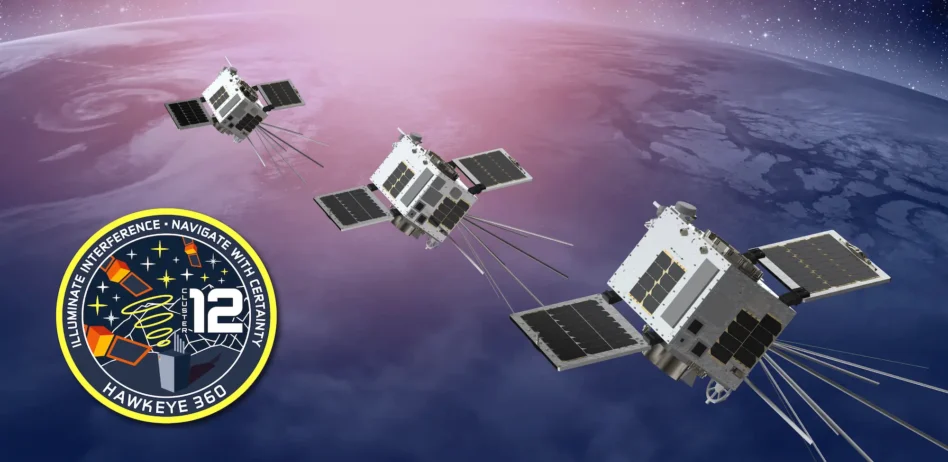
Hawkeye 360 has filed paperwork to go public on the NYSE, operating under the ticker symbol “HAWK.”
The space-based RF data and analytics firm is the latest in a string of defense-focused space companies seeking to go public, opening access to more capital as the industry grows. Firefly Aerospace began trading on Nasdaq in August, and York Space Systems went public with the NYSE in January. The kingpin is the expected IPO of SpaceX this summer.
TBD: The VA-based company did not release the number of shares that would be offered, or the price range for the shares.
Keep reading