



Fenix Space is one step closer to leaving the world behind.
The CA-based launch startup completed a week-long testing campaign of its Fenix alpha prototype launch vehicle, validating the launcher’s ability to take off and land—without the use of a launch pad.
Hitchhiker’s guide: Fenix Space is hoping to offer customers an alternative to vertical launch at a time when the nation’s spaceports are becoming increasingly congested. Its launch system is designed to reach orbit by first gliding behind a tow aircraft, then detaching and propelling itself the rest of the way.
Over four flight tests, Fenix demonstrated its ability to separate from its ride in the sky and perform autonomous flight maneuvers using a proprietary GNC software and avionics package that will one-day fly on the full-sized Fenix 1.0 vehicle.
Demanding supply: US orbital attempts more than doubled between 2022 and 2025—yet American launchers still primarily rely on the same two spaceports that have served the nation since the ‘60s.
The DoD in particular is increasingly anxious about the concentration of the launch market—both in the number of companies that can reach orbit, and the number of available launch pads for vertical lift launchers. In January, the commanders of US military ranges highlighted the looming capacity issue at vertical launch sites on the coasts.
Fenix’s solution has the potential to provide a new launch supply, not limited by the availability of launch pads. The company’s horizontal-lift approach means it can take off and land from standard runways, and the DoD is actively supporting the development and testing effort.
“Tow launch allows use of existing runways and reusable aviation assets which significantly lowers costs and enables dedicated launch-on-demand with maximum flexibility and safety,” Fenix CEO Jason Lee told Payload via email.
What’s next: Fenix expects commercial launch operations to begin in 2028. The company’s long term vision is to develop a system that can fly multiple times per day and access SSO, but early iterations will focus on hypersonic testing and delivering small payloads to LEO, according to Lee.

SpaceX Announces New Starbase, Louisiana Spaceport
Gwynne Shotwell joined Louisiana Gov. Jeff Landry on Tuesday to announce a high-cadence launch site for future Starship operations.
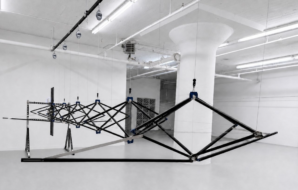
Beyond Reach Labs Unveils Flarewing Deployable Solar Arrays
Beyond Reach Labs has been developing a patent-pending solar-array-deployment system designed to fold flat during launch.

Starcloud Announces $250M Series A Extension
Starcloud has raised a $250M extension to its March $170M Series A funding round, bringing it to a a $2.3B valuation.
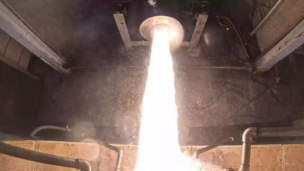
Letara Raises ¥2.6B to Build its Hybrid Rocket Engine Tech
Japanese propulsion startup Letara closed a ¥2.6B ($16M) pre-Series A round to fund the development of its low-cost, hybrid engine tech.
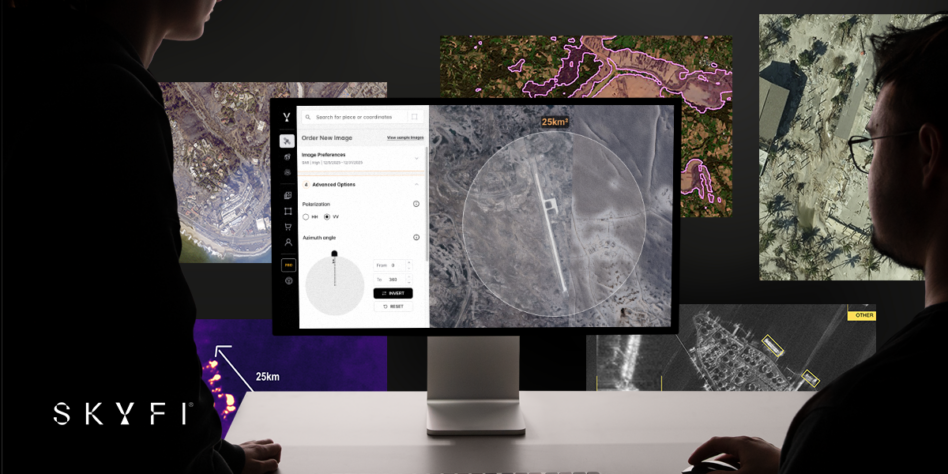
The US military is relying more and more on the commercial EO industry to maintain its edge in conflict zones. For operators in the field, insights from EO data are about to get a lot easier to see.
US Special Operations Command (SOCOM) selected SkyFi to develop an early prototype of a new sovereign intelligence platform, aimed at giving troops quicker and easier access to geospatial imagery—including tasking sats for fresh imagery from the field.
There’s an app for that: As part of the Phase 1 effort, SkyFi is also developing a plug-in for the Android Tactical Assault Kit—a software application used across the US government for EO data and mission planning.
Keep reading