



Hydrosat is zooming in on the thermal EO market.
Today, the company unveiled a new thermal mid-wave infrared (MWIR) program, called Nyktòs, which is designed to capture high-resolution imagery to complement the company’s lower-res, always-on, wide-swath imagery gathered through its planned Osiris constellation.
“With Osiris and Nyktòs, we have our own tip and cue capability,” CEO Pieter Fossel told Payload. “It’s really a family of products, or almost a Hydrosat ecosystem of products…It’s like having your iPhone and your MacBook. They do different things, but it can be nice to have two products from the same family.”
Fossel declined to share specifics on the expected resolution of the new Nyktòs imager, but told Payload it would be competitive with other thermal payload operators—namely SatVu, which offers imagery with 3.5-m resolution.
Heating up: The Nyktòs capability comes in response to growing demand for thermal EO data from European government customers. Unlike optical EO imagery, thermal EO payloads can capture data 24/7, allowing military customers to keep an eye on conflict zones even under the cover of darkness.
Hydrosat’s Osiris constellation aims to capture continuous imagery over a 340-km swath as each satellite flies overhead, allowing customers to spot changes on the ground without needing to task the satellites. With Nyktòs offering a higher-resolution perspective than Osiris, Hydrosat officials believe the company can lock down more of the market for satellite imagery—as customers can spot changes with Osiris, then task Nyktòs sats to take a closer look.
If you build it: To bring Nyktòs to life, Hydrosat is planning to open a new production facility in Europe. The aim is to inaugurate the company’s in-house manufacturing capacity in Europe, and form new relationships with European suppliers, to field a capability that can serve the sovereignty requirements of defense and government customers across the region.
While the company is unveiling Nyktòs as part of its bid to lock down a contract with the Greek government, according to Fossel, Hydrosat envisions Nyktòs supporting customers around the world—”targeted at defense and intelligence applications, although it will be great for industrial monitoring and things of that nature,” Fossel said.
Hydrosat is still shopping around for a location for its new facility, but Fossel told Payload it could be up and running next year, with Nyktòs payloads coming off the line as early as 2028.
Northwood Space Raises $375M Series C at $2B Valuation
Northwood Space is attempting to build the world’s largest ground-station network, and now it has a massive pool of capital to fund its buildout.
Europe Begins Funding Offensive In-Space Capabilities
If the best defense is a good offense, then announcements in the European space sector this week are signaling that the region is preparing to move the ball upfield.

Argotec Raises €50M To Scale Small Sat Manufacturing
NUO Space S.p.A—the space arm of the Milan-based private equity firm—led the round.

Seraphim Space Launches Space Academy
Thinking of going back to school? Seraphim Space is taking applications.
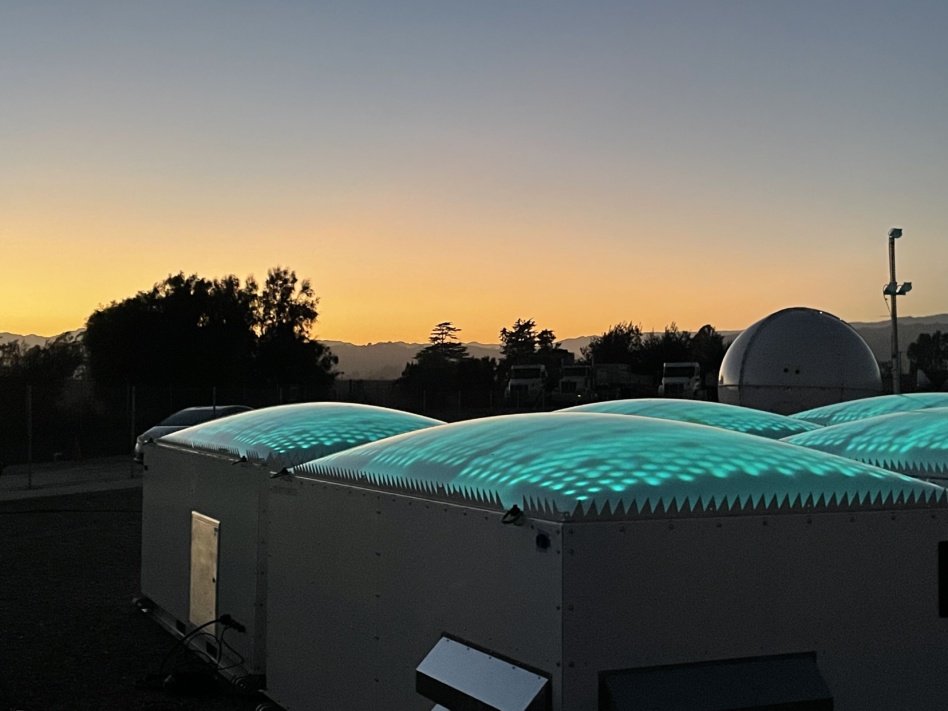
Northwood Space is attempting to build the world’s largest ground-station network, and now it has a massive pool of capital to fund its buildout.
Today, Northwood announced the closing of $375M Series C, valuing the company at $2B, and bringing its total capital raised to $500M+.
a16z and DFJ Growth co-led the round, which included additional participation from Alpine Space Ventures, Washington Harbour Partners, Stepstone Activate, In-Q-Tel and others. Alongside the round, Northwood also secured a separate multi-year credit facility from HSBC Innovation Banking of undisclosed value.
Keep reading