


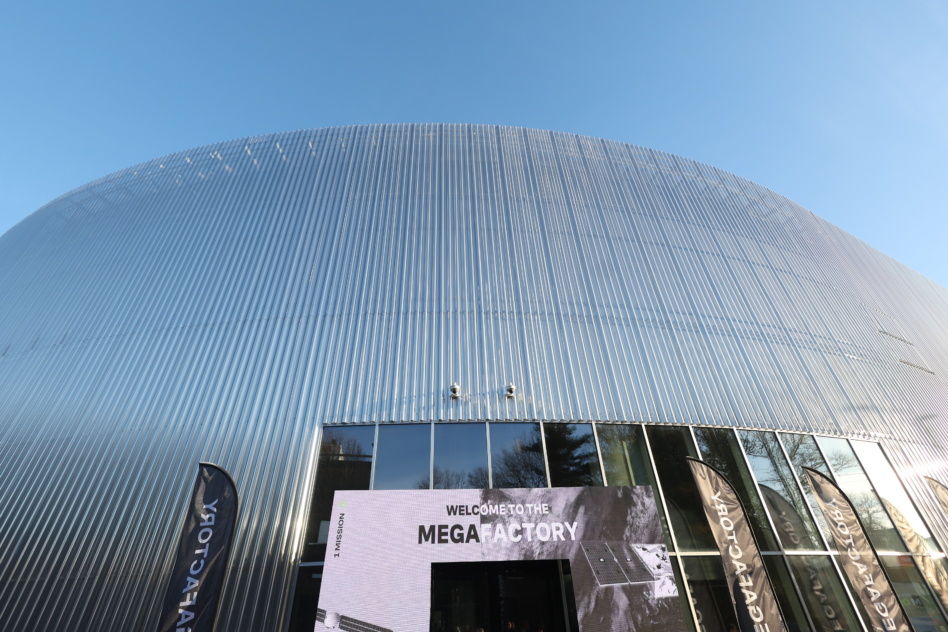
Belgium-based Aerospacelab—which is rebranding as Ectro on Nov. 30—cut the ribbon on its new 215,000 sq ft satellite production facility—called the Megafactory—in Carleroi, Belgium on Tuesday.
The Megafactory, which the company describes as “Europe’s largest satellite manufacturing facility,” is designed to churn out up to 500 satellites per year, and is expected to reach its full production cadence next year.
The new capacity is coming online just in time, as Europe is ramping up with new national and commercial constellations. Traditionally, large institutional contracts from European space agencies and national MoDs have been awarded almost exclusively to the region’s aerospace and defense primes—Airbus, Thales, OHB, and Leonardo—but Aerospacelab has been able to buck this trend. And that’s a huge deal.
In September, the company was awarded a €2.4B contract to design, manufacture, and deliver 264 LEO sats for the European Commission’s IRIS2 secure comms constellation—more than three quarters of the total 348-sat fleet. The move was a first for a European startup, but now the company has to prove they can complete the project on time, and on budget—a feat which has eluded A&D primes in the past.
Payload spoke with Aerospacelab CEO Benoît Deper about what the new factory means for Aerospacelab, and Europe’s space sector as a whole.
This transcript has been edited for length and clarity.
It feels like a new era for the Aerospacelab. What does the Megafactory opening mean for the company going forward?
It is indeed a new step, and it’s been a project we’ve been working on for a few years now. I’m very glad that it’s open, but at the same time, the business side of things was filling it as we built it. This was a huge bet we made—and most of the players in the industry were saying that it was too big for the European market, but ultimately it’s overflowing with orders now.
So, it’s transitioning from making one satellite to now assembly lines where we have to build hundreds of satellites, but also thousands of components. Really, the magic is at the component level, it’s where you make or break supply chains, and now we’re seeing those internal supply chains scaling to the thousands. It’s really a whole new scale.
Last time we spoke, you hadn’t yet won the IRIS2 contract. Can you explain what it signifies about Europe’s larger ecosystem, and about Europe’s trust in the startup sector that Aerospacelab was able to win this €2.4B contract?
The win is bigger than us. It was not granted that Europe and its member states, and this model of governance would be able to trust new players. It was really not something that was perceived as likely for most of the stakeholders, but ultimately we are quite glad—not only because it’s a massive contract that is propelling us into this new dimension, but it’s also a beacon of hope that the market is now working somehow. In a sense, it’s an efficient market where pace, quality, price, and performance still mean something, even in public orders.
Do you think that the growing trust is something that’s a natural progression of the size and maturity of the startup sector in Europe? Or is there something specific that Aerospacelab has done to gain the trust of institutional buyers?
It’s been 10+ years that the new space players in Europe have been growing. Most of them are still at subcritical mass, and are perceived by agencies and big customers as nice toys for incubators and innovation departments, and corporate venture funds.
We need to have this NewSpace pitch: We can do better, faster, cheaper, and less dependent on public money—but at the same time you also need to be able to speak the same language as legacy customers. If you are too disruptive, they don’t understand. They are afraid of what you plan to do, and they don’t believe you can deliver.
So, the idea was really to share their way of thinking, so they recognize our products even though we would still try to keep the pace, agility, and performance of a NewSpace way of doing things. And we are kind of this missing link now between NewSpace and legacy customers.
Last we spoke, you mentioned a fear of winning the IRIS2 contract. Have you had more time to think about that, and if so, how do you make sure that Aerospacelab maintains its culture while it becomes a neo prime?
My number one job now is to make sure we keep the company culture alive and intact. I don’t know yet if the mitigation plan we have in place is going to succeed, but I believe in that culture that got us here—basically: transparency, being proactive in creating value for the customer, and educating the customer on choices sometimes.
In the typical old way of working, you’d get a spec from a customer and you’d have to be compliant with 100% of the spec—even if that spec, we believe, is not what the customer needs. So it’s a careful balance of push and pull. We need to push back on some of those requirements, but at the same time do it with a smile, so it’s not arrogant.
Ultimately, they need to understand why we do this, and we need to educate and demonstrate that we are actually providing more value for them. So, the idea is to keep this transparency and this mindset. Not just say “Okay, you want us to comply with this, it’s going to be an extra billion,” like some legacy primes are doing. As long as we don’t do that, we’ll be fine.
You mentioned this doubt in the market early on, over whether there would be enough demand to fill the Megafactory’s production capacity. What kind of demand are you seeing for satellites and components now?
It’s a funny situation because the number of satellites being launched is increasing drastically, but the number of customers is shrinking. If you look at the consolidation happening, we see the emergence of entities that will go from services to manufacturing to launch—all vertically integrated. What we do see is that a lot of them are actually buying components, so we still have a growing backlog supporting these guys, but the main question is: What will the state of the industry be in five to 10 years?
At the component level, I’m pretty sure that there is going to be a lot of need. At the spacecraft level, we’ll have to get cozy with operators, and some of them are looking for a quasi-vertically integrated setup where we would basically supply them constellations. We expect a lot of recurring business from IRIS2 in replenishment, but we also see other countries within or outside the EU allocating budgets to get their own shell on top of IRIS2. For the next five years, we are going to be busy.
BlackSky Acquires Data Science Firm EpochGeo
BlackSky ($BKSY) announced its acquisition of geospatial data science firm EpochGeo yesterday, which will merge EpochGeo’s AI/ML capabilities with BlackSky’s existing constellation and analytics tools.
Cerberus to Acquire Airbus US Space & Defense
Cerberus Capital Management is acquiring the US space systems business of Airbus US Space & Defense, the investment firm announced Tuesday.
Quantum Space Goes Public as SPACs Return
Quantum Space is the latest space company to go public this year, closing its merger with SPAC Inflection Point on Monday.
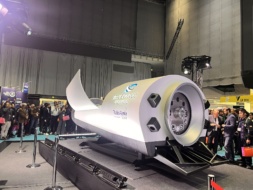
European Hardware Takes Center Stage at Space Tech Expo
Europe is a region chock full of builders. At least, that’s the vibe we got this week watching the news wire from Space Tech Expo in Bremen, Germany.

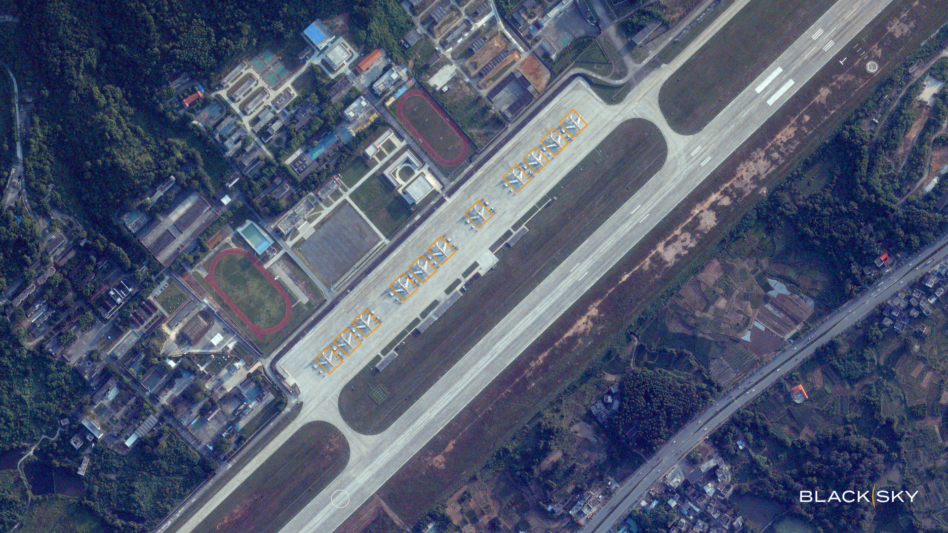
BlackSky ($BKSY) announced its acquisition of geospatial data science firm EpochGeo yesterday, which will merge EpochGeo’s AI/ML capabilities with BlackSky’s existing constellation and analytics tools.
There’s no shortage of imagery flowing into defense customers’ hands. But, to make it usable for quick decision-making, companies are working to shift from capturing pixels to automatically fusing electronic signals with overhead photos in real time.
“BlackSky’s satellites and AI already show customers what is happening at the places that matter most to them,” BlackSky CEO and president Brian O’Toole told Payload via email. “EpochGeo adds the ability to tell them where they should be taking a closer look.”
Keep reading