


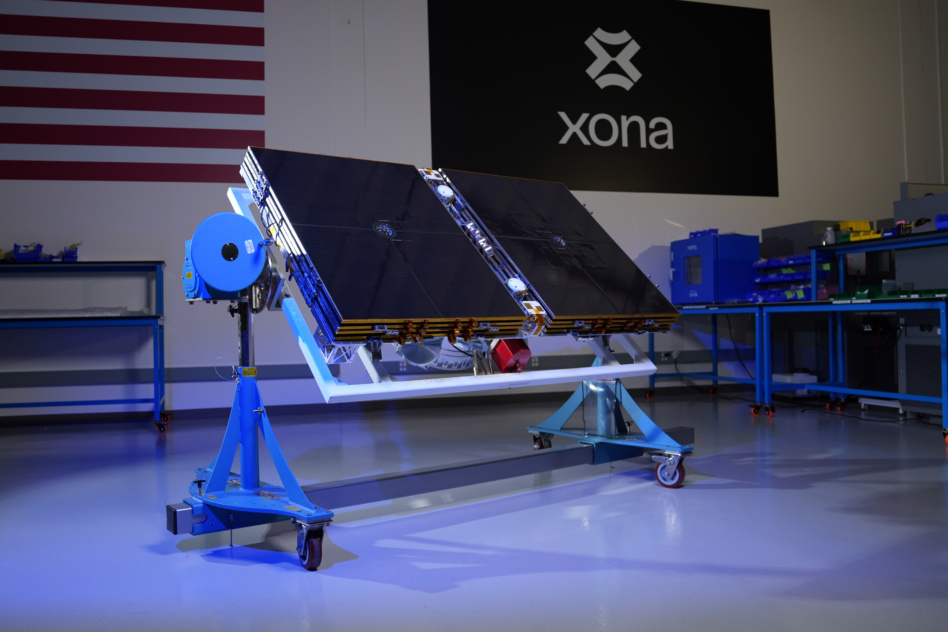
Xona Space Systems announced a $250M Series D today to accelerate production of its Pulsar commercial GPS constellation, which is aiming to begin service in 2027.
Steve Jurvetson, cofounder and managing director of Future Ventures, led the round, which included additional participation from undisclosed new and existing investors. The round, which valued the company at $2.45B, brings Xona’s fundraising to $570M+ since its founding in 2019.
Location, location, location: Xona’s long-term plan is to build a ~258-sat constellation to offer an upgraded commercial alternative to government GPS networks. Xona’s pitch: GPS is a critical capability underpinning much of the modern economy, but publicly funded GPS networks are costly, complex, and too exposed to spoofing and jamming.
Xona’s alternative, Pulsar, aims to offer centimeter-level precision, jamming resistance, and the ability to reach receivers indoors—with signals that are 100x more powerful than legacy GPS.
In August, Xona became the first commercial GPS constellation to win FCC approval to broadcast L-band signals. Next year, the company plans to test its integrations with Army, Navy, and Air Force assets. For the military, the timing couldn’t be better.
Xona has seen an uptick in interest from government customers “coming on the heels of increased jamming and spoofing vulnerability seen from places like the Strait of Hormuz, where interference has disrupted navigation for more than 2,000 ships,” CEO Brian Manning told Payload via email.
And demand is coming from all sides, Manning said.
“On the commercial side, we’re seeing strong demand signals across all types of innovations in autonomous vehicles and robotics, aviation, and critical infrastructure,” he said. “We’re on track to begin serving early commercial users with a timing service next year.”
Output volume: The announcement comes days after Xona received $15M CDN (~$10.7M) from Canada to expand operations in Montreal, QC, and launched six Pulsar satellites to orbit on SpaceX’s Bandwagon-5 rideshare launch. The sats include four modified Pulsar-0 sats, built with help from Aerospacelab, and two Pulsar Test Satellites designed and manufactured by Xona in-house.
The launch represents the first stage of Pulsar’s full commercial PNT constellation—with the four Aerospacelab-built sats beginning the service, and the two Pulsar Test Satellites validating the in-house design before the company scales to full production.
Xona plans to use the new capital to catalyze its output, and has spent much of 2026 laying the groundwork for a capacity boom. In April, the company opened a new production facility in Burlingame, CA, and this month announced the hiring of Waymo veteran Patrick Cadariu as COO to lead the production increase.
“We’re moving from development into repeatable satellite production, with a goal of reaching capacity to produce 50 satellites annually by the end of 2027,” Manning said.
Hewlett Packard Enterprise to Send AI Compute Module to the Moon
Hewlett Packard Enterprise ($HPE) is taking remote working to a whole new level.
WarpWare Closes Pre-Seed to Bring Agentic Tools to Flight Software
CO-based WarpWare closed its $1.2M pre-seed round today to expand what it calls an AI-enabled engineering platform for space missions.
BlackSky Renews HEO Deal, Adds Gen-3 Imagery for Space Domain Awareness
BlackSky Technology inked a seven-figure deal to extend its partnership with Australian non-Earth imaging (NEI) provider HEO for another year.

Balerion Surpasses $200M Goal for Fund II
Dallas-based Balerion Space Ventures has surpassed its $200M target for its second fund, the firm announced Thursday.

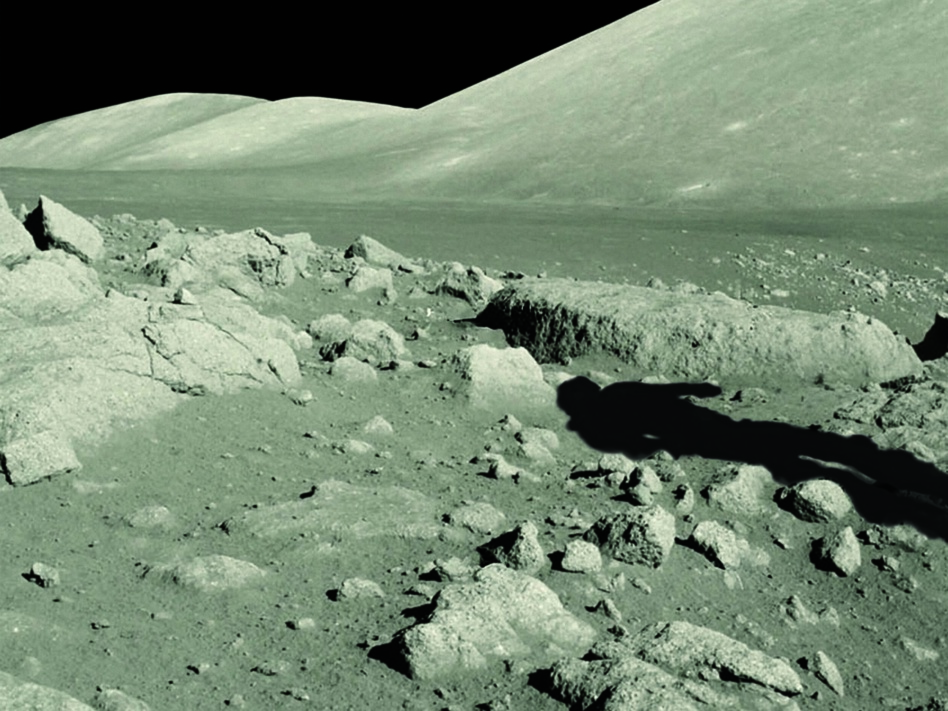
Location, location, location is everything—even on the Moon.
Astronauts are heading back to the lunar surface, and now the scientific community has made its voice heard on where they should go with the release yesterday of a National Academies report ranking the top four non-polar sites for future crewed lunar missions.
NASA asked the committee which science goals in locations beyond the poles need people rather than robots, and where to send those astronauts. The committee’s answer assumes short sorties: two-person crews, no rover, and one to four moonwalks per site.
Keep reading