


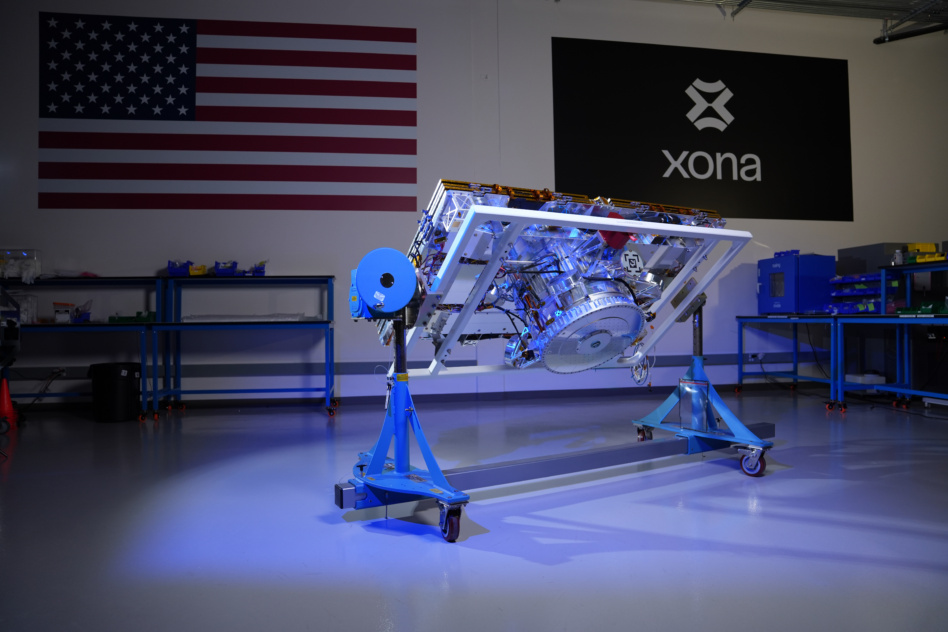
With FCC approval in hand and six sats ready for the pad, Xona is turning to its next challenge: building the next 250.
To do so, the company is making a few key moves, including:
- Hiring Waymo veteran Patrick Cadariu as COO,
- Beginning production on four more sats in Burlingame, CA,
- Expanding in Montreal.
“[Xona has] demonstrated that they can design and build satellites,” Cadariu told Payload. Now the job is to “demonstrate that we can build at scale, as we continue to prepare for having a full constellation providing our service.”
On the pad: Six Pulsar sats are slated to fly on SpaceX’s Bandwagon-5 mission this month, with initial operations set to begin in early 2027. This batch includes Xona’s first internally designed and manufactured flight articles.
The next four in production are ~10% lighter than the previous design, Xona says. The company is ramping toward capacity to build multiple sats per week by the end of 2027.
The hard part is keeping quality and reliability up as cycle times shrink. “With a product like a navigation service, you can’t scale at the expense of performance or operational resilience,” Cadariu said.
Pit crew: For Cadariu, the challenge of scaling is a familiar one. He started on an automotive factory floor in his hometown of Detroit, MI, then spent nearly a decade in operations leadership at Waymo, helping take its autonomous fleet of ride shares from an early stage project to a commercial service.
At Xona, he’ll oversee manufacturing, supply chain, and operations, building what he calls “the machine that builds the machine”—aka the systems, tooling, process, people. That means pulling more work, such as satellite design, in-house.
“You’re just able to learn more, control more, move faster, and really get to a compelling cost basis as we build satellites for scale,” he said.
O Canada: Xona set up shop in Montreal in 2024. Now, the company is adding 35,000 sq. ft. of manufacturing and mission operations capacity at a site linked to Canada’s first satellite, Alouette I.
Montreal already houses Xona’s product and user equipment teams, and the region offers access to aerospace talent. Burlingame remains the main production site. The new space will handle:
- Vertical integration of select bus and payload components for future Pulsar sats,
- Service operations and user support for Pulsar customers,
- Mission operations that will run alongside Burlingame for redundancy.
“We’re really building for long-term scale,” Cadariu said, designing “not just the satellites that we’re building today, but also for future generations of our hardware as well.”
MP Space Raises AUD $23M to Scale Satellite Battery Manufacturing
MP Space’s batteries launched for the first time last week with an undisclosed customer on SpaceX’s Bandwagon-5 mission, and already the company has orders to support 500+ spacecraft.

Colare Raises $2.5M to Expand its Hardware-Focused Hiring Platform
Colare’s technical-assessment platform maps the requirements of a role, and recreates decisions future engineers could face on the job.
Inside Starburst’s First Flight, and Portal’s New Bothell Office
“I feel like 80% success now,” CEO Jeff Thurnburg said. “But honestly, to get this far this fast, I’m tempted to call it 100%.”
Exclusive: EraDrive Lands $13M DoD Award For Autonomy Module
EraDrive won a $13M DoD award, under which the Space Force will buy an undisclosed number of the company’s Era-Node vision-based autonomy modules.

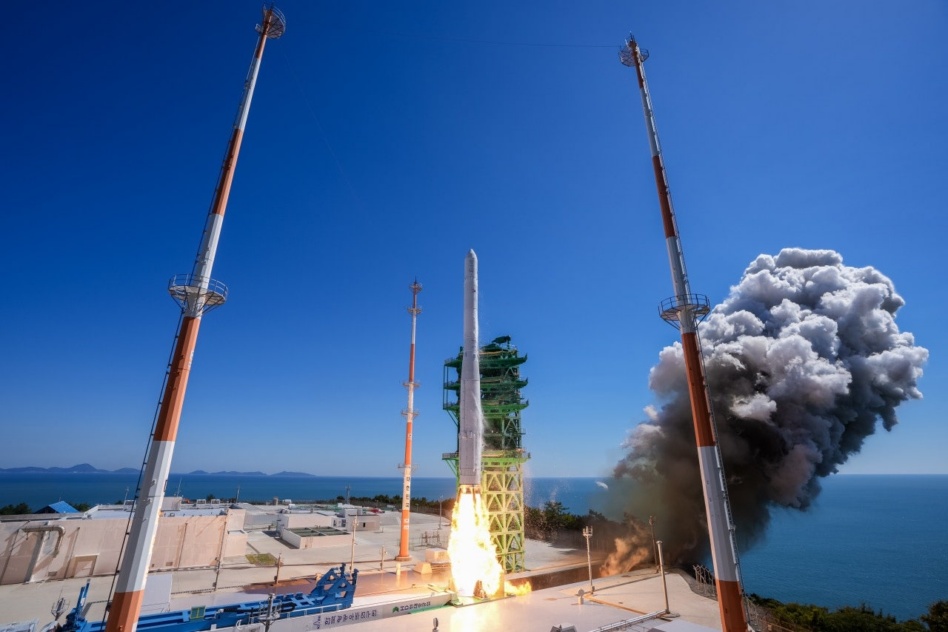
South Korea launched its three-stage Nuri rocket for the fifth time at 11:25 pm EDT last night from the Naro Space Center on an island off the southern coast of the Korean peninsula.
The launch brought 15 satellites to orbit, including:
One payload—an AI verification module from ArbaLabs flying on Space & Bean’s demo sat—could change the way autonomous AI systems operate.
Keep reading