



Xona Space Systems has won FCC approval to broadcast its Pulsar navigation signals from a full satellite constellation, clearing the last regulatory hurdle before the company can scale deployment, Xona announced Monday.
The authorization makes Xona the only FCC-approved private navigation constellation cleared to broadcast in the L-band, putting Pulsar alongside GPS and other nation-state networks.
“This is a pretty exciting moment for us to get authorization to deploy the whole constellation,” Xona CEO Brian Manning told Payload. “The ball’s really in our hands now to run it down-field, start launching satellites, and get up in the air.”
Finger on the Pulsar: Xona launched Pulsar-0 in 2025 to prove the signal could work without interfering with GPS. Since then, the company says it has logged 350+ transmission passes tracked by more than a dozen commercial receivers.
Xona says Pulsar is built to augment what legacy GPS delivers:
- Signals up to 100x stronger than GPS;
- Spoofing protection through a dynamic cryptographic watermark;
- Compatibility with existing GNSS hardware through software and firmware updates.
Taking the L: Xona’s biggest hurdle was proving to regulators it wouldn’t interfere with existing GNSS signals in the heavily protected L-band.
- Manning called the band “beachfront property”, meaning that it is scarce, already occupied by critical systems such as GPS and aviation, and nearly impossible to build in without disturbing the neighbors.
- Rather than retreat to a quieter frequency, Xona engineered Pulsar to broadcast alongside GPS in that crowded band—meaning it is compatible with 6B+ GNSS-enabled devices worldwide.
“The hardest challenge about deploying a new service often isn’t building the infrastructure,” Manning said. “It’s, ‘How do you integrate with the user equipment?’”
With this approval, future operators seeking FCC clearance in the band will have to prove they don’t interfere with GPS and Pulsar.
The bigger mission: GPS resiliency is a priority for the US military, but its in-house fixes keep stalling, and Congress is stepping in.
- The Space Force defunded its Resilient GPS program—a proliferated layer of small satellites meant to harden the core constellation—in the FY26 budget.
- The House pushed back in its version of the FY27 NDAA—faulting a lack of senior oversight of military PNT and moving to consolidate efforts under a single official.
- In July, the House introduced the GPS Modernization Acceleration Act, which directs the president to speed up GPS modernization—with commercial and terrestrial PNT flagged as a complementary fix.
What’s next: The first six Pulsar satellites are slated to launch in October, with initial operations set to begin in early 2027. Future spacecraft are already in production at Xona’s facility.
“Even with just a small number of satellites, there are capabilities we can provide on an intermittent basis,” Manning said. “As we get more satellites up, intermittent will become persistent, and then you’ll grow to a full multi-satellite persistent view.”

Inside Starburst’s First Flight, and Portal’s New Bothell Office
“I feel like 80% success now,” CEO Jeff Thurnburg said. “But honestly, to get this far this fast, I’m tempted to call it 100%.”

State Department Taps Trio for $5M Space Diplomacy Push
At last week’s second annual US Space Forum, the US Mission to the International Organizations in Vienna launched Project Constellation, a $5M effort to build international space partnerships.

Exclusive: EraDrive Lands $13M DoD Award For Autonomy Module
EraDrive won a $13M DoD award, under which the Space Force will buy an undisclosed number of the company’s Era-Node vision-based autonomy modules.
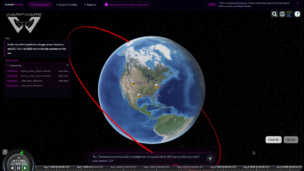
WarpWare Closes Pre-Seed to Bring Agentic Tools to Flight Software
CO-based WarpWare closed its $1.2M pre-seed round today to expand what it calls an AI-enabled engineering platform for space missions.


Kreios Space is aiming to launch its first flight to VLEO in 2028.
The Spanish startup—which is building air-breathing electric propulsion (ABEP) tech for satellites to operate below LEO—today announced its selection of Kongsberg NanoAvionics to supply the satellite bus for Kreios’ first demo.
The flight plan: Kreios’ debut mission will attempt to validate the company’s ability to fire an ABEP thruster at a range of altitudes below LEO.
Keep reading