


Location, location, location is everything—even on the Moon.
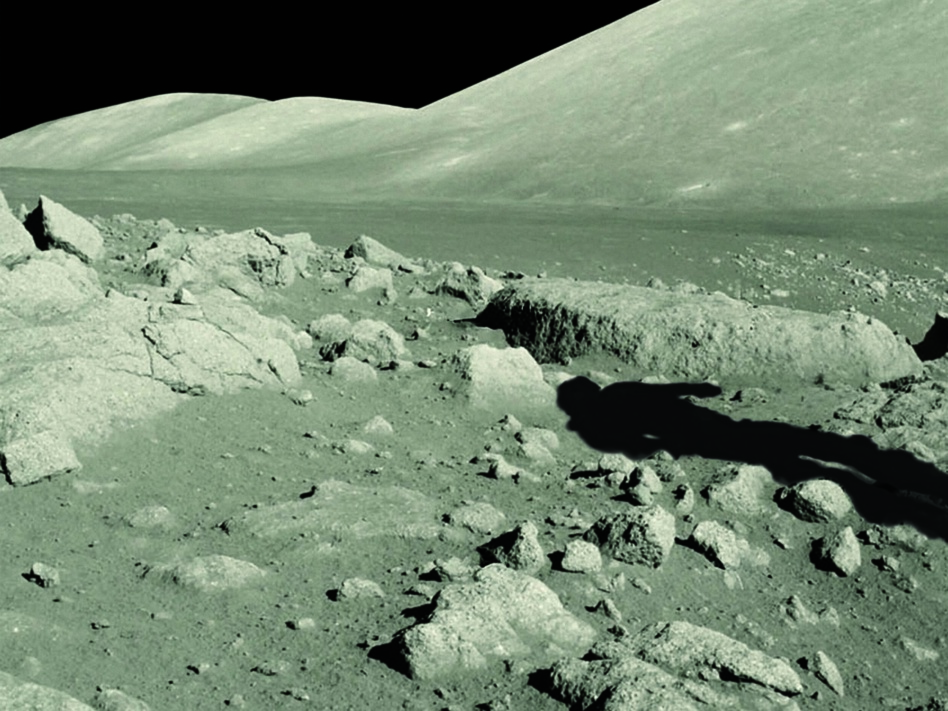
Astronauts are heading back to the lunar surface, and now the scientific community has made its voice heard on where they should go with the release yesterday of a National Academies report ranking the top four non-polar sites for future crewed lunar missions.
NASA asked the committee which science goals in locations beyond the poles need people rather than robots, and where to send those astronauts. The committee’s answer assumes short sorties: two-person crews, no rover, and one to four moonwalks per site.
Sites were weighed on three criteria: whether science aligned with the decadal surveys and NASA’s Moon to Mars objectives, if the missions would expand US exploration capabilities, and, to a lesser degree, how they would contribute to public inspiration.
Site seeing: The sites, in priority order:
- Bhabha Crater: Astronauts have never landed this far from Earth. The far-side crater sits in the middle of the South Pole-Aitken Basin, which may have the oldest impact signature in the solar system. The region is also shielded from Earth’s radio noise, making it a prime spot for low-frequency astronomy.
- Mons Hadley: Apollo 11 and 17 are seen by NASA as protected heritage sites because of their historical significance, so the committee picked the Apollo 15 site instead. Crews would land ~2 km away from the Apollo site and venture over to investigate how the hardware and astronaut waste left behind have held up after 55+ years.
- Orientale Basin: It’s the Moon’s youngest large impact basin—and best-preserved. Boulders that tumbled off the region’s inner mountain rings could give scientists their first look at the deep lunar crust. The committee suggests only a single visit, keeping the site undisturbed for a gravitational wave observatory.
- Aristarchus Plateau: The volcanic plateau was a planned Apollo landing site and may hold water-bearing deposits and rare Earth elements. It’s also a good spot for a space-weather observatory.
Off the beaten path: NASA commissioned the study in 2025, before the agency refocused its lunar program on a Moon Base on the lunar South Pole. With the shifts, the committee is now pitching the sorties as add-ons to the Moon Base missions. NASA has not said whether it will act on the recommendations.
The list may also have a nearer-term use. If schedule or other constraints keep Artemis IV away from the absolute South Pole, Interstellar Mapping CEO Andrew Hazelton told Payload, sites farther from it “could meet many of the same objectives with potentially lower landing risk.”
For companies like his, he added, “every new data point helps, and the sites in this report would add several.”
Packing list: The committee left the how to NASA, but provided the agency with a suggestion list:
- Let astronauts roam beyond NASA’s current 2-km limit on how far astronauts can travel from the lander, ideally on an unpressurized rover.
- Develop survive-the-night instruments, continue high-resolution orbital reconnaissance, and maintain continuous comms during surface ops.
- Run the same baseline experiments at every location, like crew health monitoring and seismic stations for a Lunar Geophysical Network.
- Pay for the labs and scientists who will actually study the samples.
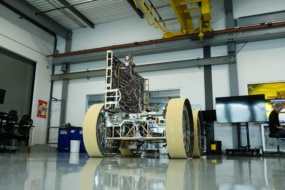
Hewlett Packard Enterprise to Send AI Compute Module to the Moon
Hewlett Packard Enterprise ($HPE) is taking remote working to a whole new level.
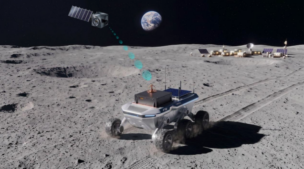
JAXA Taps ArkEdge for Two Lunar Navigation Demos
Today’s Moon explorers won’t have the luxury of GPS-like tech for navigation. But JAXA is trying to change that for future lunar visitors.

DOE Announces $400M for Frontier Science Research
The Department of Energy is super-charging research into bleeding edge energy tech.
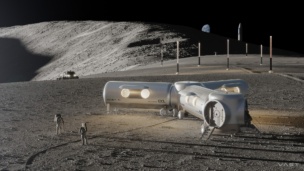
Vast Announces New Lunar Programs Division
Vast announced a Lunar Programs division, building on its commercial space station and satellite development work to support NASA’s Moon Base ambitions.

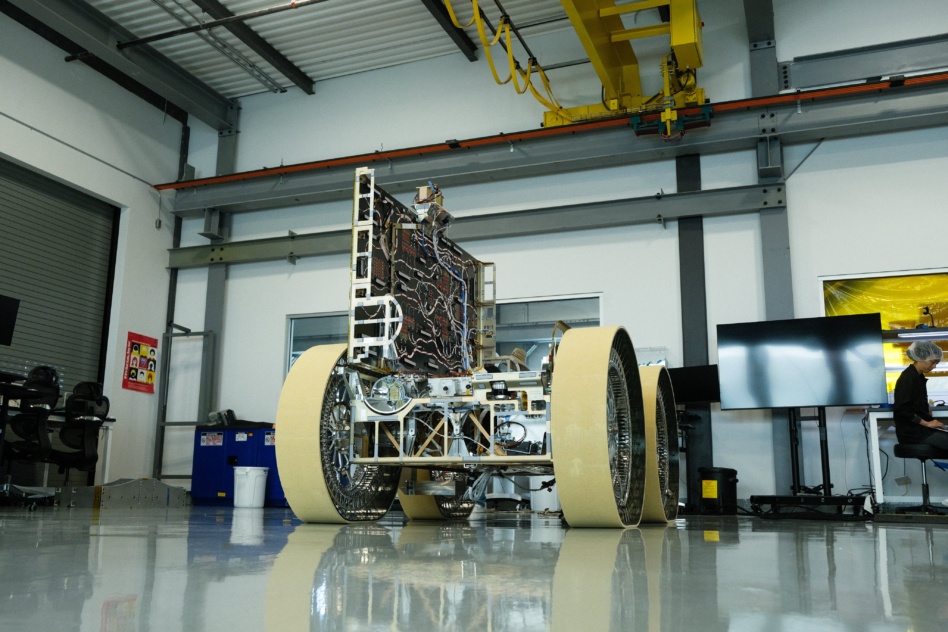
Hewlett Packard Enterprise ($HPE) is taking remote working to a whole new level.
HPE announced that its new AI-compute module—dubbed Spaceborne Computer-4—is set to deploy on Astrolab’s FLIP rover during a mission expected to launch this year.
Bit FLIP: During the mission, HPE’s Spaceborne Computer-4 will test large language models, visual and LiDAR data processing, as well as autonomous monitoring on the lunar surface. NASA and Deloitte also plan to deploy AI workloads on Computer-4.
Keep reading