


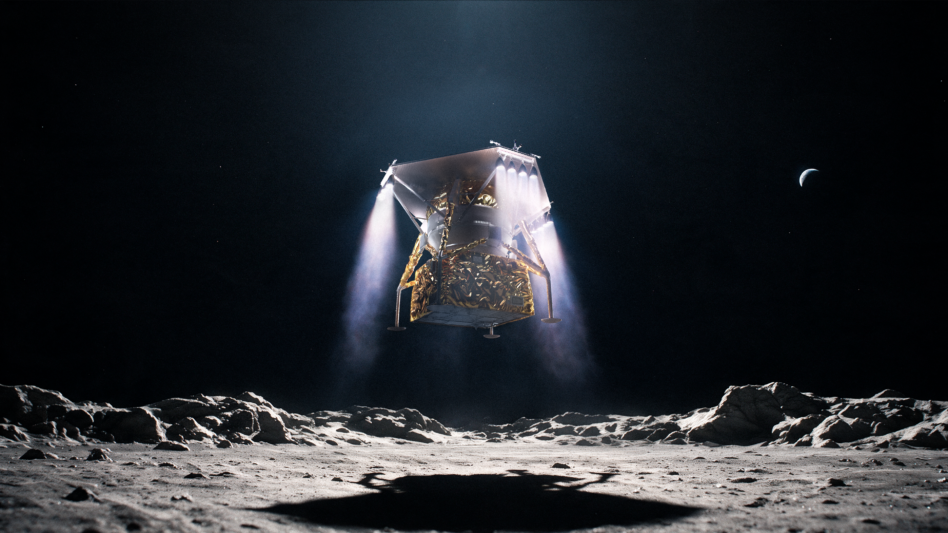
CAPE CANAVERAL, FL—NASA rolled out a stack of Moon Base awards Saturday during MAX POWER, ranging from new lander contracts to a recycled Mars rover.
“Hopefully, we’re keeping industry on their toes, trying to catch up to all the solicitations we’re doing,” Moon Base Program Manager Carlos García-Galán told reporters during a press briefing. “This is what it takes to do the Moon Base in the timeline we have set forth.”
Darth VADR: NASA awarded six task orders worth a combined ~$1.3B under VADR, its venture-class and rideshare launch contract. The awards represent an evolution in how NASA buys missions—adopting a buy-now, payload-later approach to reshuffle cargo as hardware matures.
“Under the current CLPS contract, it’s all or nothing, which might be fine if you’re only doing one or two of those per year,” NASA Administrator Jared Isaacman said during the briefing. “But when you’re trying to scale up to what we’re talking about today, you want to have the flexibility to move pieces around.”
- SpaceX Falcon 9 will fly two missions. Arrow Science and Technology will carry CAPSTONE 02 on a Quantum Space Ranger tug, and Impulse will carry multiple Intuitive Machines comms sats.
- Blue Origin will fly three New Glenn missions. One will use Firefly’s Elytra tug to deliver NASA’s three MoonFall drones, and two will use Blue Ring for cargo NASA hasn’t picked yet.
- Impulse and Relativity will pair Relativity’s Terran R with Impulse’s Helios kick stage, as well as a lander that will drop NASA payloads in cislunar orbit, then attempt a lunar descent.
CLPS 2: Electric Boogaloo: NASA picked eight companies to compete for lunar deliveries under CLPS 2, a 10-year contract worth up to $10B combined. The sequel is built for Phase 2 landers carrying 2 to 6 metric tons, García-Galán said.
Blue Origin, Firefly Aerospace, Intuitive Machines, ispace-U.S., Lockheed Martin, Northrop Grumman, SpaceX, and Voyager Technologies made the cut. Northrop and ispace-U.S. are new to the CLPS vendor pool alongside Voyager, who acquired CLPS 1.0 vendor Astrobotic in July.
ispace-U.S., previously a Draper subcontractor, will compete as a prime for the first time with its ULTRA lander, which merges US and Japanese designs and carries ~200 kg.
“What we bring to the table is our international footprint, and the ability to take all of those unique perspectives and support from JAXA and other various space agencies, and transfer that knowledge,” ispace-U.S. CEO Elizabeth Kryst told Payload.
PROMISE kept: NASA greenlit the Polar Rover for Observation, Mapping, and In-Situ Exploration (PROMISE), first floated in June and built from spare parts and test models for the Curiosity and Perseverance rovers.
The nuclear-powered rover will be designed to operate through lunar nights and in permanently shadowed regions. It will drill ~1 m down to look for water ice and help NASA pick landing sites.
JPL will manage the mission—which NASA expects to cost under $400M—including the instruments and the ride to the Moon, García-Galán said. Blue Origin will land it on a Mark 1 lander under a $94M base contract with a $140M option, targeting a late 2028 launch and an 18-month mission.
But wait, there’s more! Crewed missions at the South Pole will need to generate, store, and distribute a lot of energy, said Dayna Ise, acting director of the Moon Base program’s Utility and Infrastructure Office. NASA’s first test is the Mini-Communications and Solar Tower (miniCAST):
- Honeybee Robotics, a Blue Origin company, will provide energy storage.
- Yank Technologies will supply wireless-power-transfer hardware.
- Redwire will generate power using its roll-out solar arrays, which the company said can retract during landings and launches to dodge kicked-up dust.
Regolith, not China, is “the number one enemy on the Moon,” Redwire President of Space Mike Gold told Payload. “It will attack our people. It will attack our machines.”

Apollo and Artemis Astronauts Share the Stage at Gala
Twenty-eight astronauts—including two Apollo veterans—and one very large Saturn V shared a room at Kennedy Space Center for the Artemis Celebration Gala.
Starfish Loses Contact with Otter, Cutting SSPICY Short
Starfish’s Otter spacecraft has joined the graveyard it was sent to inspect.
NASA Outlines the Details of Artemis III and IV Missions
NASA is still on track to return US astronauts to the Moon in 2028. On Friday, officials shared a progress update on their efforts, as well as the finer details of the mission plans for Artemis III and IV, targeting flights in 2027 and 2028, respectively. Long story short: NASA remains confident it can meet…

National Academies Rank Nonpolar Moon Sites
A new report from the National Academies ranks the top four non-polar sites for future crewed lunar missions.

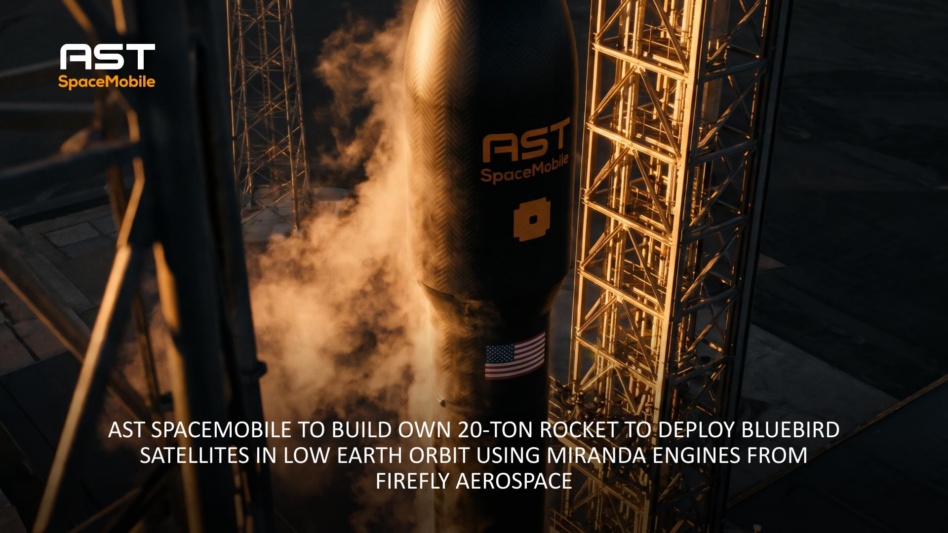
Amid a growing launch crunch, AST SpaceMobile ($ASTS) is building its own ride to space.
On Friday, the company announced it is building Blacklift, a 20-ton rocket designed to launch its BlueBird D2D satcom constellation to LEO.
“The Blacklift rocket is the springboard to significantly expand our total addressable market, providing AST SpaceMobile with regular unconstrained access to orbit and providing for most favorable owners’ economics in the industry,” Abel Avellan, AST SpaceMobile’s founder, chairman, and CEO said in a statement.
Keep reading