



AUSTIN, TX—Two days. Nine panels. Two dozen speakers—and that’s just the space content.
This year’s Tectonic Defense Summit was bigger and better than ever, and Payload was thrilled to join the fun with the inaugural Payload Space Stage. Before we sign off and sleep all weekend, we want to share with y’all some of our top takeaways from our natsec space track at the defense tech event.
Let it grow: Gary Calnan, the CEO of CisLunar Industries, announced the closing of the lunar infrastructure startup’s seed round at the event. While he didn’t yet share the value of the round, he did talk about how it’s a major step for the company to begin production.
“This is where we go from prototype production, to real manufacturing of low-quantity, manufacturable, final-flight hardware,” Calnan said. “It’s a pretty big pivot point.”
Pitch deck: We had three space investors weigh in on everything from SpaceX’s highly anticipated IPO, to how dual use is driving mega rounds, to Golden Dome hype. Here’s some of what they’re watching:
- Many SpaceXers—drawn to the company because of its drive to Mars—are deeply displeased with Elon’s pivot to the Moon. They are preparing to walk post IPO, according to Patrick Beatty, managing director at Beyond Earth Ventures. A potential loss for SpaceX, however, could be a boon for the industry—if these space-minded experts spend their IPO earnings on building their own companies, or investing in next-gen tech.
- Investors are seeing companies try to capitalize on Golden Dome fever—but not always in the best way. “A Golden Dome-only thesis, I think, is quite dangerous—which we have been seeing a lot of in decks,” said Lewis Jones, investment principal at Generation Space. “You automatically discount businesses that seemingly have no angle for Golden Dome, yet have it plastered all over their deck.”
Cleared: The DoD’s Commercial Space Office will team with orgs—including DIU and SpaceWERX—to continue a program to help startups secure clearances faster, according to Col. Tim Trimailo, head of SSC’s Commercial Space Office. He said he’s hoping to identify companies eligible for TACFI and STRATFI funding working on promising tech, to help them get a “jump start” on larger contracts.
“Before they even get to the point where they’re going to propose, I want to work with our program executives to pinpoint those right companies—and if they’re on a SBIR Phase II,” Trimailo said. “Let’s get them cleared now. Let’s start this process now so they can get in with the programs, and talk about some of their classified needs.”

One-On-One With SDA’s GP Sandhoo
It’s been about six months since the SDA launched its first operational tranche of satellites—but troops still aren’t benefiting from the better comms tech because of a series of small issues that forced the agency to take a “strategic pause,” SDA Acting Director Gurpartap “GP” Sandhoo told Payload.

Leonardo’s Missile-Defense Demo in Ukraine Aims To Be a Blueprint for Other Nations
Leonardo is positioning itself to become a mass distributor of space-enabled missile defense shields.

Q&A With Laurent Jaffart, ESA’s Director of Resilience, Navigation and Connectivity
Jaffart is leading the charge to build up ESA’s defensive posture. Payload chatted with him to hear his plans for the new role.

Planet Labs Extends Middle East Space Imagery Restrictions
Planet Labs just proved that dual use doesn’t necessarily mean equal priority.

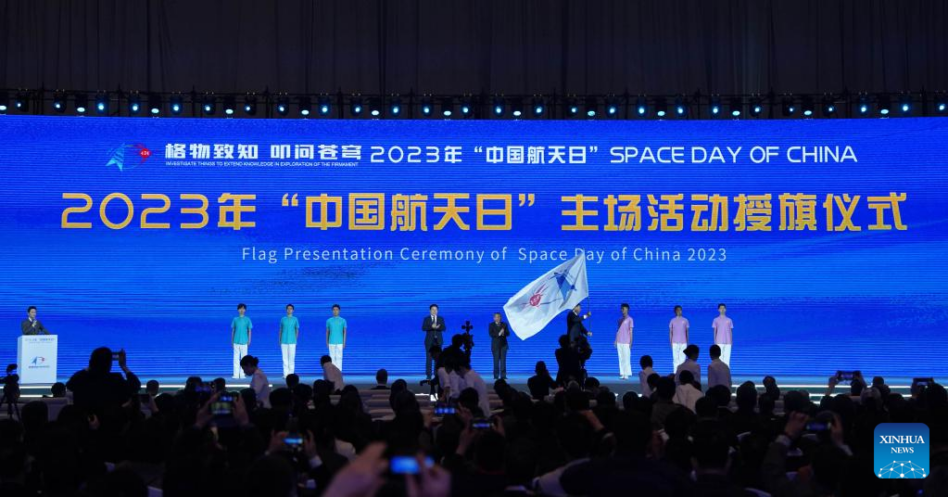
China’s web of space ties is rapidly going global—but even as Beijing offers benefits on cost and offerings, experts say the US and Europe still could maintain their diplomatic toehold in emerging space nations. Competing with China, however, requires offering alternatives to their strategies of option lock-in, blended hardware and turnkey solutions.
While some countries may build out their space capabilities by making more use of China, experts don’t see a map of blue-or-red nations, dominated by Western or Chinese space firms. Instead, experts see varying shades of purple, with possible fierce competition in the Global South’s budding markets in key geographic locations.
“Africans don’t choose sides, at least for now…so these countries are typically not locked into one provider,” said Mustapha Iderawumi, a senior analyst at Space in Africa—a Lagos, Nigeria-based market research firm.
Keep reading