


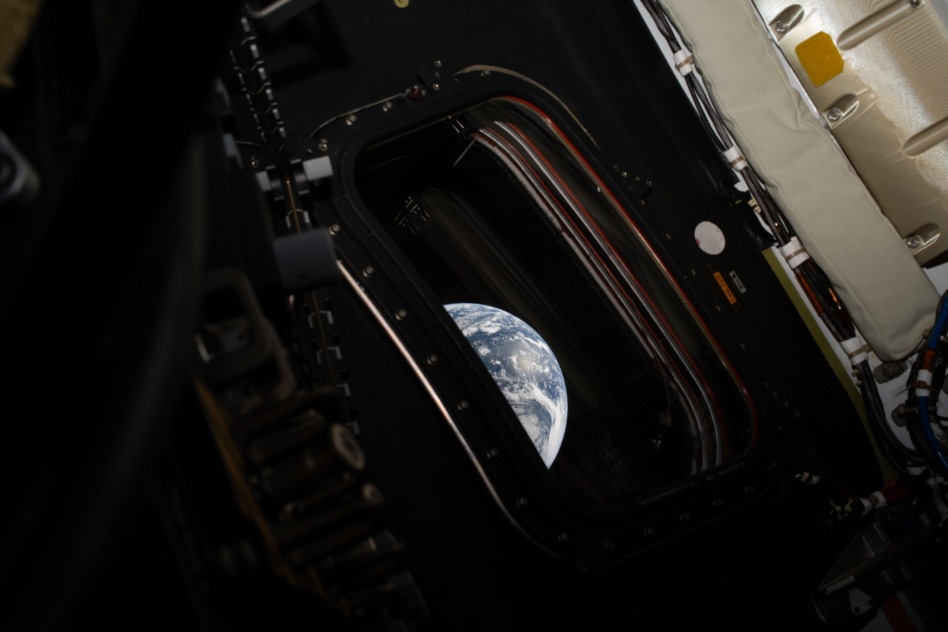
For astronauts who put in decades of work and training, getting to see space with their own eyes is a big part of the payoff.
Artemis II astronauts will take in the view courtesy of McDanel Advanced Materials, which is the company expecting to make the windows for at least the first five Artemis missions.
“Imagine you work your whole life to become an astronaut, and you have to look through a computer screen to see outside,” said Ramsey Benhusen, a senior program manager for aerospace and defense solutions at McDanel. “Of course they want to look through a window to see what it looks like with their own eyes. It’s a privilege only they will have.”
Specs: McDanel, which acquired Orion window manufacturer Rayotek about two years ago, makes all of the window panes for Orion—including on the docking hatch, the forward-facing windows, on the side hatch, and on the launch abort system.
Each window is multiple layers thick, including outer panes to absorb micrometeoroid impacts and inner panes to inhibit bacteria and mold growth.
Building for space: These aren’t your everyday house windows. Orion’s windows are designed to withstand the extremes of temperature, radiation and microgravity in space while meeting strict mass requirements.
Making the windows space-ready without constant maintenance is a mindset shift, Benhusen said. “When we build things for oil and gas, we deal with some extreme pressures…[but for space], we can’t bring them back down, fix them and send them back out.”
What’s next: Benhusen said engineers are looking at ways to reduce the weight of the windows while maintaining safety for Artemis III and beyond—a change that will have implications for broader deep space travel as well.
“If they want to get to Mars cheaper and safely, we have to address weight,” he said.
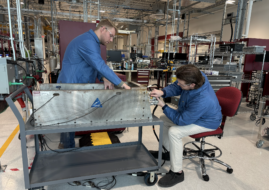
Moog’s “Tip to Tail” Contributions to the Artemis II Flight
“Moog supplies more than 100 different pieces of hardware that go from tip to tail of the rocket, [and] into the Orion system.”
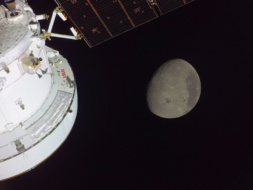
Artemis II Gives Airbus Hope For European Spaceflight
At the heart of Artemis II’s Orion spacecraft is the European Service Module (ESM), built by Airbus Defence and Space in Bremen, Germany, on behalf of ESA.

Czech Radiation Chips on Artemis II Bring ISS Experience
With the sun at solar maximum, HERA serves as an instant warning system if a solar flare emerges.
How Earthlings Got Views of the Lunar Fly By
Redwire has built 11 cameras that are installed around the inside and outside of the Orion capsule, Kaylee Geidel, a senior systems engineer at Redwire, told Payload.

The Trump administration proposed an $18.8B fiscal 2027 budget for NASA—a 23% decrease from the funding level enacted by Congress for fiscal 2026.
The budget proposal includes the same top line as the administration’s fiscal 2026 request, and would make similar cuts to NASA’s science and STEM missions.
Key numbers: Here are some high-level funding numbers in the White House document:
Keep reading