


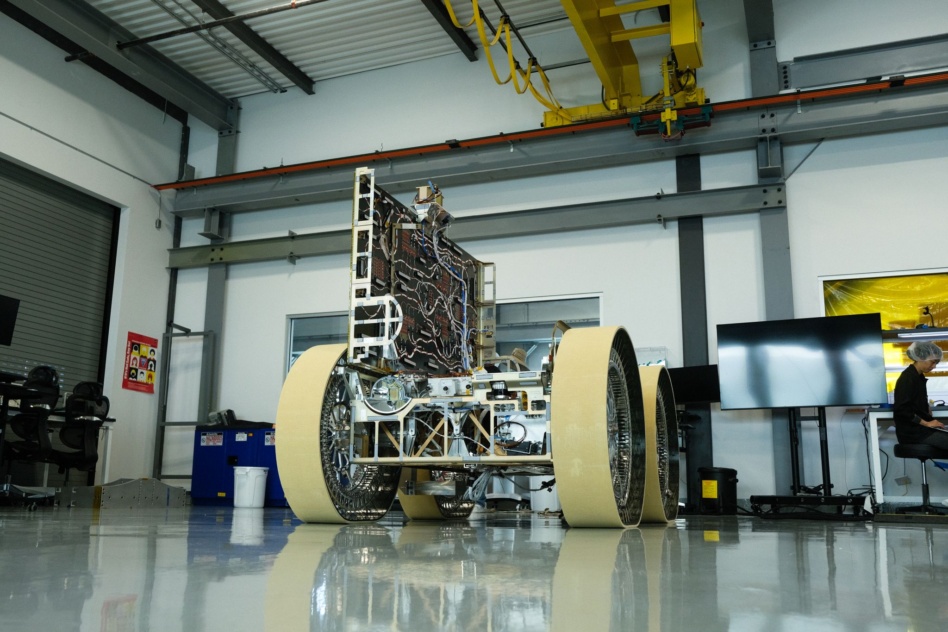
Astrolab is headed to the Moon this year with a rover-load of science payloads that will help future explorers better understand conditions at the lunar South Pole.
The company revealed some of the payloads flying onboard its FLEX Lunar Innovation Platform (FLIP) rover, including NASA funded research projects to study regolith and map the lunar surface.
- A multicolor camera and radiometer from NASA’s Ames Research Center and Interlune to estimate the concentration of Helium-3 present in the lunar regolith.
- A laser retroreflector array from NASA’s Goddard Space Flight Center, which will provide precision tracking of the rover’s position without the need for power or maintenance.
- A lunar-dust-level sensor from JSC, which will quantify the impact of lunar regolith on lunar systems—such as solar arrays and radiators—to help future Moon architecture better withstand lunar conditions.
- A lunar LiDAR demonstrator from NASA’s Marshall Space Flight Center to create high-resolution 3D maps of the lunar surface.
Relative scale: As Astrolab’s first mission to the lunar surface, FLIP will act as a building block for larger vehicles to fly more extensive missions in the years ahead. In addition to delivering NASA and commercial payloads to the Moon, the rover will also be collecting vital in-situ data to help Astrolab build toward its larger, more complex Flexible Logistics and Exploration (FLEX) rover.
FLEX is targeting future commercial and Artemis-program missions, and is designed to support astronaut operations, logistics, construction and more.
“We’re honored to deliver NASA’s instruments to the lunar surface,” Astrolab CEO Jaret Matthews said in a statement. “With FLIP, we can provide a nimble, mobile platform that enables multiple NASA investigations in one mission. Together, these efforts will help pave the way for Artemis astronauts to explore more of the Moon.”

DOE Announces $400M for Frontier Science Research
The Department of Energy is super-charging research into bleeding edge energy tech.
Vast Announces New Lunar Programs Division
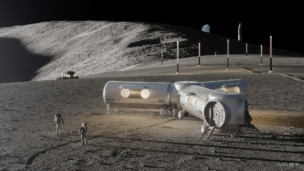
Vast announced a Lunar Programs division, building on its commercial space station and satellite development work to support NASA’s Moon Base ambitions.
Exclusive: Astrolab, Interstellar Mapping Hunt Lunar Water
A new partnership between Astrolab and Interstellar Mapping is one giant leap for mapkind.

Exclusive: Exolaunch Books its first Starfall Mission
Exolaunch signed an agreement to support customer payloads on a SpaceX Starfall reentry mission scheduled to launch on a Starship NET 2029.
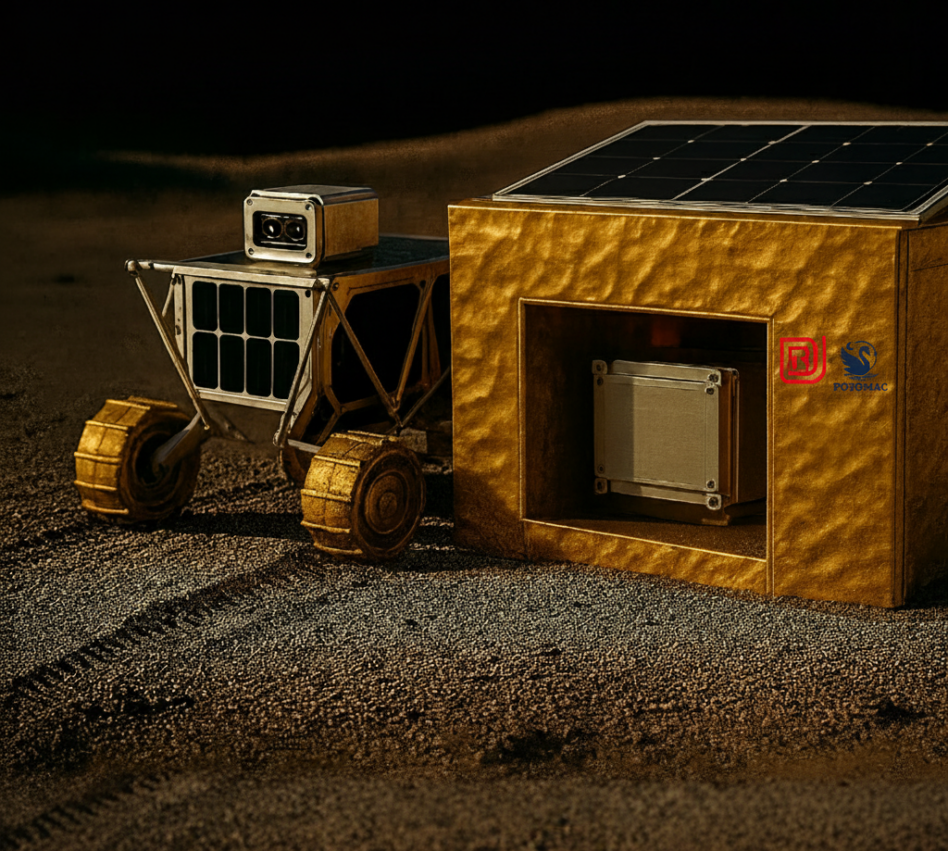
There’s money to be made on the Moon, but it’s not all mining and infrastructure.
Potomac Database Systems unveiled plans today to gather a different lunar resource—data. The DC-based company intends to collect sellable info through three types of lunar missions:
Potomac aims to use low-cost systems to increase the supply of surface data, at a time when those insights are in high demand from companies planning more missions to the Moon.
Keep reading