


There’s money to be made on the Moon, but it’s not all mining and infrastructure.
Potomac Database Systems unveiled plans today to gather a different lunar resource—data. The DC-based company intends to collect sellable info through three types of lunar missions:
- Compass: A satellite that sends an impactor to hit the lunar surface, and study the resulting plume—much like NASA’s LCROSS mission that confirmed water on the Moon in 2009.
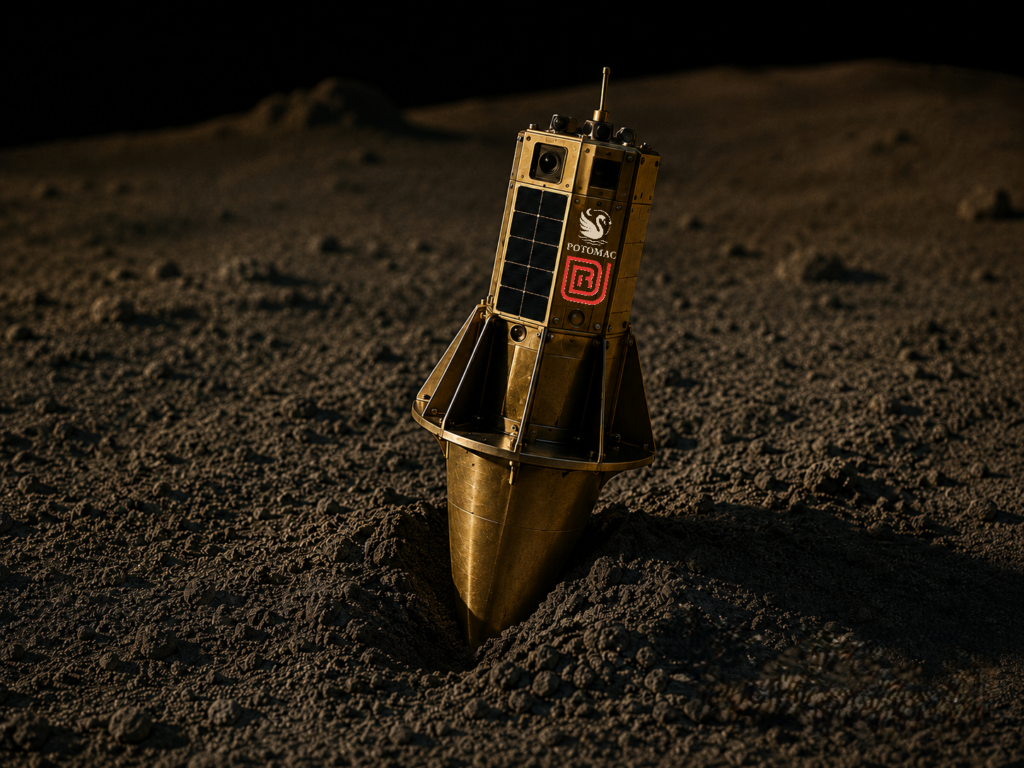
- Pathfinder: A “ballistic surface node,” which is designed to survive impact with the lunar surface and transmit data after landing.
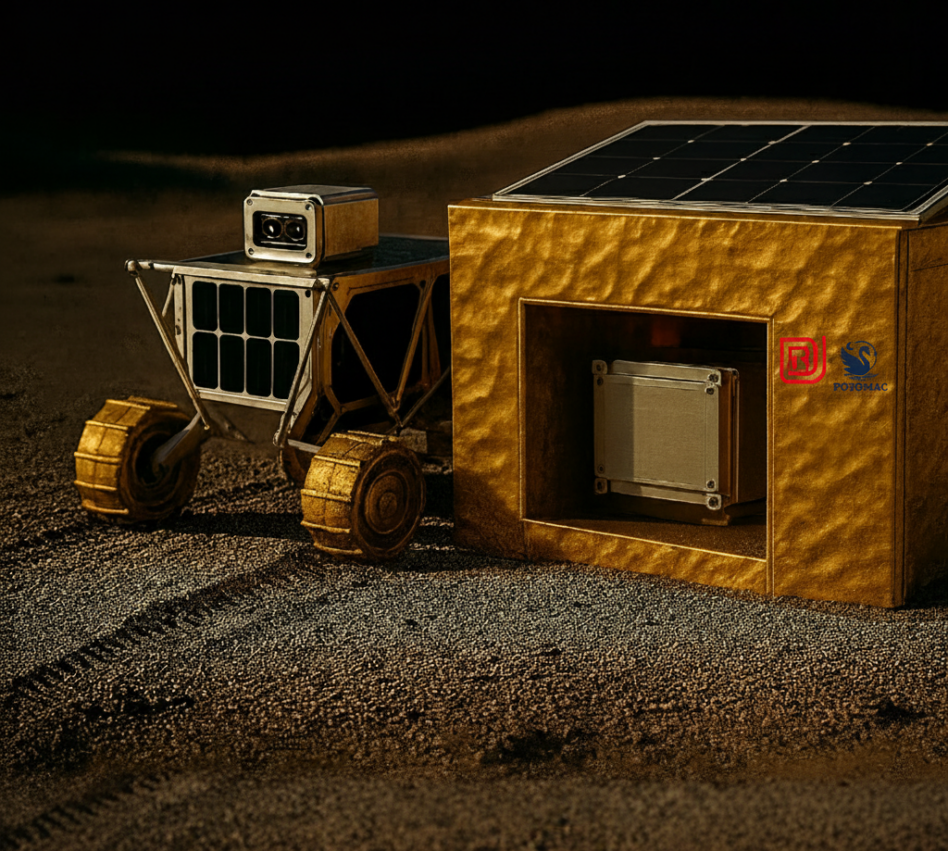
- Source: A rover to traverse a large area of the lunar surface on missions lasting at least a year. To stay alive during the long lunar night, it would park in a purpose-built garage heated with a radioisotope heating unit (RHU).
Potomac aims to use low-cost systems to increase the supply of surface data, at a time when those insights are in high demand from companies planning more missions to the Moon.
“Everybody’s…working from the same public database,” CEO Jacob Matthews told Payload. “But our bet is that you would invest a couple hundred thousand—or a million—dollars into getting novel datasets that differentiates your proposals from your competitors.”
Good lunar data can fetch a high price tag. In September, NASA spent an additional $10M to purchase 120 gigabytes of data from Firefly Aerospace’s Blue Ghost Mission 1.
“The product of the lunar economy today is data, and it is very expensive,” Matthews said. “The lunar economy will not scale if every dataset requires a dedicated mission.”
Going nuclear: Potomac wants to launch its first commercially-funded Source mission to the Cabeus Crater on the Moon’s south pole as early as 2028, and has partnered with the University of Dayton Research Institute on a proposal under NASA’s PRISM program for civil-funded missions by the 2030s. Potomac also unveiled an RFI today to attract proposals for a commercial RHU for its first Source mission.
Matthews was previously the cofounder and CTO of Zeno Power, which is one of the companies building RHUs for lunar applications. He said, however, that his choice for an RHU would come down to more than technical specs.
“I’m proud of the work that we had done [at Zeno]. But this really comes down to schedule,” Matthews said. “I would like to launch Source…the sooner the better.”
Update: This story was updated to reflect Potomac’s proposal is in partnership with the University of Dayton Research Institute.

Exclusive: In Orbit Aerospace Pivots From Re-entry Vehicles to Spacecraft Autonomy
In Orbit has won new government contracts for its onboard AI system, which the company says can run a spacecraft’s operations without waiting on ground control.

Reflect Orbital Buys Two Skyroot Aerospace Launches
Reflect Orbital announced the purchase of two launches today from Indian launcher Skyroot Aerospace.

Fortastra Raises $30M Series A to Fund its Next Security Spacecraft
The US military has weapons in space, and—with the orbital arsenal expanding—security is becoming a top priority.

Exclusive: Xona Ramps Up Production Ahead of Pulsar Launch
With FCC approval in hand and six sats ready for the pad, Xona is turning to its next challenge: building the next 250.

Skynopy’s ground-station-as-a-service model is quickly gaining traction.
The company signed two agreements with French satellite manufacturer U-Space, announced today.
Good omen: U-Space operates three sats in orbit—SOAP, PANDORE, and NESS, a sat developed alongside CNES to detect terrestrial signal interference. But that number is poised to grow dramatically.
Keep reading