


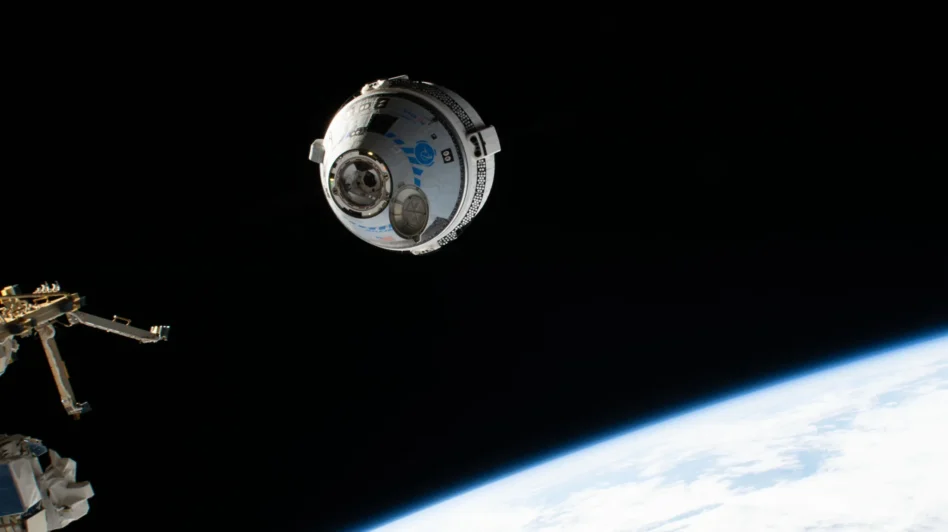
Boeing said it lost $523M on Starliner in 2024—the largest single-year loss the aerospace titan has recorded in developing the commercial crew vehicle, pushing the total losses to just over $2B.
More to come: In its annual report filed with the SEC on Monday, Boeing attributed the most recent losses to “schedule delays and higher testing and certification costs as well as higher costs for post certification missions.”
The $4.2B fixed-price contract with NASA to develop Starliner means Boeing has to pay for such overruns, so “there is ongoing risk that similar losses may have to be recognized in future periods,” the company wrote.
A bumpy road: Years of technological and operational challenges have increased costs to develop Starliner, with Boeing reporting losses almost every year since it began developing the spacecraft in 2014.
Starliner’s first uncrewed test flight failed in December 2019 due to a critical software error. After a second uncrewed flight to the ISS in 2022 that was successful, Starliner carried two astronauts to the ISS for the first time last summer.
However, this flight faced a major setback when a malfunction in the spacecraft’s propulsion system exposed a persistent helium leak and faulty thrusters. NASA chose to return Starliner to Earth empty, asking SpaceX to bring the astronauts home aboard a Dragon capsule, which is now scheduled for late March.
What’s next: It remains unclear when the beleaguered Starliner will fly next, as neither Boeing nor NASA have publicly discussed plans to address the spacecraft’s propulsion issue.
Boeing may be considering selling Starliner and chunks of its space business to return to its roots as an airplane company. CEO Kelly Ortberg hinted at a Starliner-less future during the company’s Q3 earnings call in October, saying “we’re better off doing less and doing it better, than doing more and not doing it well.”
These and other efforts will unfold with a familiar figure returning to Starliner’s helm: John Mulholland, who led the program from 2011 until 2020, resumed charge after Mark Nappi stepped down from the role.
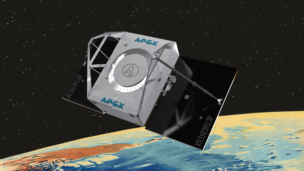
Orbital Data, Niche Markets Give Space Solar a New Shimmer
The face of space-based solar power (SBSP) is changing due to surging interest in in-space industry and data centers. While some companies are racing toward these new opportunities, others are sticking with the technology’s original goal of powering life on Earth.
OroraTech’s New Exec Plans to Step on the Gas
With Zuleta as a catalyst, OroraTech aims to grow to a few hundred sats in the coming years, with the aim of providing worldwide coverage, 15-minute revisit rates, and resolution as low as 50 m.

Momentus and NASA Will Collab on RPO Demo
The mission will test technologies including multispectral satellite inspection, formation flying, and WiFi-based inter-satellite links.

Voyager, Max Space Team on Expandable Tech
“Expandable structures represent a step change in how surface infrastructure can be delivered and deployed,” Saleem Miyan, cofounder and CEO of Max Space, said in a statement. “Its architecture embodies increased capability, scalability, and versatility that are essential for sustained deep-space human activity, and to unleash the lunar and Martian economies.”

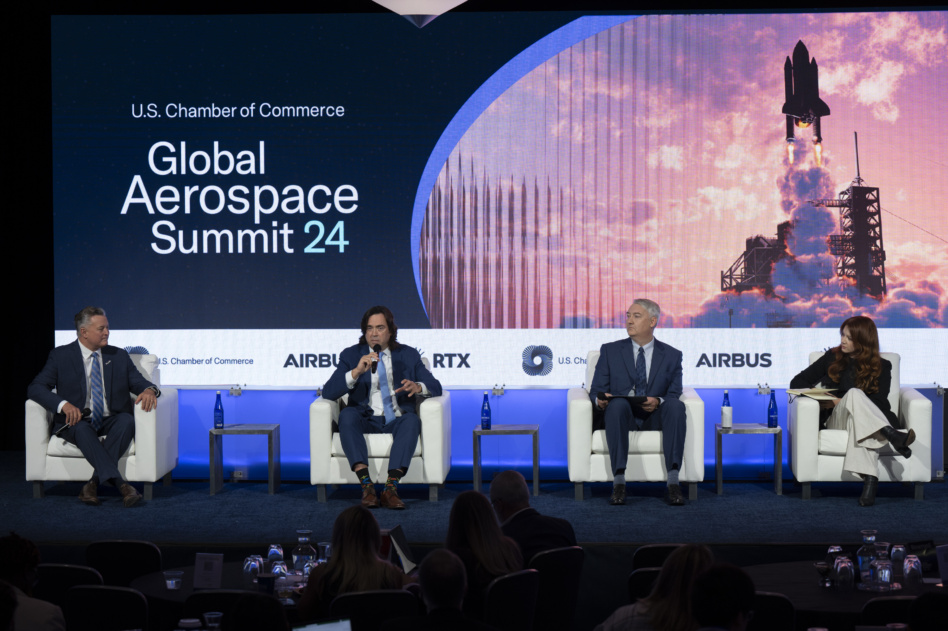
The US Chamber of Commerce is establishing a Space Leadership Council to advocate for commercial interests during space policy debates on Capitol Hill.
“At a time when global competition is intensifying, policymakers need access to the best emerging technologies and expertise available, and the private sector stands ready to serve as a dependable partner on this mission,” Christopher Roberti, the chamber’s SVP for cyber, space, and national security, said in a statement. “The Space Leadership Council represents our commitment to strengthening America’s space industrial base in collaboration with government to meet this historic moment.”
Areas of interest: The council will work with lawmakers to help shape policy in a way that benefits the commercial sector on topics from acquisition to licensing to spectrum. Its work will fit into three main areas:
Keep reading