



CATALYST is rolling out a new product today that aims to make city skylines safer from space.
UrbanSAR will be able to detect millimeter-scale shifts in buildings, on a floor-by-floor basis. The changes will be spotted by interferometric SAR, which uses data from at least two SAR sats to determine very small changes over time, according to a press release from CATALYST—a brand of Ottawa, Canada-based remote sensing software firm PCI Geomatics.
Why it matters: As cities put up new construction, builders don’t know what they don’t know—and there are many blind spots when it comes to traditional monitoring, according to CATALYST. One study in Toronto found that the top floors of new buildings—higher than ground-based monitoring can measure—moved up to 30 millimeters.
“Now we can show a construction firm what was already moving before they broke ground, an insurer the risk they were underwriting blind, and a city authority the consequences of densification they had approved but were not monitoring,” PCI Geomatics CEO June McAlarey said in a statement.
Using assets in space also allows for a fuller picture of a building’s status outside of the single structure, by taking into account nearby tunnels, roads, and other infrastructure, CATALYST said.
Zoom out: Space is critical to urban safety beyond building monitoring, according to a report from the Australian Space Agency. Assets in orbit can help urban planners:
- Monitor temperature and air quality in cities;
- Track severe weather and natural disasters;
- Study land use, and the health of green spaces within cities.

HEO Raises $25M Series B to Fuel GEO Expansion
HEO, the Australian non-Earth-imaging startup, announced Monday it closed a $25M Series B to expand its imaging network to GEO.
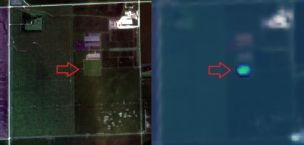
InnerPlant’s Glowing Soy Demos Hyperspectral Use Case
InnerPlant, which was founded in 2018, has enabled plants to let humans know when they’re under stress.

Hydrosat Unveils Osiris Constellation Ahead of 2027 Launch
Very rarely can someone offer you the best of both worlds, but Hydrosat’s newest constellation claims to do just that.

Kuva Space Spots Illegal Poppy Farms from Orbit
Kuva Space released data today from a pilot program that demonstrated its ability to monitor illegal crop farming from space.


York Space Systems ($YSS) plans to acquire terminal manufacturer ALL.SPACE for $355M, according to paperwork filed with the SEC yesterday.
The cash-and-stock deal will leave ALL.SPACE as an indirect, wholly owned subsidiary. York expects to:
Inorganic material: The acquisition comes hot on the heels of York’s March acquisition of Orbion Space Technology, a MI-based manufacturer of Hall-effect electric propulsion systems.
Keep reading