


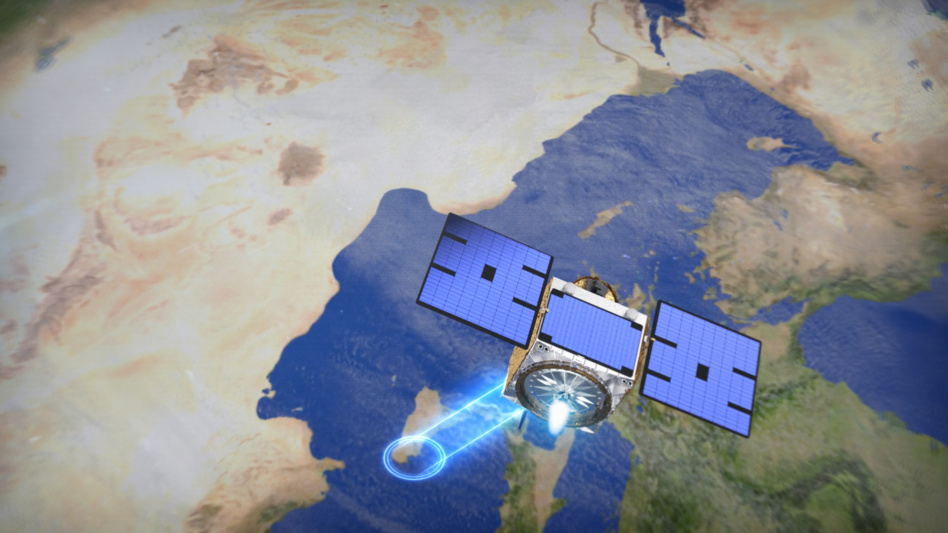
Europe is on a mission to prove that groundbreaking science can be done on the cheap.
Yesterday, ESA green-lit two more Scout satellites, a growing fleet of low-cost, rapidly developed EO spacecraft launched to answer pressing scientific questions.
The missions—Hibidis and SOVA-S—each cost less than €35M ($40.7M), and will be developed in under three years.
“These missions demonstrate how agility and creativity can accelerate progress, delivering impactful science and technology in a remarkably short timeframe,” ESA Earth Observation Program Director Simonetta Cheli said in a statement.
Hibidis: The Hyperspectral Biodiversity Scout aims to improve humanity’s understanding of life underneath forest canopies.
Hibidis will use a hyperspectral imager, from Belgium’s AMOS, to view the Earth’s surface from three different angles. The mission is built by Italian A&D prime SITAEL, and uses data-processing tools from Belgium’s VITO Remote Sensing as well as the University of Zurich. The imagery will separate the top forest canopy from the undergrowth, and help researchers generate new information to monitor biodiversity over large areas—and in hard-to-reach regions.
SOVA-S: The Satellite Observation of Waves in the Atmosphere–Scout will study incidences of light emissions in the upper atmosphere to help climate scientists understand how atmospheric gravity waves work.
Researchers assume that, much like ocean or air waves, atmospheric waves impact the spread of energy around the globe. Understanding how much these waves impact meteorological models could help forecasters better predict extreme weather, and improve GNSS accuracy.
OHB Czechspace, the prime contractor for SOVA-S, will develop and build the spacecraft alongside DLR as well as Czech and German industrial partners. While the aim of Scout missions is to build cheap and fast, SOVA-S will be the largest sat ever developed and built by the Czech Republic.

Seraphim Space Investment Trust Doubled its Value in 2026
Seraphim’s major holdings—ICEYE, ALL.SPACE, D-Orbit, HawkEye 360, and Xona Space Systems, which together represent more than 75% of the firm’s portfolio—all had a great year, and that success has trickled upwards.

UKSA Taps ClearSpace for Country’s First Debris Removal Mission
The UK Space Agency is dressing up as a waste-management company for Halloween.

NASA Signs Space Nuclear Pact, Says Moon Base Is Ahead of Schedule
Isaacman gave updates at the White House’s “Science: A New Golden Age Summit.”
Europe’s Space Defenses Fall Just Shy of Weaponization
Europe doesn’t have any weapons in space—but that doesn’t mean the region is comfortable flying around in orbit defenseless.

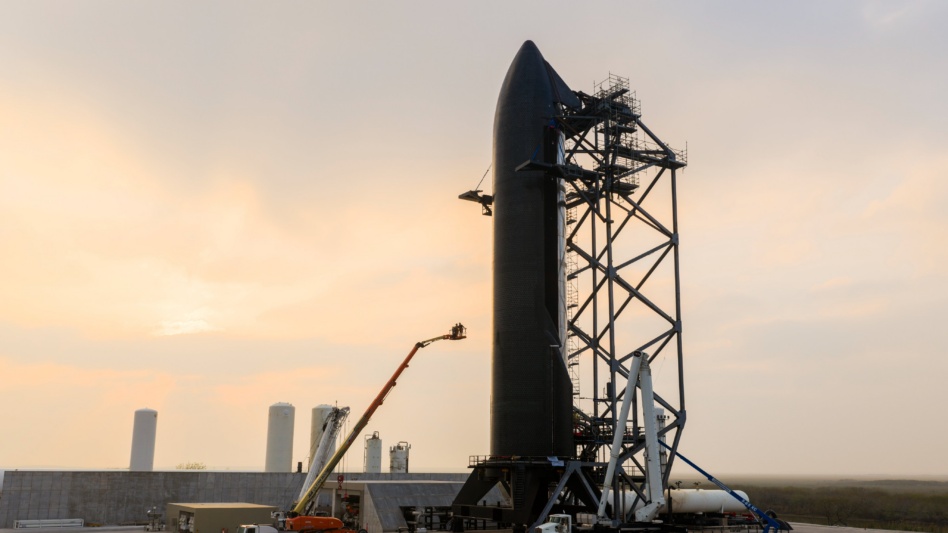
SpaceX generated $18.67B in revenue in 2025, according to paperwork filed Wednesday with the Securities and Exchange Commission ahead of the company’s IPO, expected next month.
By the numbers: This is the first peek we’re getting into the financials of the largest company in the space sector. Some other 2025 highlights include:
SpaceX also shared its Q1 business numbers through March 31, including:
Keep reading