



UK startup NewOrbit announced a $18.5M Series A today to fuel development of a new class of VLEO satellites.
Voyager Ventures led the round, which was joined by previous investors Atlantic, Lifeline Ventures, LGF, Illusian, as well as multiple angel investors including former NVIDIA Chief Scientist David Kirk and TIER Mobility Cofounder Lawrence Leuschner.
Ticket to fly: While NewOrbit has yet to fly in any orbit, the company is targeting a first flight of its VLEO-capable NEO-1 satellite in 2028.
The mission is planned as a multi-stage demonstration.
- NEO-1 will deploy in LEO—at an altitude of about 600 km—to validate its ability to operate in the vacuum of space;
- The satellite will then use its air breathing ion propulsion engine to lower its orbit below 300 km;
- The goal of the flight is to prove that the satellite bus can operate in VLEO for up to five years, while keeping conventional LEO payloads protected from the increased atomic-oxygen content present in the upper atmosphere.
The Series A also gives the company runway to ramp its satellite production capacity, company officials said, to allow for high-cadence flights soon after.
NewOrbit will use the new capital to fund construction of a production facility, which will host the development and integration of NEO-1. The NEO Production Complex will be able to build up to 10 satellites per year initially, and with goals to eventually scale to 100+ sats annually.
Boom or bust: NewOrbit isn’t the only one seeing dollar signs below LEO. At a time when satellite congestion in LEO is expected to get out of hand quickly—with some estimates projecting the total number of sats in LEO to be as high as 100,000 by 2030—NewOrbit is one of a growing number of companies targeting the new orbital altitude for future operations.
“I believe this is the future—this is the destiny of all satellites,” CEO Anatolii Papulov told Payload. “You have better performance, you don’t leave space debris, it’s a very safe operational environment [with] lower radiation.”
Flying in VLEO offers outsized benefits for payload operators compared with higher orbits. Shortening the distance to Earth allows for higher-resolution EO and lower-latency comms. NewOrbit plans to fly cheaper, smaller satellites to keep costs competitive.
Amid this growing competition, what sets NewOrbit apart, according to Papulov, is the experience his team members have working for government VLEO missions.
“Many people think you just modify a LEO satellite. It doesn’t work that way. You have to redesign the entire spacecraft,” Papulov said. “We have the people who know how to design this. They tell us where we have to pay attention, and that’s invaluable.”
Balerion Surpasses $200M Goal for Fund II
Dallas-based Balerion Space Ventures has surpassed its $200M target for its second fund, the firm announced Thursday.

Exclusive: Kapta Space Raises $24M Series A to Build Moving Target Radar Payload
Seattle-based Kapta Space announced a $24M Series A to build next-gen radar payloads designed to track moving targets.
Europe’s Space Defenses Fall Just Shy of Weaponization
Europe doesn’t have any weapons in space—but that doesn’t mean the region is comfortable flying around in orbit defenseless.

Fortastra Raises $30M Series A to Fund its Next Security Spacecraft
The US military has weapons in space, and—with the orbital arsenal expanding—security is becoming a top priority.
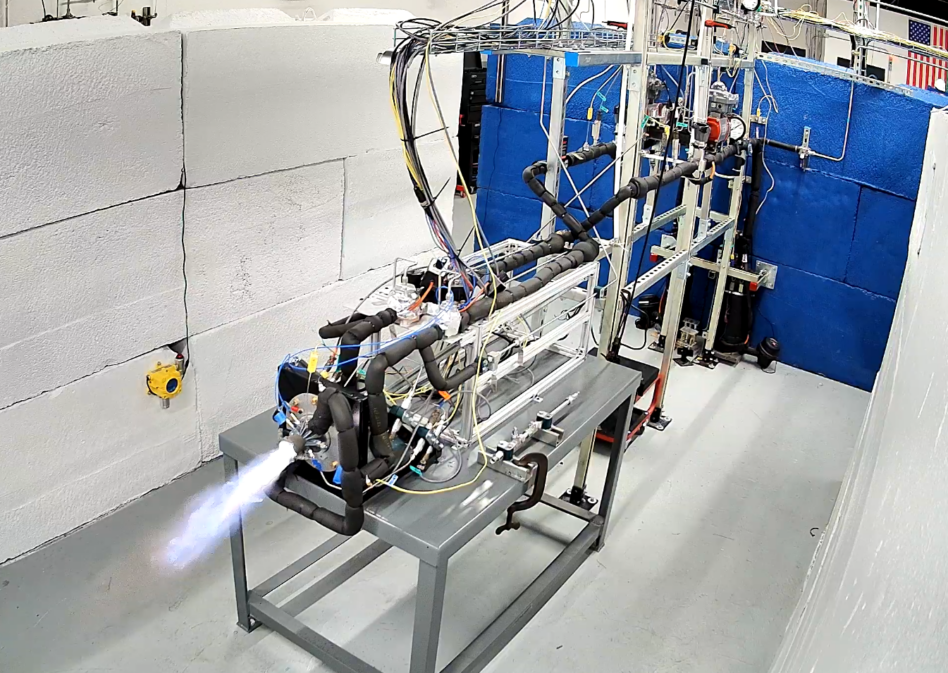
Juno Propulsion announced a $1.4M pre-seed investment round today to fund the completion of its first flight-ready rotating detonation engine (RDE)—called Project Iris—ahead of its inaugural demo mission in 2027.
SOSV led the round, which included participation from Hypernova, Leslie Ventures, Activate, Collab Fund, Safar Partners, and Cape Fear Ventures.
Better than best: Juno plans to use the funds to complete development of its Iris engine. Iris is scheduled to fly as a hosted payload onboard a Momentus satellite bus in Q1 2027, where the engine is expected to be the first commercial RDE system to propel a satellite in orbit.
Keep reading