


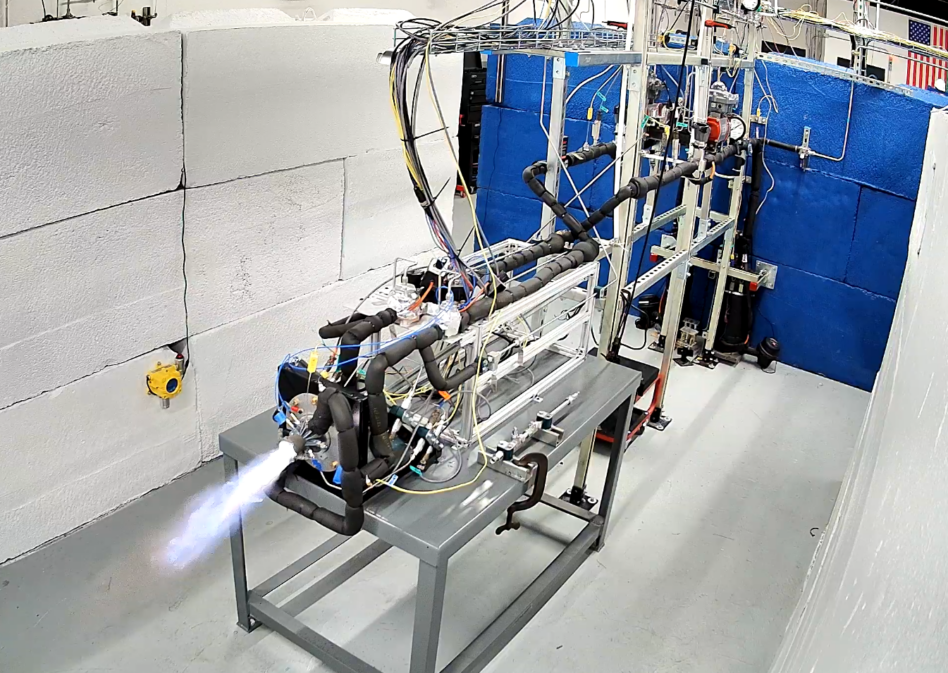
Juno Propulsion announced a $1.4M pre-seed investment round today to fund the completion of its first flight-ready rotating detonation engine (RDE)—called Project Iris—ahead of its inaugural demo mission in 2027.
SOSV led the round, which included participation from Hypernova, Leslie Ventures, Activate, Collab Fund, Safar Partners, and Cape Fear Ventures.
Better than best: Juno plans to use the funds to complete development of its Iris engine. Iris is scheduled to fly as a hosted payload onboard a Momentus satellite bus in Q1 2027, where the engine is expected to be the first commercial RDE system to propel a satellite in orbit.
Since Juno won NASA’s TechLeap prize in July, it has conducted hot-fire tests of its RDE system, demonstrating a combustion efficiency 7% higher than the theoretically perfect constant-pressure engine, according to CEO Alexis Harroun. But the benefits of RDE go beyond thrust.
As opposed to traditional satellite-propulsion systems, which are often reliant on toxic hydrazine, Juno’s RDE setup runs on cheaper and safer nitrous oxide and ethane.
On its first mission, Juno is tasked to validate the engine’s ability to fire in orbit, produce long-duration burns for lowering or raising orbits, and perform rapid minimum-impulse burns for future RPO applications.
Join the pack: Juno isn’t alone in its quest to bring RDE to the market. Multiple teams around the world—including JAXA, Venus Aerospace, and Stellar Alpina—are working to demonstrate the new tech.
To stand out, Juno is focused on building scaled-production facilities to churn out products, once the engine is demonstrated.
Juno is using the new capital to finance its in-house production capabilities, which the company plans to scale to tens of engines per year in the near future. Harroun said her company is aiming to get Iris to technology readiness level 9, which is the most mature level, ahead of production.
“We’re trying to parallelize developing more product lines. We have a lot of different irons in the fire,” Harroun said.

Exclusive: Kapta Space Raises $24M Series A to Build Moving Target Radar Payload
Seattle-based Kapta Space announced a $24M Series A to build next-gen radar payloads designed to track moving targets.

Fortastra Raises $30M Series A to Fund its Next Security Spacecraft
The US military has weapons in space, and—with the orbital arsenal expanding—security is becoming a top priority.
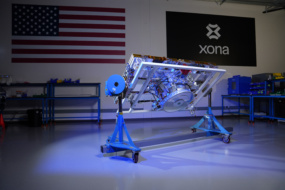
Exclusive: Xona Ramps Up Production Ahead of Pulsar Launch
With FCC approval in hand and six sats ready for the pad, Xona is turning to its next challenge: building the next 250.
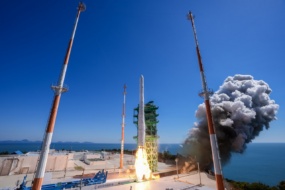
ArbaLabs Launches AI Verification Demo On South Korea’s Nuri Rocket
“In short, tons of companies are looking at the latest and greatest physical AI deployments,” ArbaLabs CEO Ashley Reeves told Payload. “Nobody is really thinking about putting some checks and balances on what these AI models are doing.”
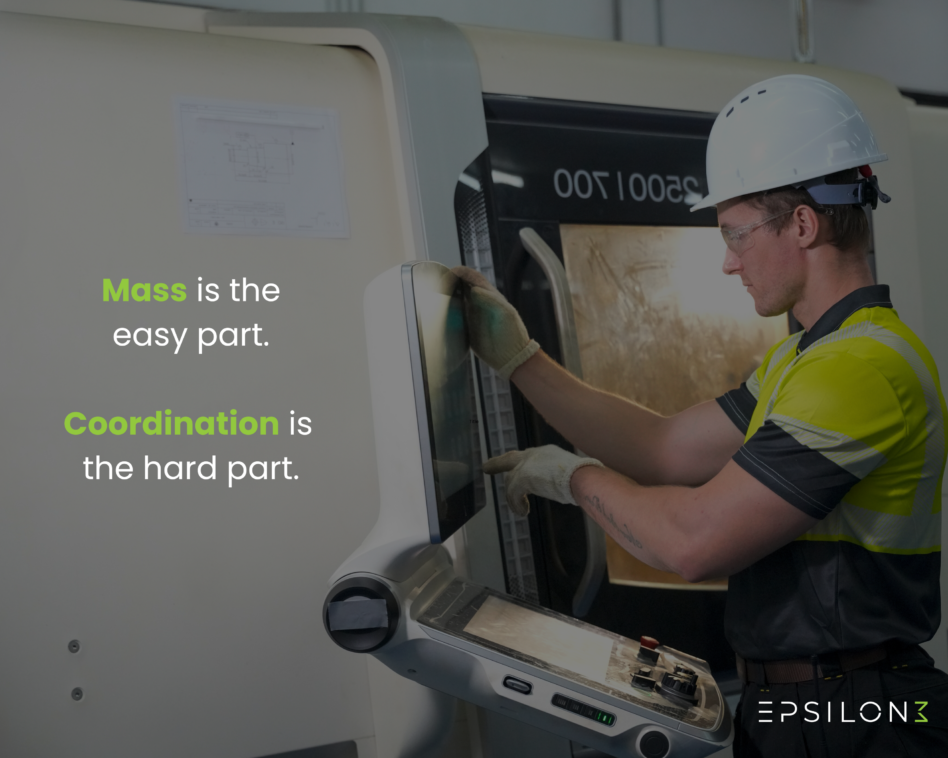
Ukraine rewrote the economics of conflict. When an adversary can field cheap drones by the thousand every month, you can’t answer them with million-dollar interceptors and exquisite platforms, you answer mass with mass. The U.S. has absorbed the lesson and is building autonomous, disposable systems faster than it ever has, led by a new generation of startups that grew up on software, are fueled by AI, and move at break-neck speed.
But building at this scale – thousands of units, across an expansive supply chain, on a wartime clock – is new, and it’s not just startups facing these pressures. It’s new for everyone, with traditional primes trained to operate on multi-million dollar programs, not fast and cost-effective hardware produced at scale. The entire defense industrial base is going to hit a wall, AI or not.
Scale breaks at thousands, when a dozen organizations hand tasks back and forth across boundaries their systems cannot cross.
Keep reading