


The ISS may be winding down, but Europe’s access to LEO isn’t going anywhere.
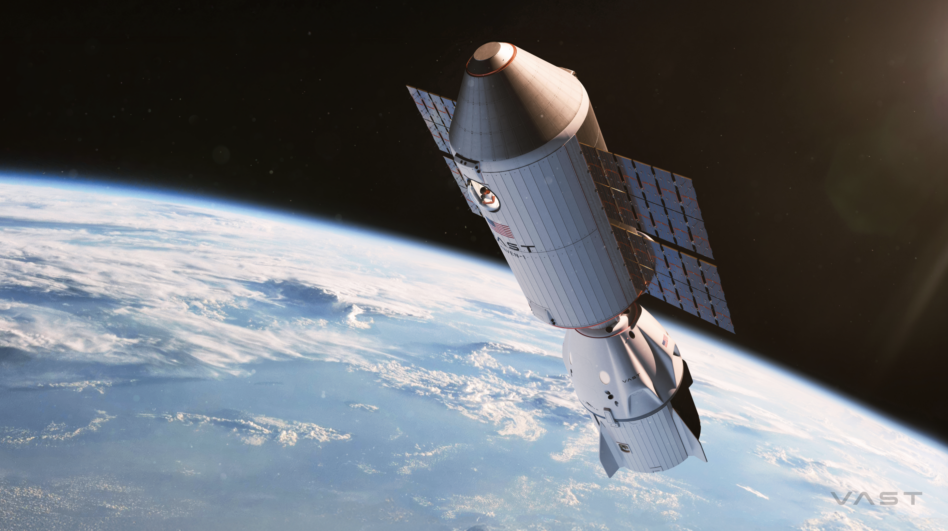
Two commercial space station companies—Vast and Axiom Space—announced this week they would establish new offices in France and Switzerland, respectively, with the aim of forming closer ties with future European customers.
Vast’s agreement with the French government included provisions to send two French astronauts on future flights to LEO. Vast is the first commercial space station company to announce crew placements on future private space stations:
- French ESA Astronaut Thomas Pesquet will serve as the commander on the sixth private mission to the ISS slated for next year, which is overseen by Vast;
- French ESA Reserve Astronaut Arnaud Prost will fly as a flight test engineer on the first crewed mission of Vast’s Haven-1 space station, also expected to fly next year.
Location, location: International space companies looking to establish a presence in Europe have no shortage of options to choose from—with each nation offering different tradeoffs between regulatory burdens, manufacturing capabilities, and access to capital and workforce.
For Vast, the decision to establish an HQ in France was a contingency of the agreement to send French astronauts on future missions, according to CEO Max Haot.
But Vast’s new Paris office will also act as a launch pad for further international deals.
- As part of its announcement, Vast projected that additional crew selections for its next two flights would likely source astronauts from nations with “diplomatic ties to France.”
- Vast also signed an agreement with the UK to explore the possibility of sending UK Reserve Astronaut John McFall to Haven-1, alongside Prost.
Similarly, Axiom’s choice to set up shop in Switzerland was driven by its proximity to the rest of Europe, and by the unique benefits offered by a neutral nation that is part of ESA, but outside of the EU.
“Non-EU status means fewer constraints from EU export control and procurement frameworks, and more flexibility on commercial and defense-adjacent work,” Axiom CEO and President Jonathan Cirtain told Payload via email. “ESA membership gives us the science and research access we need. That combination is rare in Europe, and hard to replicate elsewhere.”
Cirtain went on to caveat that this unique setup has the potential to add regulatory headaches when working with EU member states on collaborative programs, but Axiom could avoid this by setting up shop in other European nations in the future.
“Switzerland is our initial entry into the European region,” he said. “We will continue to evaluate where additional regional presence might make sense over time.”
Dropping anchor: While the specifics differ, the two offices have some things in common. Both companies set up shop in Europe largely to grow their access to European revenue streams, and future ESA space exploration funds.
Commercial space stations have a lot of heavy lifting to do to prove they can make money operating private labs in orbit, so securing international funds for astronaut flights and scientific research is vital to validating long-term economic viability.
Both Axiom and Vast are competing for NASA funds to help support at least one station as part of the agency’s CLD program. These funds are crucial for keeping the lights on, but not enough to turn a profit. And while both companies could look to the private markets for continued financing—as Axiom did this week, landing an additional $175M (€150.7M) in investment— international revenue streams are vital for long-term survival.
The moves to Europe also highlight the feedback loop forming between public and private space station funds, where companies that demonstrate commercial interest are more likely to access public funds—and vice-versa. Haot told Payload that proving Vast can secure paid flights on Haven-1 could make NASA more likely to fund Haven-1 as a viable CLD.
Honorable mention: Vast and Axiom aren’t alone in their private space station ambitions. Starlab—a joint venture between Airbus, Voyager Technologies, and other partners—is also participating in NASA’s CLD program, and dependent on the European market for its future growth.
Starlab incorporated a European subsidiary in Germany in January 2025, and has leaned on many international partners to fuel its technological development, including Belgium-based Space Applications Services, Canada’s MDA Space, and Japan’s Mitsubishi Corporation.
Europe’s Space Defenses Fall Just Shy of Weaponization
Europe doesn’t have any weapons in space—but that doesn’t mean the region is comfortable flying around in orbit defenseless.

Skyrora Shifts Orbital Launch Timeline to 2030
First-mover advantage isn’t all it’s cracked up to be—at least, that’s the thought process for UK launcher Skyrora.

Foundational Raises £8.2M for Satellite Laser Ranging
Foundational emerged from stealth today with Europe’s largest space tech pre-seed round.
Blackswan Space Raises €2.5M Seed to Fund RPO Kit Demo
The round comes as Blackswan gears up for its first in-orbit mission of its RPO Kit payload.


Planet Labs ($PL) reported $94.2M in revenue during the first quarter of FY27—a 42% increase compared with the same period last year.
The EO company plans to surpass those numbers next quarter, predicting $102M to $107M in revenue during Q2. For the full year, Planet is projecting $425M to $441M in revenue.
Ahead of the earnings release, Payload chatted with Planet President and CFO Ashley Johnson about why Planet has found success as a public company, tips for other companies looking to go public, and the company’s future outlook.
Keep reading