



Planet Labs ($PL) reported $94.2M in revenue during the first quarter of FY27—a 42% increase compared with the same period last year.
The EO company plans to surpass those numbers next quarter, predicting $102M to $107M in revenue during Q2. For the full year, Planet is projecting $425M to $441M in revenue.
Ahead of the earnings release, Payload chatted with Planet President and CFO Ashley Johnson about why Planet has found success as a public company, tips for other companies looking to go public, and the company’s future outlook.
Why Planet works: Johnson said Planet has found success as a public company for two main reasons:
- It’s not a capital intensive business, with sats costing only between $300,000 and $5M each.
- The company’s core product is data, not hardware, which offers a high margin.
“That’s one of the ways that I think we’re differentiated from companies that are going to have much more binary outcomes,” she said. “If you’re selling hardware, you recognize revenue when you’ve delivered that hardware. If it fails, that’s the end of the story.”
Advice line: Johnson joined Planet in 2020, and played a significant role in taking the company public on the NYSE the following year via SPAC. Amid a new wave of space companies going public, Johnson’s advice is that—on the public markets—predictability is king, and companies that can attract high quality investors by setting expectations and then meeting them are on the right track.
“The stock reacts very well to predictability, and it reacts extremely poorly to mistakes,” she said. “The rest of it is a little bit out of your control—market dynamics, geopolitics, all the things that will swing the stock in ways that you have to remind [investors] this has nothing to do with us.”
Planet’s future: Looking out a decade, Johnson predicted Planet will continue to grow its use of AI to get data into decision-makers hands faster. Given that, will Planet still be a space company in 2036—or will it be an AI company that works in space?
“If space just becomes another geography that companies work in, it’s possible that [space] becomes maybe the lower case, and the bigger case is the AI,” she said. “But the fact that we have such great scientists that work in-house, who understand the nuances of space and what that means for what we need to build to work really well, I don’t think that ever leaves our DNA.”

Nebex Partners with Thrusters Unlimited to Unlock $700M for Mexico’s Space Ecosystem
The capital will fund EO, telecoms and other strategic capabilities, according to Nebex.

Exclusive: Meridian Space Spins Out from SpinLaunch
“Meridian will carry forward the satcom infrastructure business… SpinLaunch will continue to build on its vision for a lower-cost approach to launch, with further applications in hypersonics to support the Golden Dome program and in the lunar economy,” Meridian Space CEO Massimiliano Ladovaz told Payload.
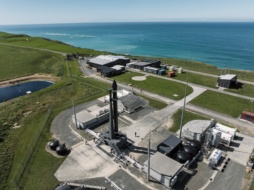
Rocket Lab CFO Adam Spice Predicts More M&A Deals on the Horizon
Iridium shareholders voted overwhelmingly to approve the company’s acquisition by Rocket Lab. According to Rocket Lab CFO Adam Spice, there’s more M&A on the horizon.

HEO Raises $25M Series B to Fuel GEO Expansion
HEO, the Australian non-Earth-imaging startup, announced Monday it closed a $25M Series B to expand its imaging network to GEO.
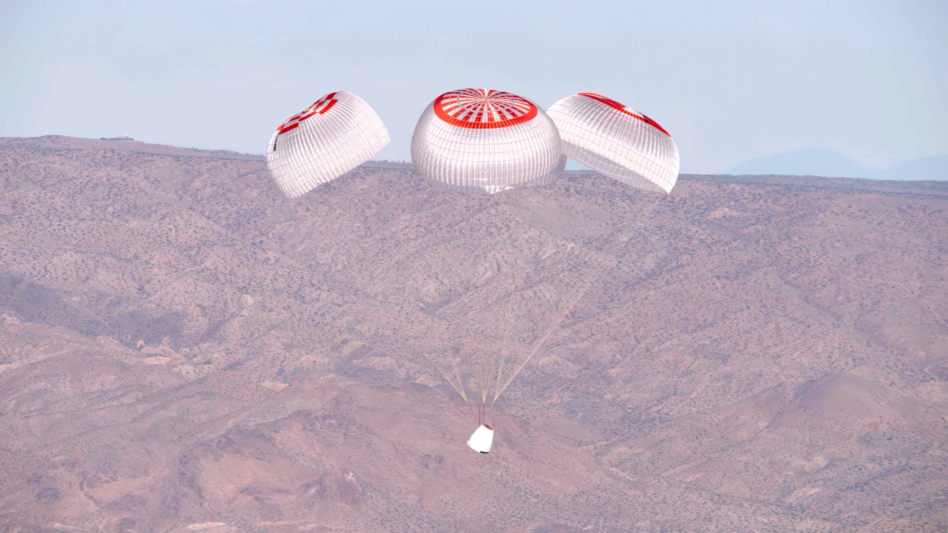
The Exploration Company completed a drop test in the Mojave Desert as part of its Nyx cargo spacecraft development program, the company announced on Thursday.
The test, which was completed on May 19, used a dedicated drop-test vehicle to help engineers evaluate how well parachutes and vehicle dynamics brought the capsule to a controlled stop on Earth.
The details: During the mission, the drop-test vehicle was hoisted by a helicopter to 9,100 feet. After detaching from the helicopter, the test vehicle went through the process of deploying drogue parachutes, transitioning to main parachutes, and eventually being recovered when it safely reached the ground.
Keep reading