


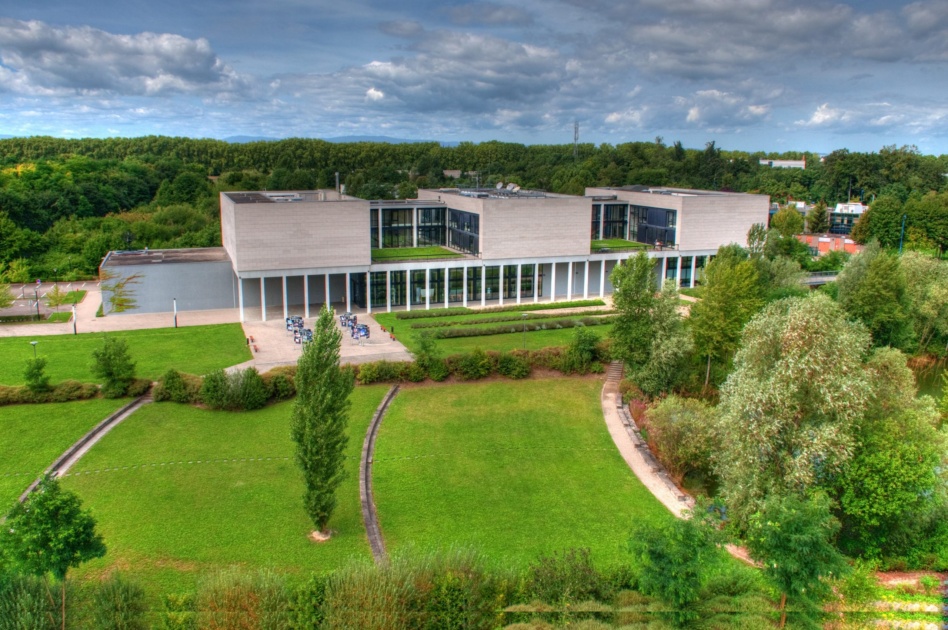
The central campus of the International Space University (ISU) in Strasbourg, France, was forced into liquidation by the French courts last week.
The move has upended the plans of dozens of current ISU students. While some have had their degrees fast-tracked into diplomas, others have not been so lucky. In addition, many international students have found their legal right to live and work in France threatened by the pause in operations.
What happened: To many in the ISU community, the liquidation didn’t come as a surprise.
ISU Professor Emeritus Scott Madry penned an open letter to the ISU community this week, admitting that “ISU has been on the edge of insolvency for decades…It was never a viable financial model.”
Madry added that the founding idea of the central campus as a supporting node to the global ISU organization instead forced international programs to “cut corners, do with less, charge more, not pay faculty, in order to support the cost of the central campus.”
While ISU and the French court-appointed liquidator are still hashing out what to do with ISU’s assets—and there’s still a lot of disagreement about what can and should be up for liquidation—Payload spoke with ISU cofounder Bob Richards and Dean Emerita Angie Bukley about what happened, and what comes next. The good news: they say the global ISU entity isn’t going anywhere.
“The question of the future of the [Strasbourg] association has never been the question of the future of ISU,” Richards told Payload. “ISU is the mothership. It always has been.”
Lessons learned: In many ways, the liquidation stemmed from ISU’s failure to update its business model to reflect the modern space ecosystem.
ISU teaches an interdisciplinary curriculum touching on space policy, science, business, and law to prospective space industry professionals. Its students have included NASA astronaut Jessica Meir, Planet Labs co-founder Robbie Schingler, and EnduroSat founder Raycho Raychev. But all the while, the university’s finances have been dependent on civil funds.
As access to space has opened up over the past few decades, more commercial entities have proven they can exist and thrive without being solely dependent on national space agency funding, but that shift never seemed to reach ISU Strasbourg.
ISU plans to revamp its financing model to ensure this can’t happen again.
“Going forward, we are evaluating our business model and not being so dependent on, you know, space agencies like ESA, CNES, [or] NASA,” Bukley told Payload. “I think we have to move away from that and find out what value-add we can bring, what the market is, and again, how to reach the participants and students today because things have changed a lot since 1987.”
That change will require new financing models, new sources of sponsorship, and likely, the expansion of the brand to a more global academic base. It also requires an update to the curriculum.
“We understand that the space studies program, which is now an eight- or nine-week on-site program, is getting harder and harder for people to get the time off to do,” Bukley said. “But people still need what ISU has to offer in terms of the international, intercultural, and interdisciplinary studies that we offer.”
Bukley added that the ISU staff is exploring options for shorter-term programs aimed at executives, as well as the foundation of online resources to educate remotely.
Globe trotters: Two months before the liquidation, ISU launched a new initiative to attract international partners and establish a network of affiliate campuses—ISU Global, with its own corresponding website. As ISU’s main website is now in the hands of the liquidator, ISU Global has carried on.
The existence of ISU Global, and the popularity it’s seen since the liquidation began, has helped reignite the organization’s worldwide ambitions, according to Richards. Going forward, Richards expects this initiative to continue, and offer the overall organization a better financial footing for the future.
“The reason for a global campus strategically has always been to spread the risk because different regions of the world run into problems,” Richards said. “The fact that there was a, let’s say, a singular point of failure of a singular campus based on government funding was a recipe for disaster.”

European MNOs Join Forces to Explore Joint MSS Spectrum Bid
Deutsche Telekom, Telefónica, Orange, and Vodafone plan to establish ground network infrastructure across Europe, and partner with an as-yet undetermined satellite operator for the D2D connection.
Reaction Dynamics Targets 2031 for Borealis Medium-Lift Launch
In the contest to build up commercial launch capabilities in Canada, Quebec-based startup Reaction Dynamics has entered a new weight class.

Seraphim Space Investment Trust Doubled its Value in 2026
Seraphim’s major holdings—ICEYE, ALL.SPACE, D-Orbit, HawkEye 360, and Xona Space Systems, which together represent more than 75% of the firm’s portfolio—all had a great year, and that success has trickled upwards.

UKSA Taps ClearSpace for Country’s First Debris Removal Mission
The UK Space Agency is dressing up as a waste-management company for Halloween.

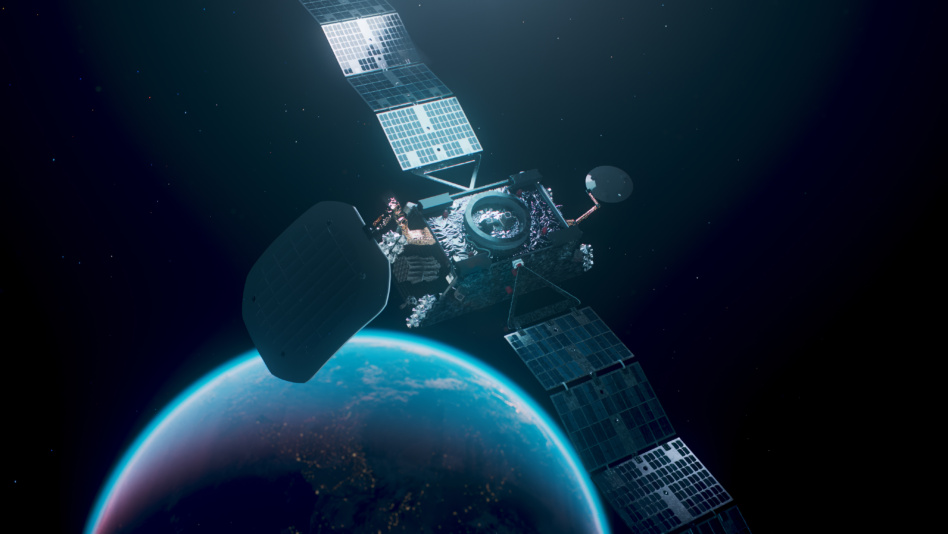
European space company SWISSto12 has raised a $70M Series C, which will help it scale to meet the global demand for sovereign hardware in orbit.
The company did not disclose who contributed to the round.
“Our products are supporting exciting new customer missions—from direct-to-device connectivity to media broadcasting, intersatellite data relays or sovereign communications infrastructure—many of which span multiple orbits,” CEO and founder Emile de Rijk said in a statement. “This Series C funding round accelerates our ability to execute on this growing demand across any payload, any platform and any orbit.”
Keep reading