


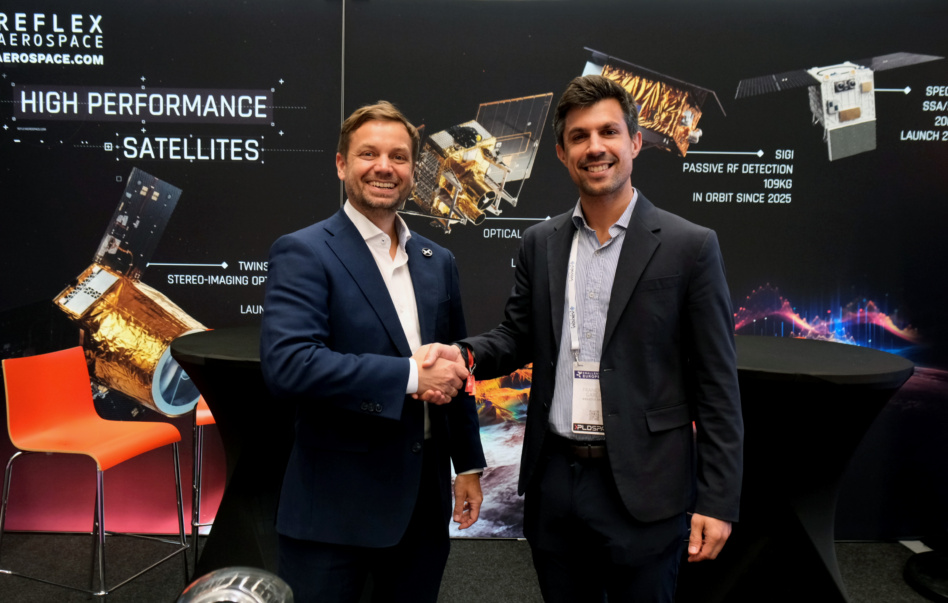
Reflex Aerospace selected Spanish startup Arkadia Space to provide a propulsion system for its satellite mission, launching in 2027.
The agreement marks the first time that Germany’s Reflex will fly a chemical-propulsion system on one of its satellites, according to the announcement. Reflex’s decision was based largely on Arkadia’s ability to rapidly build and integrate.
“As a European and ITAR-free supplier with demonstrated in-orbit heritage, Arkadia Space enables us to move quickly while maintaining high technical standards and supply-chain independence,” Reflex CEO Walter Ballheimer said in a statement. “The short lead time and flexibility of their system are key enablers for our ambitious development timeline.”
The mission: Reflex’s 200-kg satellite, which is expected to launch on SpaceX’s Transporter-20 rideshare mission NET Q2 2027, will rely on Arkadia’s Triton 5N monopropellant engine for in-space maneuvers and end-of-life deorbiting.
The mission represents the first time Arkadia’s prop systems have been chosen to power a commercial satellite mission. However, Triton is based on the design of a subscale system—called DARK—which Arkadia flew on a demo mission with D-Orbit last year.
As opposed to conventional chemical propulsion systems, which often rely on toxic hydrazine for thrust, Arkadia’s propulsion systems use a green alternative: hydrogen peroxide.
While hydrogen peroxide substantially lowers the cost and complexity of fueling operations on Earth, it carries an increased risk of boil-off or degradation on orbit—one that Arkadia is confident it has solved well enough to at least to power Reflex’s multi-year mission, according to Arkadia CEO Francho García.
The back catalog: Arkadia is using the mission to prove to future customers that its green propulsion system can replace conventional satellite propulsion systems.
Arkadia’s warehouse, however, is full of more than just satellite prop systems. The company is reworking its core propulsive technology to provide multiple modes of thrust to a diverse market, and the strategy is already paying off.
- In February 2025, Arkadia announced a deal with MaiaSpace to provide 250N thrusters for the reaction-control system of MaiaSpace’s launcher.
- In April, Arkadia revealed an agreement with French prime Dassault Aviation to integrate Arkadia’s 250N thrusters into Dassault’s VORTEX subscale demonstrator program for a first-phase flight as early as 2028.
Arkadia next plans to develop more powerful bipropellant systems, with an aim to provide low-cost thrust for larger spacecraft—including potentially lunar landers.
Exclusive: In Orbit Aerospace Pivots From Re-entry Vehicles to Spacecraft Autonomy
In Orbit has won new government contracts for its onboard AI system, which the company says can run a spacecraft’s operations without waiting on ground control.
Reflect Orbital Buys Two Skyroot Aerospace Launches
Reflect Orbital announced the purchase of two launches today from Indian launcher Skyroot Aerospace.
Europe’s Space Defenses Fall Just Shy of Weaponization
Europe doesn’t have any weapons in space—but that doesn’t mean the region is comfortable flying around in orbit defenseless.

Fortastra Raises $30M Series A to Fund its Next Security Spacecraft
The US military has weapons in space, and—with the orbital arsenal expanding—security is becoming a top priority.

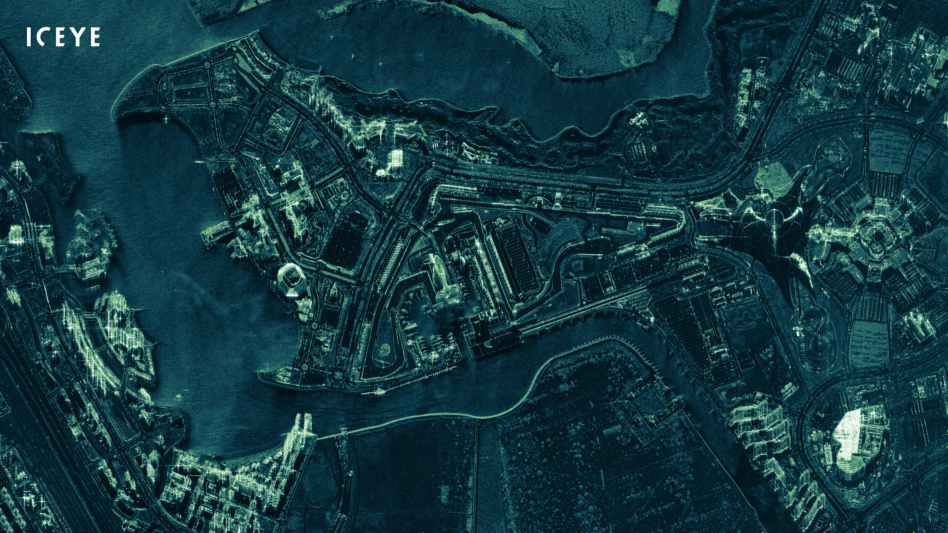
Two European space companies announced multi-hundred-million dollar funding rounds this morning.
ICEYE deep dive: General Atlantic led ICEYE’s Series F, which also included participation from Solidium, Tesi, Varma Capital, Ilmarinen, Lifeline Ventures, and Nokia. The company will use the money to increase ICEYE’s global reach, grow its intelligence capabilities, and scale to meet sovereign demand for in-space data.
The round follows ICEYE’s €150M ($175M) raise at a €2.4B ($2.8B) valuation in December.
Keep reading