



ATMOS Space Cargo wants to livestream its downfall.
Let’s try that again: ATMOS announced an agreement with Lithuanian optical comms manufacturer Astrolight yesterday to fly a laser comms terminal onboard ATMOS’ PHOENIX 2 reentry vehicle during a 2027 demo mission.
The goal of the partnership is to allow ATMOS to beam large quantities of data back to operators during the high-speed portion of return-to-Earth missions—where traditional RF comms links can degrade quickly.
The mission: For the 2027 flight, Astrolight will fly its ATLAS-X laser-comms terminal on ATMOS’ PHOENIX 2 reentry vehicle, as well as a terminal on a LEO satellite to enable spacecraft-to-satellite optical links. During the mission, these terminals will enable continuous, 2.5-Gbps connectivity as PHOENIX roars through the atmosphere.
The new hardware aims to give ATMOS and payload operators real-time insights into both the health and trajectory of the vehicle, as well as the performance of onboard payloads before they can be physically recovered.
As demand for reentry missions rises—from companies attempting to build in-orbit manufacturing capabilities to defense ministries using reentry technology to test hypersonic components—the need for real-time data is compounding, according to ATMOS CEO Sebastian Klaus.
“As cargo-return missions grow more autonomous and data-intensive, real-time connectivity across the entire mission cycle is becoming increasingly important,” Klaus said in a statement. “Our partnership with Astrolight is a step toward integrating laser communication into PHOENIX as a strategic layer for payload monitoring, autonomous de-orbit, and re-entry operations.”
Lessons learned: The partnership isn’t just building this capability on expectations of future data demands, however.
On ATMOS’ first demo mission in April 2025, RF comms links did not provide sufficient data on the performance of one onboard payload: a lab-in-a-box from Frontier Space. This shortfall blocked Frontier officials from declaring a fully successful flight, and forced Frontier to wait for a second demo mission to confirm the in-space performance of its SpaceLab—a mission it chose to fly on Orbital Paradigm’s reentry vehicle.

Fortastra Raises $30M Series A to Fund its Next Security Spacecraft
The US military has weapons in space, and—with the orbital arsenal expanding—security is becoming a top priority.
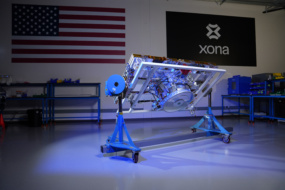
Exclusive: Xona Ramps Up Production Ahead of Pulsar Launch
With FCC approval in hand and six sats ready for the pad, Xona is turning to its next challenge: building the next 250.
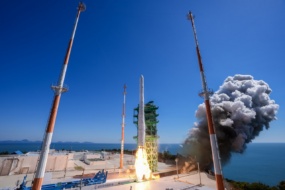
ArbaLabs Launches AI Verification Demo On South Korea’s Nuri Rocket
“In short, tons of companies are looking at the latest and greatest physical AI deployments,” ArbaLabs CEO Ashley Reeves told Payload. “Nobody is really thinking about putting some checks and balances on what these AI models are doing.”

Nebex Partners with Thrusters Unlimited to Unlock $700M for Mexico’s Space Ecosystem
The capital will fund EO, telecoms and other strategic capabilities, according to Nebex.

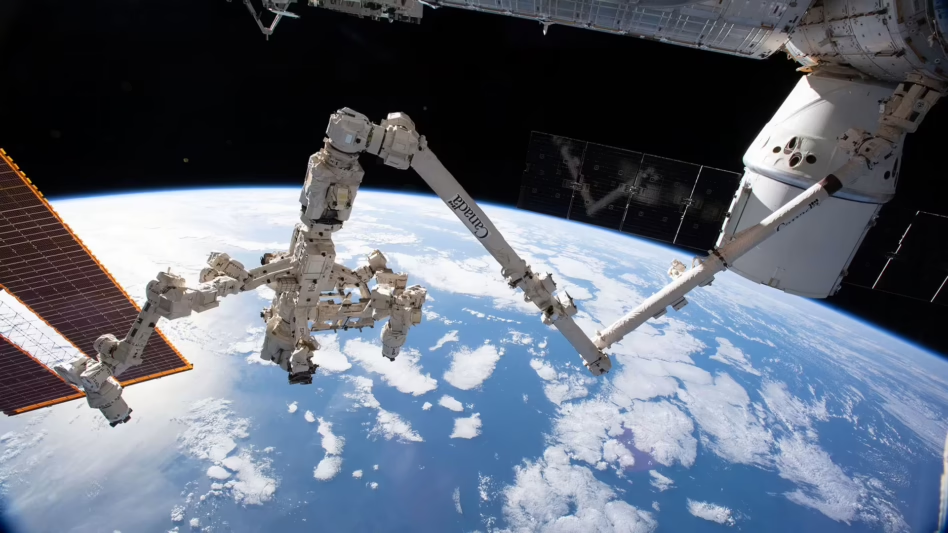
MDA Space will “repurpose” its microgravity robot-arm tech for lunar surface operations—likely supporting the NASA-led Moon Base—after the US space agency put the OG plans for Gateway on hold.
The Canadian company’s investments into Canadarm3—originally intended to operate in lunar microgravity—will focus on “future logistics activities on the lunar surface,” Canada announced late Thursday. The change is supported by MDA Space, which is working on the tech under a $1B CDN ($720M) contract with the Canadian government.
The move comes as little surprise after ESA and Northrop Grumman shifted some of their own Gateway projects to new lunar applications in recent weeks.
Keep reading