


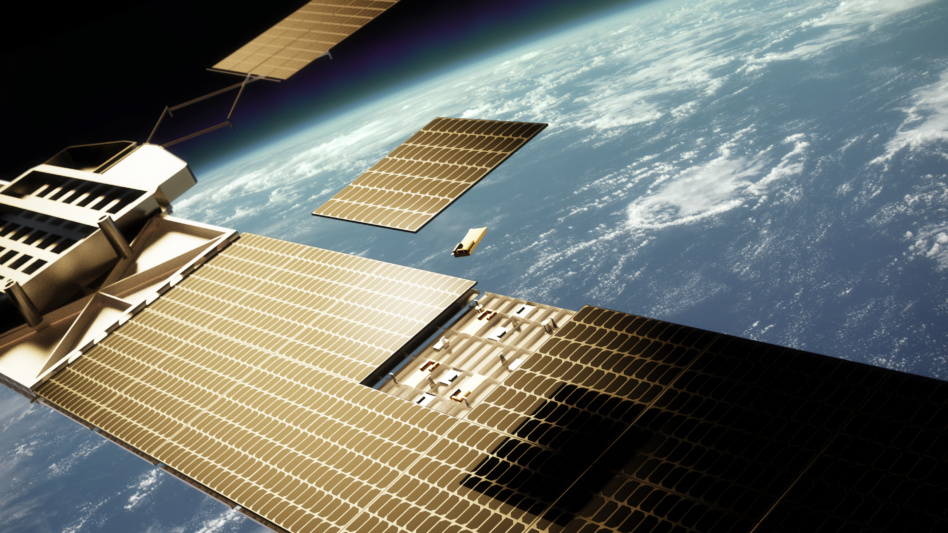
Sophia Space has deployed its Sophia Orbital Operating System (SOOS) across multiple Kepler Communications optical-data-relay sats. The test, announced today, marks the first in-space milestone toward Sophia’s goal of scalable orbital-compute infrastructure, with SOOS as the base software layer for future architectures.
As more data flows to and from—as well as between—satellites, operators are looking to process, manage, and deliver that data as efficiently as possible. Sophia is pitching SOOS as a way to do that across a distributed network in orbit.
“We believe [the test] is the first time there will be a distributed network computer in orbit,” Sophia Space CEO and cofounder Rob DeMillo told Payload as the deployment was ongoing.
Under the hood: SOOS is the software layer for Sophia’s future TILE compute modules, built to scale from one spacecraft to many.
- SOOS uses managed Kubernetes—open-source software that deploys and runs applications across a group of computers—to spread computing jobs across satellites, instead of tying them to a single spacecraft.
- The system has built-in security and triple redundancy. During the Kepler test, SOOS ran on three processors per sat, and kept a fourth in reserve as a fail-safe.
- Sophia is pitching SOOS for AI inference in orbit, including missile warning, SDA, maritime awareness, disaster response, weather intelligence, and in-space manufacturing.
“SOOS is a cooperative operating system, meaning that any version of SOOS running on a processor is aware of any other SOOS version running on a processor in that same local network,” DeMillo said.
Copy, paste, repeat: Kepler announced the compute hardware on its Tranche 1 sats in March. SOOS provides the software layer on top—coordinating processors across satellites so the constellation works as one system.
By what DeMillo called “the sheerest coincidence,” Kepler’s Tranche 1 sats use the same type and number of chips that Sophia is using in its first TILEs—four NVIDIA Jetson Orin processors each.
Here’s what went down (or rather, up):
- Sophia uplinked an alpha version of SOOS to a single processor, on one Kepler sat.
- SOOS unpacked itself, checked that it was running correctly, and copied itself onto two more processors to form a local network, with the fourth held in reserve.
- Then SOOS jumped across the optical link to a second Kepler sat, and did it all again.
Sophia defined success as the moment the two satellites began talking to each other. “Everything else is whipped cream on top of the pie,” DeMillo said.
Open for business: Sophia has already signed an extension to its Kepler contract that brings in paying customers. The company has one customer signed and a second ready to go, though it declined to name either.
“We are charging them GPU usage and access the same way a data center would,” DeMillo said.
Next up: Sophia’s passively cooled hardware still needs to fly before the company can begin building out its constellation, with plans to send the first TILEs to orbit in 2028. The challenge now is “getting our manufacturing pipeline to a point where we can produce thousands of our servers a month,” DeMillo said.
Exclusive: Inflection Space Systems Books First Orbital Mission
Inflection Space System’s first mission, Pax, will launch NET 2028 on a rideshare booked through Exolaunch.
Exclusive: CUBECOM Expands to the Netherlands to Scale European Biz
Europe’s space industry is heating up, and it’s starting to attract outside attention. CUBECOM, the South African company developing RF communications systems for satellites, today announced it’s opening a new office in Delft, the Netherlands as part of an effort to lock down more deals across the continent. The new office will initially host the…

Space Cargo Unlimited Unveils REV1 Reentry Vehicle
Space Cargo Unlimited unveiled its new reusable reentry vehicle—called REV1—at Space Tech Expo in Bremen, Germany today.

Asynchronics Raises $3.1M To Boost its Digital-Twin Software
Asynchronics today announced the closing of a $3.1M seed round to bring more affordable digital-twin software to the market, and grow its virtual catalog of off-the-shelf components.

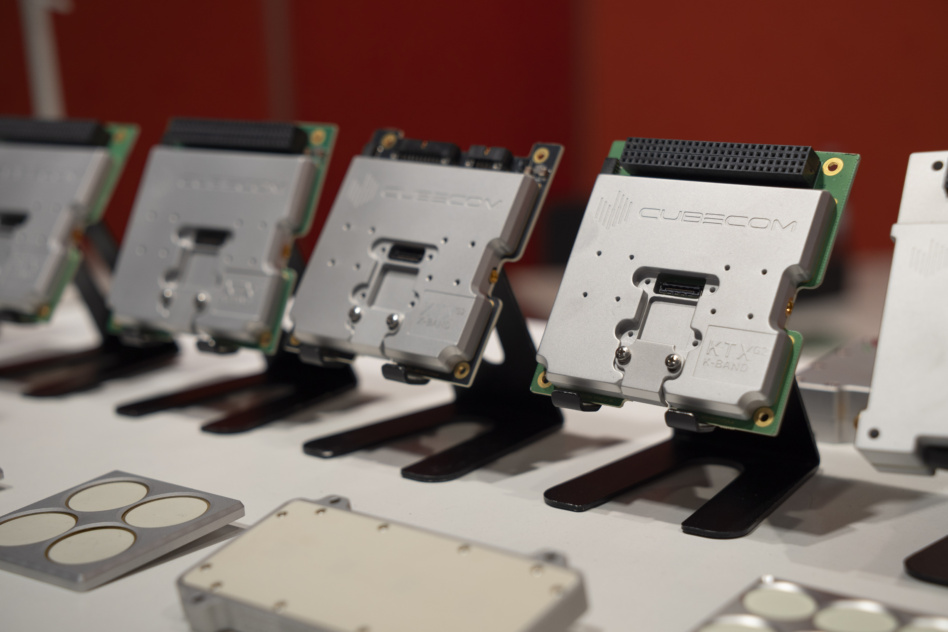
Europe’s space industry is heating up, and it’s starting to attract outside attention.
CUBECOM, the South African company developing RF communications systems for satellites, today announced it’s opening a new office in Delft, the Netherlands as part of an effort to lock down more deals across the continent.
The new office will initially host the company’s sales and customer team, with the goal of forming stronger relationships with clients in the region, but will eventually include technical staff and engineers to develop European IP. CUBECOM ultimately aims to establish a regional production facility within the next five years.
Keep reading