


For decades, the US enjoyed its standing as the preeminent space power—but its position isn’t guaranteed.
Yesterday, four space industry and China experts appeared before the House Committee on Science, Space, and Technology’s Subcommittee on Space and Aeronautics testifying that if the US doesn’t step up, it risks ceding space superiority to China. That risk, according to witnesses, comes on all fronts—from the Moon and planetary science, to PNT systems and LEO security.
“In recent years, China’s pace has surged, in part due to the declaration of the ‘Space Dream’, which transformed aspirations into coordinated missions for dominance,” subcommittee chair Mike Haridopolos (R-FL) said at the hearing. “China’s space sector has since surged forward, aimed to compete with America’s world leading commercial space industry. This is not an accident. It is strategic.”
The threat at hand: There is a real threat that China will send astronauts to the Moon before the US and set up permanent settlements there, the discussion noted. Michael Griffin, a former NASA administrator and witness at the hearing, pointed out that the first people to arrive on the Moon will set rules, standards, and communications protocols.
“If we are watching from the sidelines, it will be China that is establishing those things,” Griffin said. “With respect to the future for the rest of the humans on Earth, that will not go well.”
China has a plan to get to the Moon, but the US-led Artemis program does not have the same detailed long-term approach, leaving a hazy future after Artemis III. That doesn’t bode well for competition with China, members said.
But the threat stretches beyond the Moon. The subcommittee members and witnesses warned that threats to NASA’s science budget could result in a gap in talent—and in technological capabilities. Cutbacks also may hand soft power and leadership in exploration over to China.
Do your job: There was consensus that the US government plays an important role in ensuring American space industry stays on top. However, the government should not enact excessive or additional regulation on the space industry at home, to allow American space companies to innovate and iterate.
“Every company that’s trying to put our spaceships out there and retrieve them has a reputation that they exist on: If you fail, if you’re unsafe, their business is done,” said Rich McCormick (R-GA). “There’s nobody who wants to be more safe than those companies. They can regulate themselves probably better than we ever could, and be competitive only when we get out of their way.”
Instead, the government should focus on supporting NASA and the commercial space sector, witnesses said. Consistently funding NASA, and establishing a concrete plan for lunar settlement under Artemis and alongside industry, are first steps toward that goal.
“If the US government does not set that kind of a consistent demand signal, then we should not expect industry to invest alongside,” Griffin said.
White House Requests $18.8B FY27 Budget for NASA
The budget proposal includes the same top line as the administration’s fiscal 2026 request, and would make similar cuts to NASA’s science and STEM missions.

Insurance is Commercial Space Nuclear’s Biggest Headache
Lots of challenges face commercial space nuclear missions—but experts at an industry seminar on Thursday only called one a “show stopper”—insurance.

Jared Isaacman Hits 100 Days In Office With a Bang
NASA Administrator Jared Isaacman has one message: Get in, we’re going to the Moon.
Lawmakers Question NASA’s Shifting Vision for CLDs
NASA Administrator Jared Isaacman proposed a new plan for America’s human presence in LEO that left many lawmakers scratching their heads.
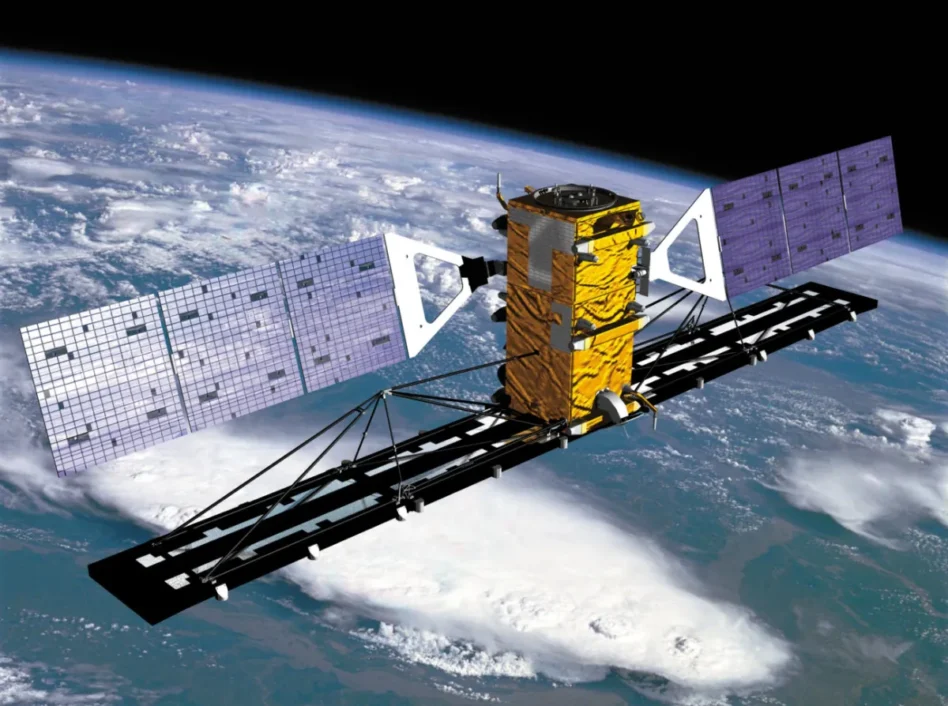
Robust domestic capability across the space domain is a key development priority for Canada. Yesterday, the Canadian government made another commitment toward that goal.
MDA Space, a Canadian space tech company best known for the Canadarm robot-arm program, won a $44.7M CAD ($32M) contract from the Canadian government to supply parts for a new RADARSAT EO satellite.
“Through these investments, we are strengthening Canada’s space sector and ensuring Canadians continue to benefit from the satellite data that supports essential everyday services,” Canadian Minister of Industry Mélanie Joly said in a release.
Keep reading