


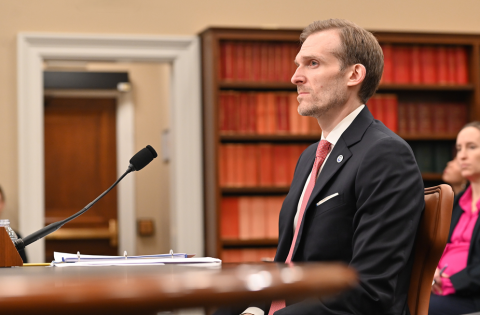
Buckle up for novel space summer.
In March, the Office of Space Commerce (OSC) unveiled its plan to serve as a one-stop shop for licensing novel space missions. Under the office’s plan for mission authorization, companies working on everything from asteroid mining to in-space refueling could submit a single application, which Commerce would share with relevant agencies—including the FAA and FCC.
Since then, industry has been fully on board with the proposal, according to Taylor Jordan, OSC head as well as NOAA’s assistant secretary of commerce for environmental observation and prediction.
While OSC is still reviewing the staffing that it will need to handle the potential influx of paperwork, officials are already gearing up to accept the first applications this summer.
Jordan also talked about ITAR reform, the future of TraCSS—and why current commercial space regulations are like the Spider-Man meme where everyone is pointing at each other.
This transcript has been edited for length and clarity.
What has been the industry’s reaction to your mission-authorization proposal?
We couldn’t be more excited about the opportunity to put forward our proposal to the White House, for mission authorization. We view this as a tremendous opportunity for the office to have an expanded role for commercial space.
We have heard from industry that they are extremely supportive of the proposal we have on our website. We’ve heard from over 100 different companies, and the vast majority are extremely supportive of what we’re doing.
Were there any common things that industry would like to see changed?
I’m not familiar with any hard-hitting negatives, or even common threads. A couple folks have had questions around, what are the [regulatory] “light-touch” parameters going to be? But that’s going to be decided with industry in the room, because as we work on these different sectors—whether that’s in-space servicing, or asteroid mining, or orbital data centers—the light-touch certification in the parameters will be slightly different for all of them. So we’re excited to build this in tandem with the commercial industry.
What are the next steps to implement it? Do you need action from Congress?
We’re going to continue to work hand-in-hand with the White House to ensure that we can roll out the first set of applications. Hopefully this summer, we’ll be in good shape to maybe start carrying out those first applications. That could change, but that’s our intent.
As far as congressional approval or legislation, we’re happy to talk with our congressional partners on that. We have built this as a voluntary system, utilizing our existing authorities. So technically, we don’t need Congress to weigh in. But if they are of the same opinion about the importance of this, we look forward to working with them to make sure that this is codified in a way that provides the additional authorities to make this a non-voluntary program.
While this is a voluntary program, I think with the quagmire that is space regulations right now, it would be extremely difficult for companies with these novel space activities to actually reach a “yes” within the federal government without it. Do you submit applications to us, to the FAA, to the FCC all at the same time, and then, have the Spider-Man meme of who’s pointing the finger at each other?
I’m confident that our certification proposal eliminates the confusion, and allows the OSC to be a single belly button for the federal government—to be the single place where commercial industry can find the confidence that they want, to operate for new and novel space activities.
Do you have the budget and staff to handle that influx of paperwork?
We’re still working through what that’s going to look like. We do anticipate a lot of proposals, for a lot of different segments of the space sector, to start rolling in once this is officially kicked off— and we’re open for business.
We will rely on memorandums of understanding and agreement with the other space regulators, such as the FCC and the FAA. We will need to pull in expertise from NASA, and NOAA—my other hat—and the State Department, and the Department of War. We’re not above looking for detail opportunities, if those exist. We also know that we will need to think through strategic hiring for this initiative as well.
So we’re running through all of those traps, knowing that there may be an avalanche of applications coming our way. Because again, this is one of the most exciting things for space regulations in the federal government.
Can you provide an update on the conversations about export control, and ITAR reform, at the State Department?
I’ve heard from a number of commercial space companies who come to our office and they ask us, “Do you know what’s going on?” So I’ve done my due diligence, and I’m starting to have those conversations with the State Department.
OSC is the entry point for a lot of space activities. Obviously, folks come to us, and they don’t necessarily know who the players are for some of these export controls and ITAR conversations. So they come to us, and obviously, as the advocate, we do go and we advocate to the other agencies.
I’m starting to have those conversations. I look forward to continuing those and trying to push the ball forward, because it is clear to me that we need to get to conclusion on some of those things—and make sure that the US can continue to compete during this unprecedented opportunity for space investment, domestically and internationally.
What’s your response to reports that the FY27 budget put TraCSS on hold?
We’re not putting it on hold. We’re not re-examining it. What you see in the FY27 budget request is a containerization of the program to ensure that we keep it hot, and we keep the lines running, as we continue to work through different options now provided to us through executive order.
You saw the removal of the prohibition on charging user fees for the program. Those are ideas that we are kicking around internally. We intend to have a listening session, and conduct market research with the community, to better understand what is the art of [the] possible in that—and we will develop a cost-sharing model, if appropriate, at the correct time.
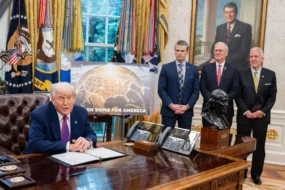
Colorado Springs, Huntsville Team Up on Golden Dome
“It’s a transformed relationship between Colorado Springs and Huntsville,” Rep. Jeff Crank (R-CO) told Payload. “When I took office, I don’t think it was a bad relationship, but it was one where both communities were kind of looking over their shoulder at the other. That wasn’t good for America, and I don’t think it was good for Colorado Springs or Huntsville either.”
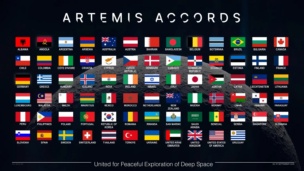
Artemis Accords To Meet on Lunar Debris, Emerging Space Help
The Artemis Accords Principals’ Meeting in Turkey will be led by NASA Deputy Administrator Matt Anderson and Maj. Gen. Roberto Melgar Sheen, director of the Peruvian Space Agency.
FCC to Vote on Waiving NEPA Review for Space Ops
The FCC will vote Sept. 30 on whether to narrow which commission activities face environmental review, and streamline the process for the ones that require assessment.
State Department Launches New Space-Diplomacy Effort
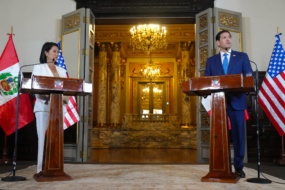
Alongside the announcement, Rubio also unveiled the SCP’s first project—a two-year, $6.5M effort to bring satellite internet to rural southern Peru.
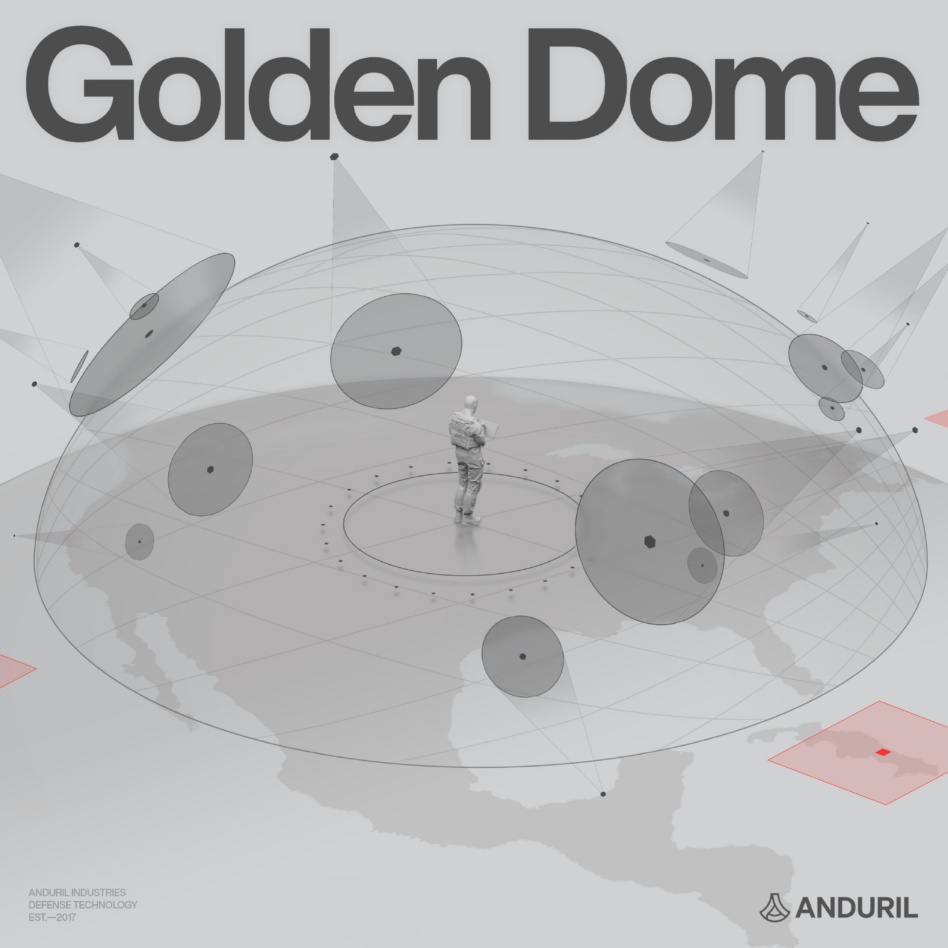
Anduril today revealed its team of partners working on a contract for the Golden Dome SBI program.
Without further ado: The company is working with:
“Anduril’s SBI team brings proven capabilities, leading technical expertise, and a commitment to moving quickly to solve one of the most critical, most complex problem sets facing the American homeland today,” Gokul Subramanian, Anduril SVP of engineering, said in a statement. “From commercial space startups to established research institutions, the Department of War’s SBI program has established a clear demand signal that has energized the entire space industrial base.”
Keep reading