


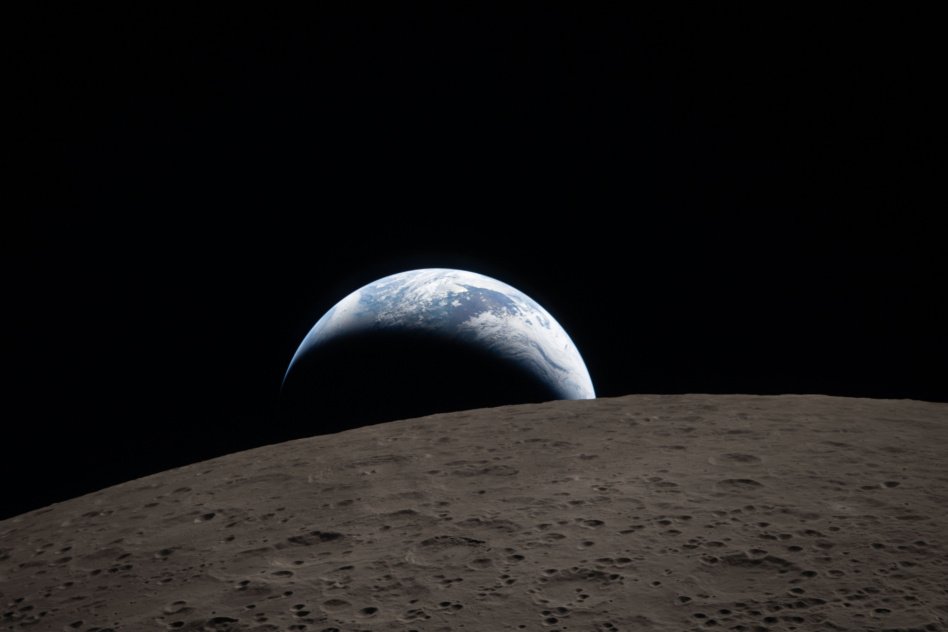
When the Artemis II astronauts left LEO, they were the first in more than 50 years to brave the radiation of cislunar space.
Czech company ADVACAM has six chips flying on the mission to measure how cosmic radiation effects the astronauts—and the electronics on Orion. The aim is to verify radiation shielding on Orion is working as designed, using tech that has already gotten a test drive aboard the ISS.
HERA comes the sun: The chips are embedded in a radiation-sensing instrument called HERA, or Hybrid Electronic Radiation Assessor. With the sun at solar maximum, HERA serves as an instant warning system if a solar flare emerges. To minimize radiation exposure, the crew would move to the storage (central) area of their spacecraft and surround themselves with stowage bags.
Future vision: The goal is for the data collected on Artemis II to make future spaceflights safer too.
- Radiation damage to spacecraft can cause them to lose control or communication, increasing the likelihood of space debris. ADVACAM wants to help companies make good design decisions for radiation to better shield space orbits from spacecraft collisions.
- ADVACAM also wants to embed sensors on various spacecraft to forecast radiation conditions in LEO. This will not only help spacecraft, the company says, but also high-altitude flights, the power grid, and comms and nav systems that depend on space assets.
Dreaming of electric seep: The chip tech originated from the Large Hadron Collider. Then the radiation environment monitors (REMs) first flew to the ISS in 2012, using a single silicon detector called Timepix. The tech was developed in collaboration with CERN, the Czech Technical University in Prague, the University of Houston, and JSC.
As demand grew, ADVACAM formed in 2013 as a spinoff of the Czech university’s institute of experimental and applied physics. Since then, “we’ve delivered different custom solutions for different types of space missions,” an ADVACAM spokesperson said said. They even flew versions of HERA twice already on Orion: around Earth in 2014 for Exploration Test Flight-1, and around the Moon in 2022 for Artemis I.
But it’s the ISS work that has been the foundation of HERA’s success, ADVACAM said. “For the Artemis II mission, we’re definitely building on this long-term experience with the ISS modules, which helps us to always push our technology forward.”
How Earthlings Got Views of the Lunar Fly By
Redwire has built 11 cameras that are installed around the inside and outside of the Orion capsule, Kaylee Geidel, a senior systems engineer at Redwire, told Payload.
Artemis II Supplier Series: Orion’s Windows
For astronauts who put in decades of work and training, getting to see space with their own eyes is a big part of the payoff.
CLPS Companies Excited For NASA’s ‘Opportunity Bomb’ Lunar Plan
Last week, NASA laid out a vision for a lunar base that’s built and supplied through monthly uncrewed lunar landings, with launches beginning as soon as next year.It’s no surprise that CLPS companies are raring to go.
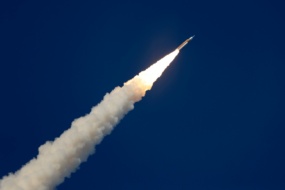
Artemis II Is On The Way To The Moon
NASA astronauts Reid Wiseman, Christina Koch, and Victor Glover, plus Canadian Space Agency astronaut Jeremy Hansen, are on board—with Koch and Glover poised to make history as the first woman and person of color to head to the Moon, and Hansen as the first non-American.


NASA is facing dramatic cuts to its science program next fiscal year—but advocates say they’re ready to fight for NASA’s space science missions.
It’s a lede we could have written in 2025, but which is also true in 2026. Once again, the Trump administration has proposed an $18.8B NASA budget that would make large cuts to science and STEM missions. And—once again—advocates and lawmakers are saying they won’t stand idly by while programs are gutted.
By the numbers: The budget would invest $3.89B in NASA’s science portfolio—representing a $3.4B cut to the directorate and the elimination of 40+ missions. That budget includes:
Keep reading