


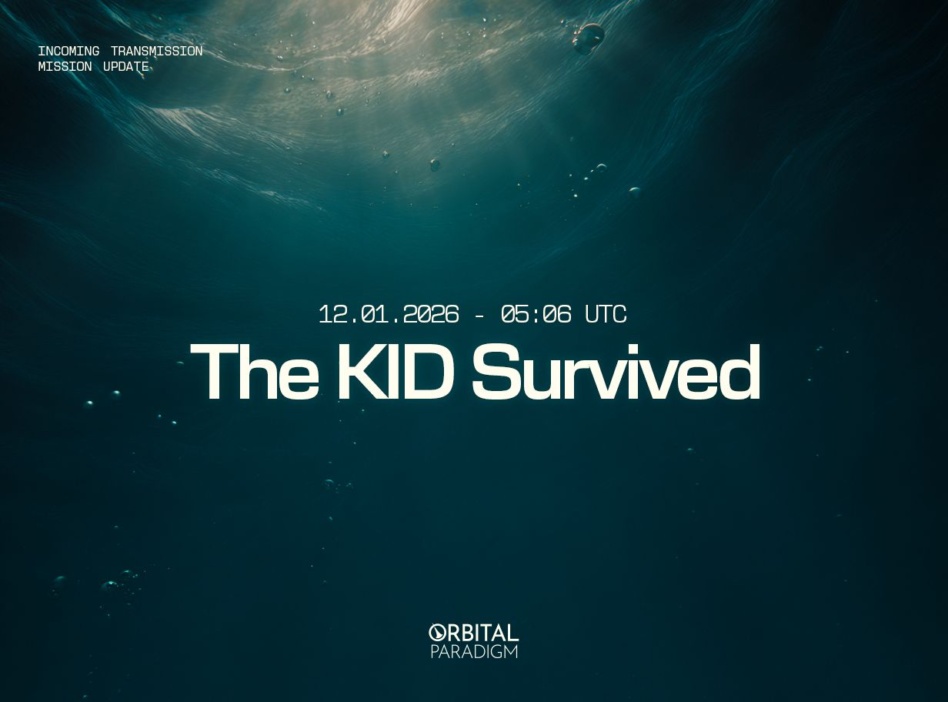
ISRO’s Polar Satellite Launch Vehicle (PSLV) suffered an anomaly six minutes after launch Sunday, falling into a tumble at the end of the third stage engine burn. Many speculated that all 16 satellites on board had been lost.
One payload, however—Orbital Paradigm’s Kestrel Initial Demonstrator, or KID—survived the mishap long enough to separate from the launch vehicle and transmit minutes of valuable reentry data before crash-landing back on Earth.
In an exclusive interview with Payload, Orbital Paradigm CEO Francesco Cacciatore shared the details of KID’s narrow escape from disaster.
“We got 190 seconds of flight data,” Cacciatore told Payload. “In a non-nominal flight, I would expect, normally, you would get zero data. And in this case, it turns out that what we did was enough to survive and transmit, which is mainly the goal.”
The data: While PSLV failed to bring any of its customer spacecraft to their intended destinations, the rocket jettisoned its payload fairing as planned at the end of its second-stage engine burn. That jettison left an opportunity for KID to leap to (relative) safety.
Orbital Paradigm is still parsing the data, and trying to reconstruct as much of the flight path as possible. But in the three minutes of data, the company determined a few key facts from KID’s first flight:
- KID separated from PSLV ~18 minutes after takeoff, likely as a result of the flight anomaly;
- The demo craft was able to withstand peak forces around 28 Gs;
- KID’s thermal protection system was able to maintain a comfortable payload temperature of ~30 degrees Celsius, while external temperature readings on the backside of the craft, under the thermal protection material showed ~85 degrees Celsius;
- The vehicle successfully transmitted data, while screaming through the atmosphere at a non-nominal trajectory.
“To transmit the data it means KID had to separate undamaged from the launcher, switch on, and connect to the RF link,” Cacciatore explained. “The working theory we have is that KID fell back to Earth coupled to PSLV stage 4, and the thermal conditions triggered separation.”
In many ways, the company’s first reentry flight was a success, though survival was just one aspect of the mission. PSLV’s premature demise meant that Orbital Paradigm’s customers were not able to perform their missions as hoped, having never reached microgravity.
Orbital Paradigm didn’t have enough time to collect and transmit payload data before the mission ended, according to Cacciatore. That’s bad news for paying customers like Frontier Space, whose previous mission with ATMOS also fell short of delivering full mission data as intended (again, through no fault of ATMOS, or Frontier).
Frontier CEO, Aqeel Shamsul, told Payload that the company remains committed to its mission despite the setback. “Days like this are part of how new capability matures,” Shamsul said.
Grading system: Last week, in a rare move, Orbital Paradigm officials shared a rubric of success with Payload, detailing how the company would judge its flight based on five metrics:
- Above expectations: Receiving trajectory data after reentry
- Success (nominal): Receiving at least one post-reentry ping
- Partial success: Receiving complete system data up to reentry
- Bare minimum: Sharing full customer mission data
- Failure: falling short of any of the above
Despite the rocket’s fate, the flight exceeded expectations, in that it transmitted trajectory data. However, Orbital Paradigm fell short of its bare-minimum goal, as customers never reached orbit to perform their experiments.
“We stated five [possibilities], and things went totally another direction,” Cacciatore said. “We have data to prove that KID worked against all odds given the scenario. We’re happy about that…because it shows that our team built a functioning first small reentry vehicle. On whether to define this as success or not or whatever else, I let you decide.”
“What’s next: Success or no, Orbital Paradigm is moving ahead with its development of a larger reentry vehicle. The next vehicle will weigh in at around 150 kg, and will come equipped with a propulsion system from Barcelona-based Pangea Propulsion.
Orbital Paradigm has already booked its next flight on a SpaceX mission in April 2027, and is booking customers and raising money to fund successive improvements. The company’s full-scale Kestrel vehicle is envisioned to weigh about 350 kg and carry up to 120 kg of payload. It could be ready to fly as early as late 2027.
ICEYE Smashes Its Own Revenue Projections
ICEYE’s results reveal a massively successful year for a business in the right place at the right time.

Q&A With Laurent Jaffart, ESA’s Director of Resilience, Navigation and Connectivity
Jaffart is leading the charge to build up ESA’s defensive posture. Payload chatted with him to hear his plans for the new role.
Mantis Space Emerges from Stealth with $10M Seed
Mantis Space is aiming to bring power into the light—and now it has the money to do so.
Firefly’s Alpha Rocket Reaches Orbit
Firefly Aerospace’s ($FLY) Alpha rocket flew the first leg of a redemption arc Wednesday night.

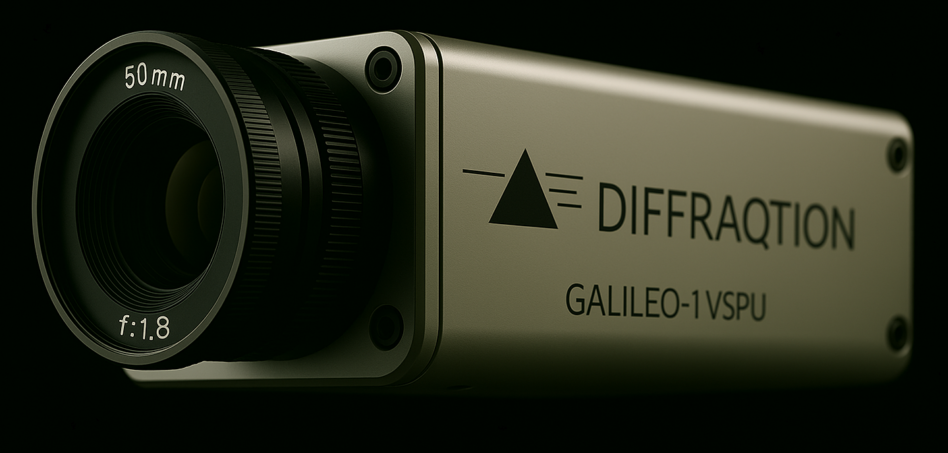
Diffraqtion is looking to see farther in space, and to understand its environment faster. The MA-based startup emerged from stealth today with a $4.2M pre-seed round.
QDNL Participations led the round, and was joined by milemark•capital, Aether VC, and ADIN. Also included in the fundraising is a $1.5M DARPA SBIR Direct-to-Phase 2 contract.
The tech: Diffraqtion is building quantum cameras for space. The cameras combine quantum imaging with AI to spot faraway objects—or, to clearly see closer objects with a much smaller lens. With this tech, Diffraqtion aims to cut down on image processing time at a dramatically lower price point than current products.
Keep reading