


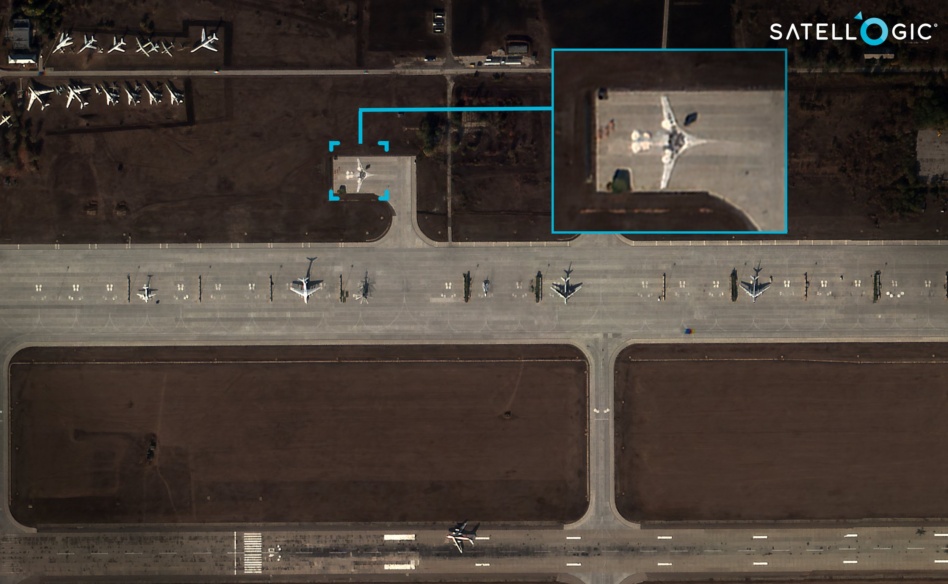
Satellogic is building an app store. The EO satellite operator today announced a partnership with SpaceKnow, the AI-powered geospatial intelligence analysis company, to build AI applications on top of Satellogic’s growing stock of satellite imagery.
The partnership reflects a fundamental shift in Satellogic’s business model, which is moving away from one-off imagery sales, and toward a data-as-a-service model. Satellogic will continue gathering EO imagery, while SpaceKnow and other partners—including SynMax—use that data to build AI applications for customers.
Like magic: The shift comes ahead of Satellogic’s planned launch of its next-gen constellation—called Merlin—which will allow the company to map the entire world at one-meter resolution. The first Merlin satellite is expected to fly in October, and the full system will come online in 2027.
Once Merlin is live, the data Satellogic gathers will be ripe for integration into AI models. Upon collection, this imagery will be tagged by Satellogic with several classification metrics, allowing third-party AI tools to ingest the data and turn the information into insights.
- Merlin’s breadth will give users the ability to monitor vast areas, and trends across the globe—think every airport, or every national landmark—and to use AI for parsing the imagery.
- The third-party integrations can customize AI analysis in ways that customers find useful, or draw analysis from more data sources—all without any heavy lifting on Satellogic’s part.
“We’re going from monitoring hundreds of points every day for our customers, to being able to just monitor an unlimited number…there’s orders of magnitude more complexity,” Satellogic CEO Emiliano Kargieman told Payload. “Our goal is to make the data that we collect as useful as possible, and to enable those applications to be built as fast as possible.”
Feeling SaaSy: By partnering with these third-party AI companies, Satellogic is drawing a line in the sand of what it can and can’t do. Satellogic can focus on collecting data, as well as building and operating satellites, without getting bogged down in building the AI tools customers ultimately want.
Through a revenue-sharing model, Satellogic can outsource the analytics to companies with a better understanding of customer end-needs, thereby keeping Satellogic’s costs competitive, while expanding its reach into new markets.
“In the end, it’s really about being able to deploy this infrastructure with the right unit economics to sustain healthy margins, and to provide data to partners and customers at a price point that drives mass adoption,” Kargieman said.
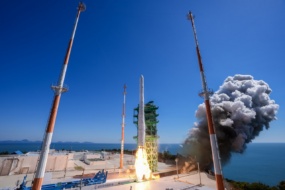
ArbaLabs Launches AI Verification Demo On South Korea’s Nuri Rocket
“In short, tons of companies are looking at the latest and greatest physical AI deployments,” ArbaLabs CEO Ashley Reeves told Payload. “Nobody is really thinking about putting some checks and balances on what these AI models are doing.”
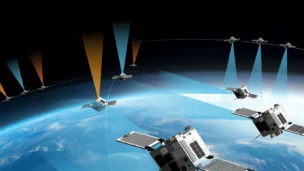
HawkEye 360 Turns its RF-Sensors to Orbital Targets
The DoD wants to better understand what’s going on in orbit. HawkEye 360 ($HAWK) has the inside scoop.

Nebex Partners with Thrusters Unlimited to Unlock $700M for Mexico’s Space Ecosystem
The capital will fund EO, telecoms and other strategic capabilities, according to Nebex.
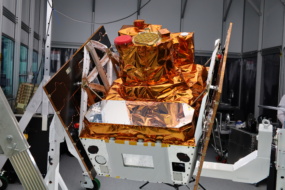
Transporter-18 Tests the Building Blocks of Orbital Data Centers
Few rideshares come with a theme, but SpaceX’s Transporter-18 had one: getting power to compute in orbit.
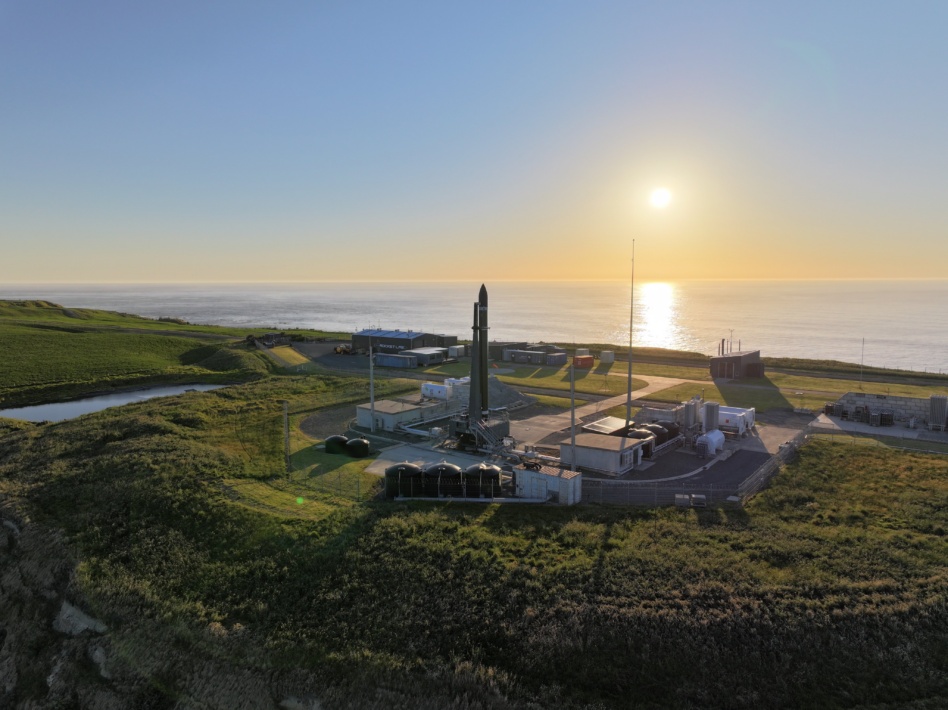
Rocket Lab ($RKLB) has been teasing its entrance into the “space applications” market for years, promising deeper vertical integration that would one day extend beyond launch vehicles and spacecraft manufacturing, and into services themselves.
Yesterday, it pulled the trigger.
Rocket Lab announced an $8B cash-and-stock deal to acquire Iridium Communications ($IRDM). The deal is partially financed by a $3.6B bridge loan from Deutsche Bank and Wells Fargo, and is expected to close in mid-2027.
Keep reading