


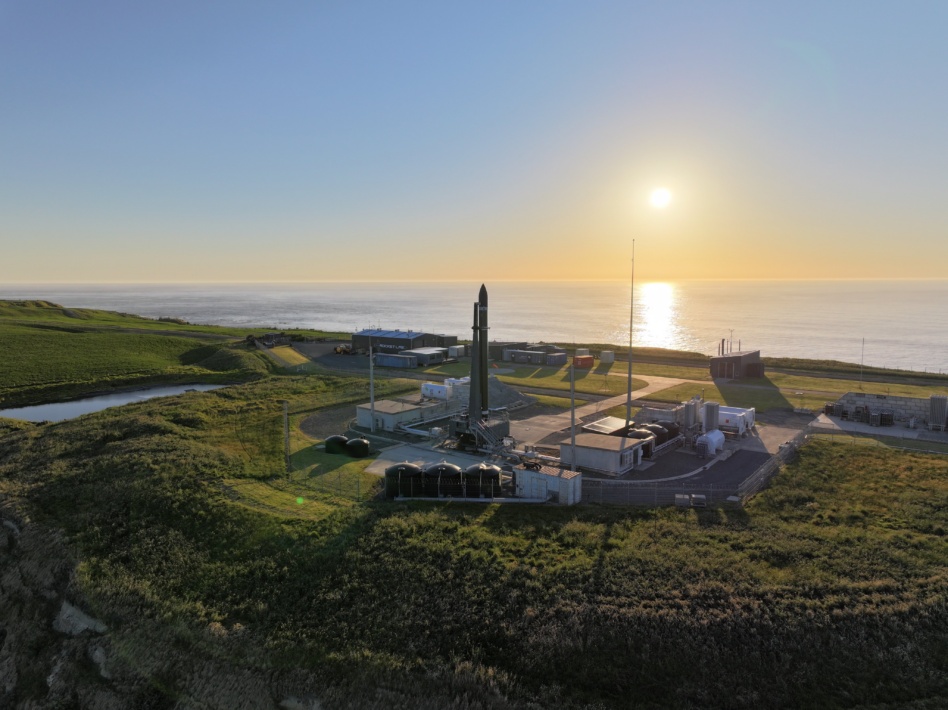
Rocket Lab ($RKLB) has been teasing its entrance into the “space applications” market for years, promising deeper vertical integration that would one day extend beyond launch vehicles and spacecraft manufacturing, and into services themselves.
Yesterday, it pulled the trigger.
Rocket Lab announced an $8B cash-and-stock deal to acquire Iridium Communications ($IRDM). The deal is partially financed by a $3.6B bridge loan from Deutsche Bank and Wells Fargo, and is expected to close in mid-2027.
The choice of a new generation: Compared with other consumer-focused satcom giants—SpaceX Starlink and Amazon Leo—Iridium holds uniquely global spectrum rights centered on the L-band. This low-frequency spectrum can penetrate clouds and harsh weather, making it the default frequency for emergency services, GPS signals, and aviation communications.
As a result, Rocket Lab is buying its way into a market with a built-in moat, and plenty of space to grow.
“It’s not the right spectrum to be going and building an internet service, but there is a lot of other things that represent really, really high value,” Rocket Lab CEO Peter Beck told Payload. “I don’t think people realize how much they’re interfacing with the L-band, and other bands sort of indirectly, so I see a huge, huge growth opportunity.”
Iridium operates a constellation of 66 satellites in higher LEO, alongside 14 spares. The constellation reportedly cost Iridium $3B to complete in 2019, and serves 2.5M+ customers around the world. But even before Rocket Lab takes over, that customer base could grow considerably.
Iridium has plans to launch two new services this year, including:
- D2D: Iridium expects to rely on narrow-band IoT tech to offer direct connectivity with consumer and industrial devices.
- Alternative PNT: Iridium is planning to offer alternative PNT capabilities anywhere on Earth, with the launch of its ultra-compact PNT chips.
Thirsty for more: With Rocket Lab in charge, Beck expects these new capabilities to compound.
Upon adding Iridium into its books, Rocket Lab will immediately more than double its revenue—for context, Rocket Lab’s FY25 revenue was $602M compared with Iridium’s ~$872M—and have hundreds of millions in additional free cash flow to expand Iridium’s technologies.
Iridium’s sat constellation could last well into the 2030s and “perhaps even out until 2040,” according to Beck. At that time the input costs for replacement—meaning, manufacturing and launch—will be greatly reduced by Rocket Lab’s vertical integration.
But Iridium also gets access to the intangible benefits of being owned by a rocket operator.
“We can literally experiment and try new things and play with stuff,” Beck said. “If you’re going to build one big constellation—one big hit—you can’t afford to take risks that you would do on a couple of satellites. On a spare Electron, you can take the risk and do the evolution and the innovation and the iteration that a normal space company really struggles to do.”

Nebex Partners with Thrusters Unlimited to Unlock $700M for Mexico’s Space Ecosystem
The capital will fund EO, telecoms and other strategic capabilities, according to Nebex.
Exclusive: Meridian Space Spins Out from SpinLaunch
“Meridian will carry forward the satcom infrastructure business… SpinLaunch will continue to build on its vision for a lower-cost approach to launch, with further applications in hypersonics to support the Golden Dome program and in the lunar economy,” Meridian Space CEO Massimiliano Ladovaz told Payload.
Rocket Lab CFO Adam Spice Predicts More M&A Deals on the Horizon
Iridium shareholders voted overwhelmingly to approve the company’s acquisition by Rocket Lab. According to Rocket Lab CFO Adam Spice, there’s more M&A on the horizon.
TRL11 Will Build Imaging Tech for SR-1 Freedom
TRL11 has received a NASA contract to provide imaging systems for the Space Reactor-1 (SR-1) Freedom mission to Mars.

Firefly Aerospace ($FLY) announced today that it aims to launch its Alpha rocket from SSC Space’s Esrange Space Center in northern Sweden as early as 2028.
The announcement is the result of years of back-and-forth between the US and Sweden:
Firefly and SSC Space have begun work on the launch infrastructure and completed multiple milestones at Esrange, including:
Keep reading