



Sceye announced today a platform designed to merge the best of space and ground comms in the stratosphere.
SceyeCELL is a custom antenna aiming to work on long-duration, high-altitude missions that can cover broad swaths of the Earth. A press release described the tech as blending the flexibility of ground-based cell networks, with the precision of LEO sats.
“SceyeCELL provides a stable, persistent layer of coverage that protects and expands networks during crises, and provides new access where it has historically been too expensive or complicated to reach with conventional technology,” Sceye CEO Mikkel Vestergaard Frandsen said in the statement.
Step back: Sceye, a US company founded in 2014, is building High-Altitude Platform Systems (HAPS) to carry out comms and EO missions from the stratosphere—a layer of Earth’s atmosphere well below the edge of space. These helium-filled, solar-powered airship-like balloons are intended to work on missions that last weeks or months.
The tech is intended to complement, not replace, existing infrastructure in-orbit and on the ground. It’s designed as a tool to ease the demand on networks, as everything from connected robotics to autonomous vehicles moves from nascent tech to maturity.
What’s next: SceyeCELL is expected to fly its first mission this summer on the company’s debut commercial test flight. HAPS will be tasked during the mission to fly from New Mexico to Japan, conducting demos focused on eventually operating during emergencies or natural disasters.

Albedo Ratchets Up the Power for its Second VLEO Flight
Albedo announced a new VLEO capable satellite bus today that’s aiming to fly the company’s second orbital mission in 2027.
The State of Satcom 2026
With SpaceX and Amazon storming into the satcom market, traditional players and startups alike are realizing they can’t compete directly with these growing giants—and are pivoting to find creative new ways to play in the crowded market.

Insurance is Commercial Space Nuclear’s Biggest Headache
Lots of challenges face commercial space nuclear missions—but experts at an industry seminar on Thursday only called one a “show stopper”—insurance.
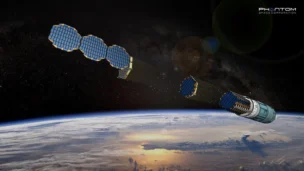
Phantom Space Acquires Thermal Management Technologies
Thermal Management Technologies builds advanced satellite thermal components for in-space applications.

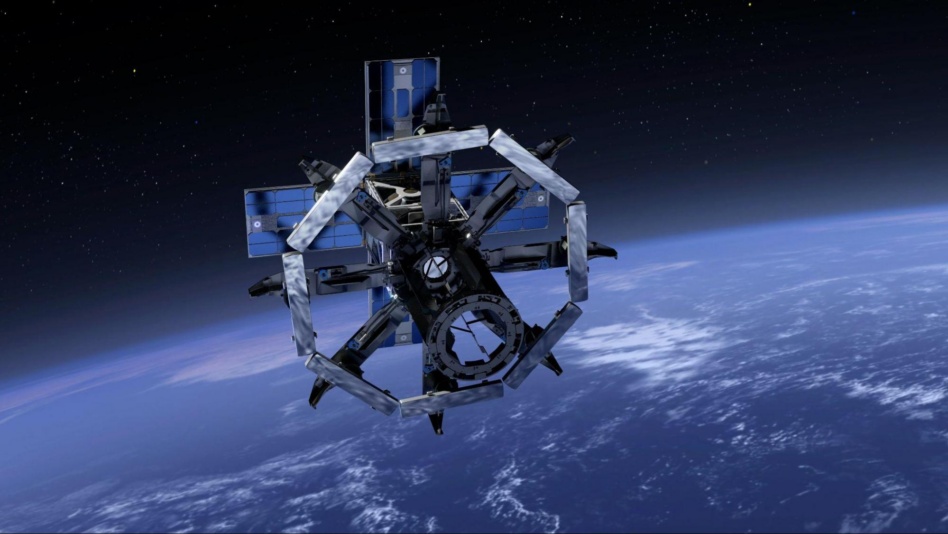
Israel-based startup Remondo unveiled plans for a super-high-resolution EO payload today, which aims to provide customers with sub-30 cm resolution imagery from LEO at prices that won’t break the bank.
Instead of increasing resolution by creating a larger mirror or a more powerful optical sensor, the company has invented what it calls a “Partial Aperture Imaging System (PAIS),” which uses a ring of smaller mirrors, a light modulator, and a coding system to create high-res digital images.
By using cheaper materials and designing the sat to fold up for launch, Remondo expects the end result to be two-to-three times cheaper than full aperture alternatives. The company believes it can eventually build, operate, and launch each sat for $2M or less, according to CEO Ido Priel.
Keep reading