



Space launch is officially in its Part 450 era.
The FAA announced Tuesday that US launchers had all transitioned to the five-year-old licensing requirements, leaving no one still operating under legacy regulations.
Context: The FAA established the Part 450 regulations in 2021 to streamline launch licensing for commercial space companies and to meet the Trump administration’s Space Policy Directive-2 requirements.
The new regulations were intended to:
- Consolidate multiple application processes;
- Allow for one license to cover multiple launch sites or missions;
- Simplify the burdensome and time consuming approval process.
Blowback: Dave Cavossa, head of the Commercial Space Federation, told Congress in 2024 that the regulation threatens to “substantially reduce the pace of innovation and progress within the domestic space sector, and impede national competitiveness with China.”
Industry has also broadly said the new regulations remain difficult to navigate. Companies have complained about a lengthy pre-approval process, prompting Congress to direct the FAA to move faster. Last year, lawmakers ordered a GAO review of whether the FAA is approving applications “in a timely manner.”
The FAA issued the first Part 450 license to Astra in 2022, but criticism continued, forcing the agency to establish a committee to review Part 450 in November 2024.
What’s next: Previous regulations and Part 450 existed in tandem for years, during a grace period that allowed existing launchers time to receive a license under the new rules. However, with the FAA’s announcement that Blue Origin, Firefly Aerospace, SpaceX, Rocket Lab, and ULA have all transitioned over, Part 450 is now the one and only law of the land.
In total, the FAA has approved 14 Part 450 licenses in the past five years.
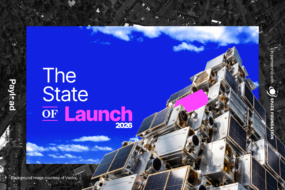
The State of Launch 2026
“You look at things like Golden Dome. There were a couple of capability gates there where you had to demonstrate capability by deadlines in order to be eligible to continue to compete,” Brian Rogers, Rocket Lab’s VP of launch, told Payload. “The constraints around launch can pick winners and losers there if you don’t have a way to get to space by a deadline.”
White House Requests $18.8B FY27 Budget for NASA
The budget proposal includes the same top line as the administration’s fiscal 2026 request, and would make similar cuts to NASA’s science and STEM missions.

Insurance is Commercial Space Nuclear’s Biggest Headache
Lots of challenges face commercial space nuclear missions—but experts at an industry seminar on Thursday only called one a “show stopper”—insurance.
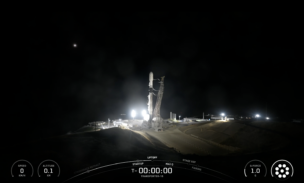
Transporter-16 Sends 119 Payloads to Orbit
The latest cargo train to orbit has left the station.
Demand in the space industry is skyrocketing—but the supply chain isn’t keeping up. Luckily, policymakers can speed things up, according to two leading industry groups.
The Aerospace Industries Association and PricewaterhouseCoopers released a report Tuesday detailing gaps in the supply chain for the space industry, and ideas for addressing those problems.
Here are some of their recommendations for the administration, and Congress:
Keep reading