


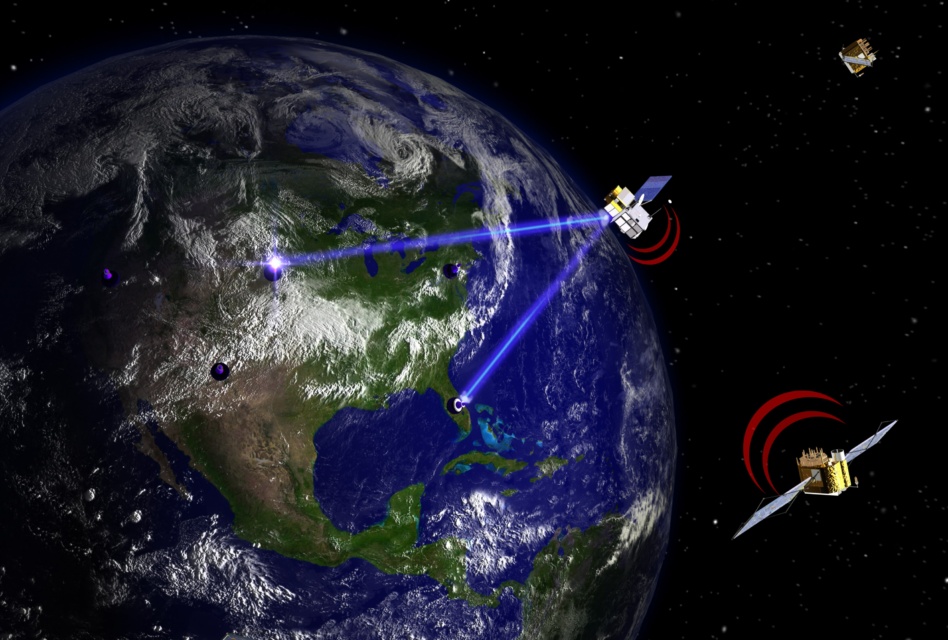
Foundational wants to turn bouncing lasers off satellites into a commercial service.
The London startup emerged from stealth today with an £8.2M ($10.8M) pre-seed round—which it says is Europe’s largest space-tech pre-seed to date.
Investors include early-stage VC firms Inflection, BACKED, and Adjacent, alongside Type One Ventures and Final Frontier, a European fund focused on defense, space, and cyber.
Origin story: Foundational CEO Hira Virdee founded SSA data company Lumi Space in 2018, which was focused on pure R&D and government projects. Last year, he partnered with CTO Dave Gooding to cofound Foundational to commercialize the tech, bringing Lumi in as a subsidiary.
“From the company formation to landing the term sheet and closing the investment was very, very quick,” Virdee told Payload. “I think a lot of that was testament to the previous work.”
Mirror, mirror: Foundational is automating and scaling satellite laser ranging (SLR), a highly precise method for measuring the distance to satellites. The company likens its accuracy to detecting a car in Edinburgh rolling forward by the width of a pencil—from a viewpoint in London.
Its system combines three pieces:
- Retroreflectors on satellites, which keep working even after a satellite dies;
- Automated ground stations that fire laser pulses at them and time the light’s return;
- A software platform that processes and delivers the data.
SLR dates back to the 1960s, but legacy stations are expensive and require staff. Foundational’s automated stations are roughly the size of two pickup trucks—meaning they can be built in the UK and deployed worldwide.
Close calls: Without precise position data, operators can end up treating a small satellite as if it were the size of a football field.
“You end up assuming something very small is very, very large just as a safety margin because you’re uncertain,” Gooding told Payload. “We’re bringing that sort of certainty to operators.”
For now, the service only works on satellites carrying Foundational’s retroreflectors, and demand is mostly commercial, from LEO navigation, in-orbit servicing, and comms operators. The company already has 16 in orbit, with about 60 more waiting to launch.
Beyond orbit: The company plans to build 10 to 20 ground stations in the coming years, with the first four or five underway across four continents. It expects to bring service online in early 2027 from its first three to four stations, which Virdee said will give it enough redundancy to track its initial demonstration satellites.
Further out, it’s working on tracking debris and satellites without reflectors, and selling derived data such as atmospheric density and space weather models.
For now, the mirrors come first. “Derived data is the bigger future business, but the space surveillance remains the bread and butter,” Virdee said.
Exclusive: EraDrive Lands $13M DoD Award For Autonomy Module
EraDrive won a $13M DoD award, under which the Space Force will buy an undisclosed number of the company’s Era-Node vision-based autonomy modules.
WarpWare Closes Pre-Seed to Bring Agentic Tools to Flight Software
CO-based WarpWare closed its $1.2M pre-seed round today to expand what it calls an AI-enabled engineering platform for space missions.

RATLOG Wants to Cut ~90% of a Rocket Engine’s Parts
The heavy-lift rocket startup debuted on Y Combinator as part of the Fall 2026 batch.

Seraphim Space Investment Trust Doubled its Value in 2026
Seraphim’s major holdings—ICEYE, ALL.SPACE, D-Orbit, HawkEye 360, and Xona Space Systems, which together represent more than 75% of the firm’s portfolio—all had a great year, and that success has trickled upwards.

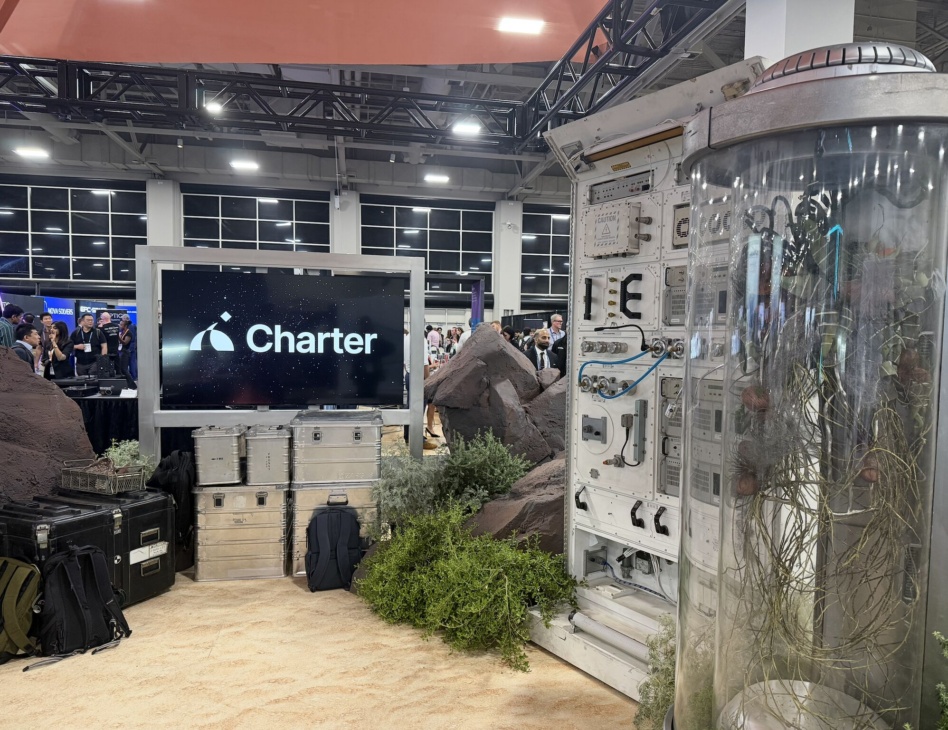
You can bundle your home and auto insurance with the click of a button, but covering your spacecraft has traditionally been a little trickier.
CA-based Charter Space is working to increase access to insurance products for companies developing new missions in space, and yesterday it announced a $5M seed round to accelerate its market traction.
Crystal Venture Partners led the round, which included participation from QED, Blank Ventures, Gaingels, Hustle Fund and others. The round brings Charter’s total financing to $8M since its founding in 2021.
Keep reading