


A new bipartisan bill introduced in the House this week would designate US space systems as critical infrastructure, offering them protection from the Department of Homeland Security.
The Space Infrastructure Act seeks to codify in statute that space assets are so vital to the nation’s economy and security that their disruption would have a debilitating impact.
“We’ve come to understand the critical nature of what this infrastructure means for our national security, for our commerce, our economy; GPS, agriculture, financial transactions, all of those things that are essential to our way of life as we know it,” Rep. Salud Carbajal (D-CA), a co-sponsor of the bill, told Payload.
Playbook: The bill, which is spearheaded by Rep. Ken Calvert (R-CA), would task the Department of Homeland Security to identify and mitigate threats facing everything from satellites and space vehicles, to ground infrastructure, production facilities, and digital architecture.
If it passes, the space sector would become the 17th designated as critical, joining the energy, financial services, transportation, and communications sectors, among others.
Will it pass? While Congress has had a hard time agreeing on the particulars of legislative actions in recent years, the bill’s bipartisan sponsors are hopeful the proposal will gain momentum.
“We might agree or disagree… when there’s a price tag on what’s entailed, and we might have a robust debate on what that means. But right now, in terms of the need to adopt this framework and move forward with this type of bill, it’s bipartisan,” Carbajal said.

State Department Taps Trio for $5M Space Diplomacy Push
At last week’s second annual US Space Forum, the US Mission to the International Organizations in Vienna launched Project Constellation, a $5M effort to build international space partnerships.

Exclusive: EraDrive Lands $13M DoD Award For Autonomy Module
EraDrive won a $13M DoD award, under which the Space Force will buy an undisclosed number of the company’s Era-Node vision-based autonomy modules.

NASA Signs Space Nuclear Pact, Says Moon Base Is Ahead of Schedule
Isaacman gave updates at the White House’s “Science: A New Golden Age Summit.”

Europe’s Space Defenses Fall Just Shy of Weaponization
Europe doesn’t have any weapons in space—but that doesn’t mean the region is comfortable flying around in orbit defenseless.

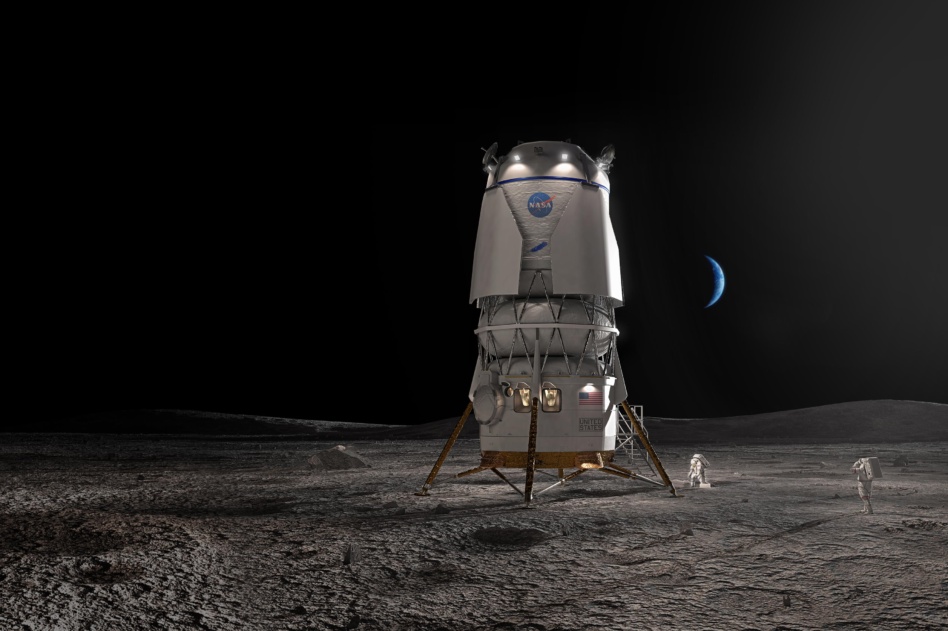
Space CEOs outlined how their tech would help the US explore Mars amid the Trump administration’s focus on the Red Planet during remarks at the Commercial Space Conference on Wednesday in DC.
Dual use: Blue Origin is developing its Blue Moon lander to reach the lunar surface—but CEO Dave Limp said Blue Moon could become Blue Mars pretty easily. Everything from engines to the tech to refuel in orbit could be reused for a crewed or cargo mission to Mars, Limp said.
“We’d have to modify things. If you think about a transit to Mars, it’s a much longer journey,” he said. “But I think modifying some of these systems is not as heavy a lift as some people think.”
Keep reading