


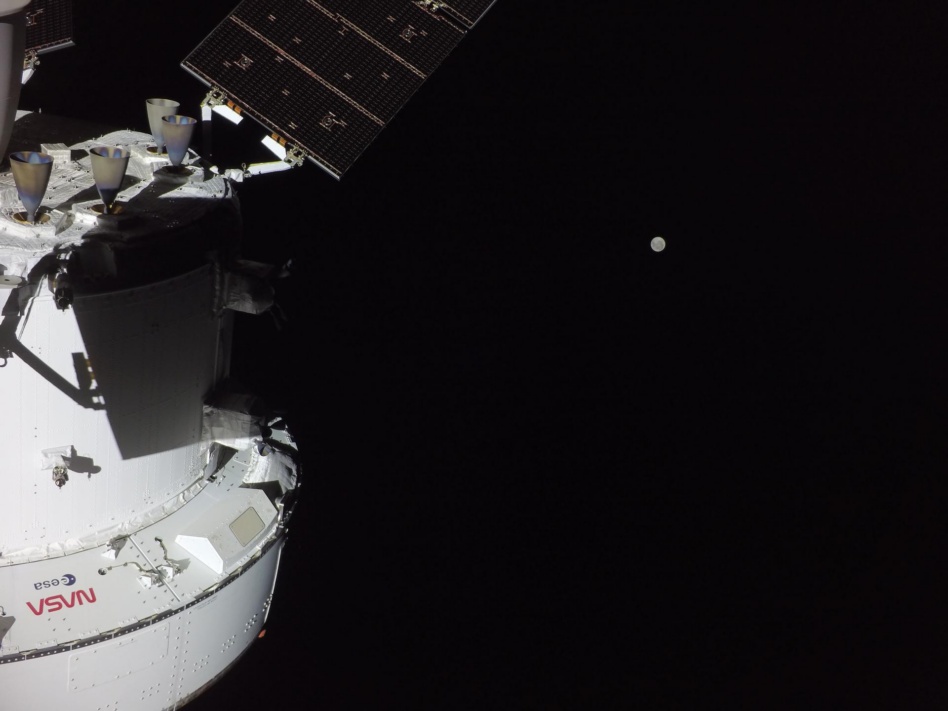
The US is bringing people back to the Moon—but this time, those of us stuck on Earth will get a better view.
Redwire has built 11 cameras that are installed around the inside and outside of the Orion capsule, Kaylee Geidel, a senior systems engineer at Redwire, told Payload.
- Interior cameras will give viewers a peek at what the crew sees out their window, and on their instrument panel.
- Exterior cameras will show some milestones of the flight, such as when the crew vehicle separates from the service module, the status of the heat shield during reentry, and the release of the parachutes before splashdown.
- Cameras will also be stationed at the end of each solar array. These will take “glamor shots” of the Moon and Earth, plus selfies of the vehicle.
- All cameras will be able to capture both still images and video in high resolution, although some of the best quality footage will be available after the flight has finished due to deep-space bandwidth considerations.
Dual use: Anyone who has seen the Earthrise image snapped during Apollo 8 in 1968 knows firsthand the value of space imagery. A generation of people were inspired by the photographs that came out of the Apollo program—and there’s hope that pics collected by Redwire’s hardware will do the same for the Artemis generation.
But, the photos aren’t just for PR, Geidel said.
“It’s about 50/50,” she said of the split between sharing the mission with the public, and mission requirements. “Every single camera on the vehicle has a specific engineering purpose, like inspecting the vehicle or watching some critical event. The PR comes afterwards. Once we decided what cameras were necessary to see key events, we thought about, ‘what other cool images can they get?’”
One camera can also be used for optical navigation—collecting high-res images of the Earth and Moon throughout the mission, to help the astronauts determine their position if they lose contact with Earth.
What’s next: What’s more exciting than seeing a fly-by of the Moon in real time? Live images of astronauts on the lunar surface for the first time in decades, during Artemis III.
Redwire will be on that mission as well—and luckily, already has experience capturing images from the surface. Its cameras captured photos on Firefly’s Blue Ghost flight and Intuitive Machine’s missions—all flown under NASA’s CLPS program.
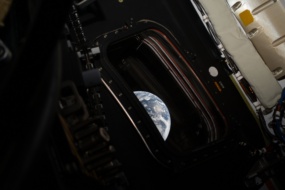
Artemis II Supplier Series: Orion’s Windows
For astronauts who put in decades of work and training, getting to see space with their own eyes is a big part of the payoff.

CLPS Companies Excited For NASA’s ‘Opportunity Bomb’ Lunar Plan
Last week, NASA laid out a vision for a lunar base that’s built and supplied through monthly uncrewed lunar landings, with launches beginning as soon as next year.It’s no surprise that CLPS companies are raring to go.

Artemis II Is On The Way To The Moon
NASA astronauts Reid Wiseman, Christina Koch, and Victor Glover, plus Canadian Space Agency astronaut Jeremy Hansen, are on board—with Koch and Glover poised to make history as the first woman and person of color to head to the Moon, and Hansen as the first non-American.

Top Space Lawmaker on Moon Base, Artemis Plans
“What I have heard from colleagues is they’re really rallying behind the idea of going to the Moon,” he told Payload. “Once we establish a base there…that might be the best place to launch to Mars.”


With SpaceX and Amazon storming into the satcom market, traditional players and startups alike are realizing they can’t compete directly with these growing giants—and are pivoting to find creative new ways to play in the crowded market.
Satcom was once a slow-moving, walled-off industry. It used to be protected by high capex requirements and partnership models, with limited consumer choice. But today the sector is experiencing a groundswell of new constellations that are making satcom seem easy.
Billionaire-funded constellations with D2C business models, as well as seemingly unlimited capital and launch capabilities, are on the verge of rapid growth. SpaceX Starlink and Amazon Leo aren’t just headed to the consumer market, however. Both companies have begun doing business with enterprise and government customers, forcing traditional satcoms to reevaluate their competitive postures.
Keep reading