


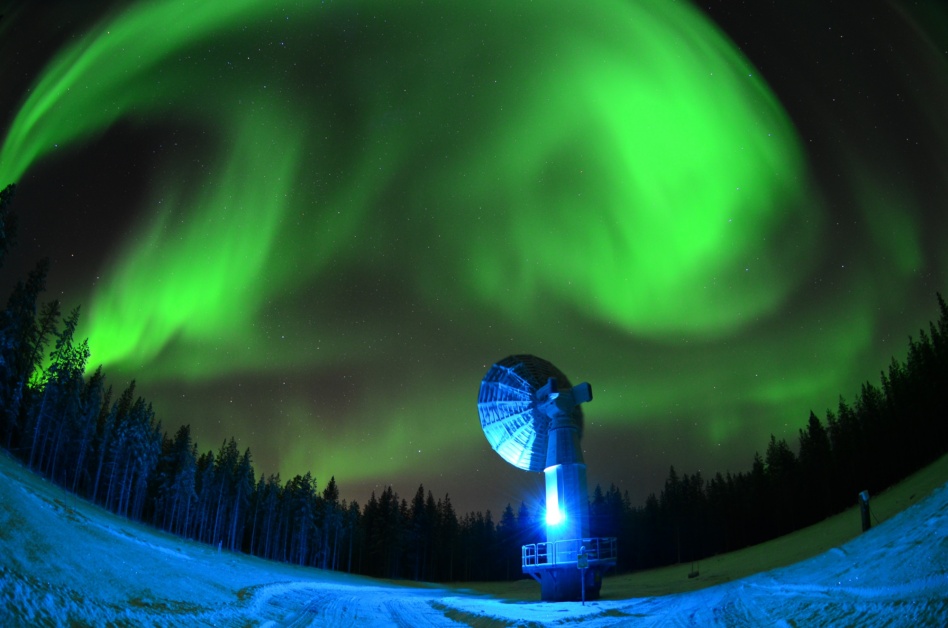
Finland’s space industry has a lot going for it. Less than 10 years after launching its first satellite, and with a population of less than 6M people, the country has stood up a highly competitive space sector—one that stands to support many of Europe’s ambitious goals for space in the years to come.
It’s not luck. Finland has invested strategically in its space sector to build a uniquely powerful set of capabilities that have become ideal candidates to support Europe’s broader push for sovereignty and security from space.
Payload spoke with leaders from some of the country’s biggest space companies—ICEYE, Kuva Space, and ReOrbit—to learn what’s behind the country’s rapid rise. The overwhelming sentiment was that technical skills, government support, and favorable geopolitical conditions have combined to set the country on its strong upward trajectory.
The strategy: Despite its size, Finland was able to set itself apart by focusing investment in subsectors of the space economy where it could stand out. The country benefits from decades of engineering and RF expertise fostered by local telecom Nokia, but its space sector truly kicked off in 2017 with the launch of its first satellites Aalto-1 and Aalto-2.
On the team developing these inaugural satellites were future founders of the country’s most prominent space firms: ICEYE and Kuva Space.
In the years since, those companies have driven Finland’s targeted approach. While other European nations aim to build end-to-end space industries, Finland has focused on doing a few things well.
In its Space Strategy 2030, the country set out to identify areas Finland needed to be self-sufficient in orbit. Those capabilities, it seems, are next generation EO capabilities, AI, and data applications, and ground stations.
At the latest ESA ministerial budget meeting in November, Finland upped its contribution to ESA by 59%, from €147M in 2022 to €233M in 2025, investing mainly in programs focused on EO, security, and telecommunications.
And private investors are throwing their weight behind Finnish ventures:
- In December, ICEYE closed a €150M Series E round, putting the company’s total funding above €600M.
- The same month, Kuva Space raised €9M, putting the company’s total capital raised to €31M.
- In September, ReOrbit raised a €45M Series A.
Rising to the occasion: Finland’s growth isn’t just the result of good business, the country has benefited massively by leaning into the shifting geopolitical landscape that’s put the Arctic region in greater focus, and driven many of its neighbors to field new defense hardware.
“The geopolitical shift has been transformative for us,” ReOrbit CEO Sethu Saveda Suvanam told Payload via email. “The Nordic position is particularly strong because many countries are looking for alternative space systems from neutral countries.”
ICEYE has been the biggest winner of defense contracts in the country, and has sold a series of sovereign solutions to national governments looking for SAR capabilities of their own—most notably when the company partnered with Rheinmetall to win a €1.7B defense contract from the German military.
Nearby Kuva Space is also reorienting its technology to support defense applications, and CEO Jarkko Antila told Payload that the next generation of its hyperspectral satellites are being built with AIS receivers to better detect dark vessels.
Beyond defense, Finland is driving forward other critical technologies that will be central to the future of the space industry. As of 2025, the country received more than 10 applications to host ground station operators, setting up reliable downlink services in the region at a time when data capacity is straining.
The country is also attempting to carve out a spot in the future of space-based data economy, most recently with ReOrbit’s announcement of a partnership with Google Cloud to build a network of satellites with quantum key distribution, optical terminals, edge processors, and D2D capabilities.
Bottom line: Finland’s success is a blueprint for how small nations can carve out a space in the growing orbital ecosystem for themselves. It’s leaning into what it does best, and has leveraged its geographic location to benefit the space ambitions of its allies.
Update: This article was updated to clarify Kuva Space’s fundraising and AIS receiving tech.
With Artemis Changes, Europe is Left Holding the Bag
ESA and European space primes were developing many of the key components of the planned lunar orbiting station.
Arkadia Space Secures €14.5M to Develop New Biprop Engine
Spanish propulsion startup Arkadia Space just secured a stamp of approval from the European Investment Council.
PAVE Space Raises $40M for In-Space Propulsion Tech
PAVE’s propulsion systems rely on a storable rocket bipropellant, which aims to make launch operations simpler and more cost-effective, compared with cryogenic fuels.

Inside Austria’s Small But Mighty Space Ecosystem
Austria’s space industry is in the midst of a renaissance, with bigger funding deals and more startup activity.

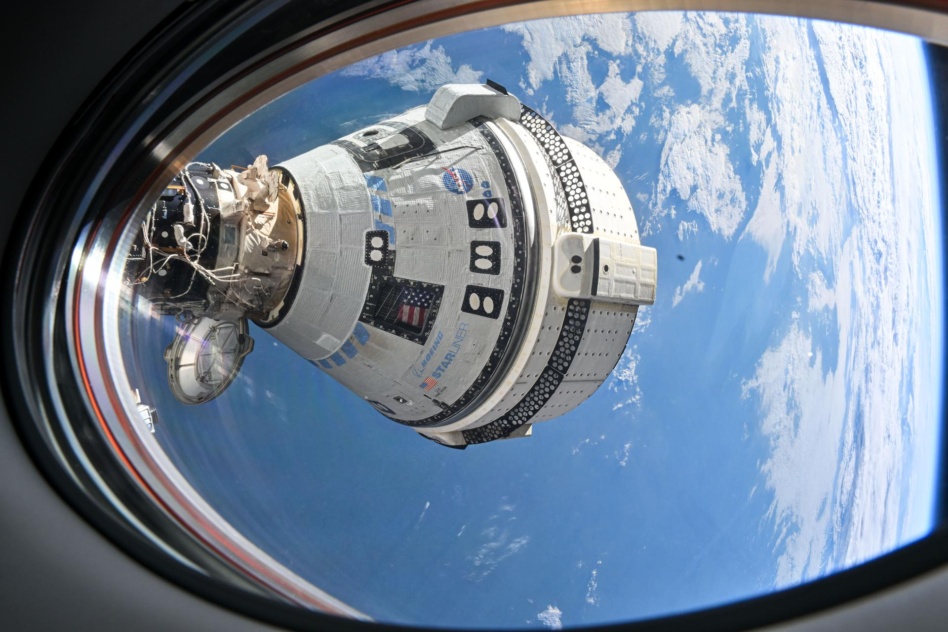
NASA failed to protect two astronauts during the debut Boeing Starliner astronaut flight that launched in 2024, senior agency management said Thursday.
“The most troubling failure…is not hardware. It is decision-making and leadership that, if left unchecked, could create a culture incompatible with human spaceflight,” NASA Administrator Jared Isaacman said during a livestreamed press conference.
“The agency failed [the astronauts],” added Associate Administrator Amit Kshatriya. (Both Isaacman and Kshatriya were not in their positions at the time of the flight.)
Keep reading