


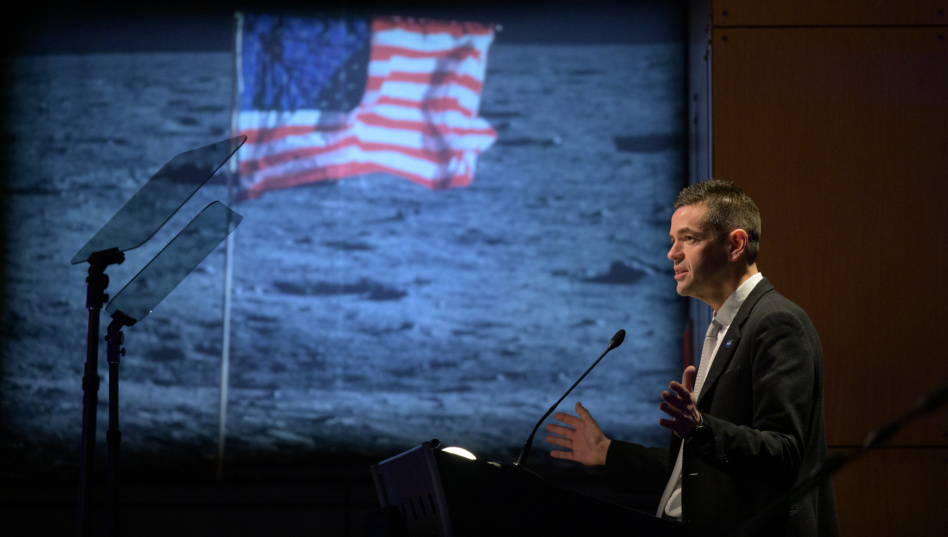
WASHINGTON—NASA Administrator Jared Isaacman has one message: Get in, we’re going to the Moon.
Isaacman travelled around the nation’s capital this week, delivering this same message to different sectors of the space community, including NASA’s industry and international partners, Silicon Valley tech execs, and officials focused on the agency’s global-soft-power capability. Reactions are mixed, but one thing is clear: Isaacman’s NASA is making big shifts to change the conversation.
Century club: Isaacman will mark his 100th day on the job on Saturday. After taking office in December, he kicked off a listening tour to visit centers and hear from employees. Once that was done, he wasted no time—and made no apologies—for shaping the agency into his mold for success.
In his first 100 days, Isaacman has announced many efforts, including:
- A shift in NASA’s workforce strategy, to cut the agency’s reliance on contractors;
- A new timeline for the Artemis program, including flying more often and pushing a crewed surface landing to NET Artemis IV;
- Plans for a lunar base, a fleet of Mars copters delivered by nuclear power, and dramatic shifts to procurement programs including CLPS, LTV and CLD—all part of a marathon day on Tuesday in which NASA officials spent more than eight hours laying out the new path forward.
Isaacman also spoke about each of these efforts—publicly and to press—marking what is hopefully a new era of transparency for the agency that has been less-than-forthcoming in recent years.
Messaging tour: Isaacman hit three events in DC this week, selling his new vision for NASA to keep stakeholders across different sectors of the industry.
At the full-day NASA Ignition event on Tuesday, Isaacman tried to sell the NASA workforce and industry execs on his bid to make the impossible happen—both to inspire the next generation, and to beat China to the Moon. To do so, he stripped away programs NASA has taken on over the years—missions that spread the agency thin trying to “satisfy every stakeholder,” according to Isaacman—to focus the agency’s money and talent on accomplishing “the headlines only NASA is capable of making.”
“Now we find ourselves with a real political rival,” Isaacman said. “They may be early, and recent history suggests we might be late. This is why it is imperative we leave an event like Ignition with complete alignment on the national imperative that is our collective mission.”
After his opening remarks, Isaacman sat on stage while senior NASA officials delivered what they framed as exciting plans for the future, intermingled with bluntly delivered blows to programs that didn’t fit into that vision. Isaacman left only to speak at the Hill and Valley Forum, where he pitched his plans to a very different audience.
At the forum, he played up the national security implications of NASA not winning Space Race 2.0. If NASA can build a lunar base, he said, other nations will believe there’s nothing the US can’t do—and will think twice about provocations as a result. If the agency fails, however, adversaries may wonder where else the US is failing.
“Like it or not, NASA has a role to play in national security,” he said.
The next day, Isaacman addressed a diplomacy-focused global audience—at the smallest, most intimate gathering of his week—at the Meridian Space Diplomacy Forum. He highlighted the importance of the Artemis Accords, and the ”essential” lunar base contributions expected from allies.
“This is how we ensure that, as we return to the Moon and beyond, we do it together and we do it for all mankind,” he said.
Chatter box: Isaacman’s remarks this week were the subject of nearly every conversation had on the sidelines of the Satellite conference in DC. While specifics of those conversations remain off the record, these were some of the big themes we heard.
Many space leaders seemed cautiously optimistic—excited about the urgency and the grand plan, but also keenly aware that Isaacman’s announcement was only the first small step in a long line of things that would need to go right to take his Moon-base vision from rendering to reality. From securing the required budget, to getting congressional buy-in, to surviving potential political shifts, NASA has a long road ahead—and that’s not even considering the technical challenges.
Others, however, were less than thrilled about the dramatic changes—and the way they were shared. NASA announced the day-long meeting for the Ignition event on March 19, with less than a week’s notice. Some in industry felt they’d had the rug pulled out from under them, spending months or years investing in manufacturing and staff to meet demand from NASA, only to have things shift—in some cases very close to the finish line.
One space official said some in industry had taken to calling it the “Artemis ambush.” And major questions remain about how NASA’s international partners for Artemis will fit into the new lunar push, especially how tech for the paused Gateway program will fit into surface operations.
The bottom line: One common sentiment shared among nearly everyone we talked to: WTF?
It’s still early days, and everyone is still trying to parse through what this means for them. While some execs were left with their heads spinning on how to navigate the new landscape, many acknowledged that the short-term confusion would likely lead to long-term gain—and skyrocketing demand if NASA actually buys what’s needed to build the lunar base.
The next step to seeing how much of Isaacman’s vision can become a reality? The drop of the agency’s FY2027 budget request, expected next week.
Lawmakers Question NASA’s Shifting Vision for CLDs
NASA Administrator Jared Isaacman proposed a new plan for America’s human presence in LEO that left many lawmakers scratching their heads.
Commerce Unveils One-Stop Licensing Proposal For Novel Space Missions
The plan is the latest step in the years-long saga surrounding mission authorization—or which agencies have regulatory authority over novel space missions that don’t fit into the existing framework.
NASA Priorities Get a Major Makeover
NASA Administrator Jared Isaacman had a vision for a robust, commercially driven lunar economy, supported by surface infrastructure. Now, he also has a plan.

SpaceX v. Amazon Heats Up at the FCC
In a world where regulatory filings can feel dull and dry, this case brings the drama—and the snark. Let’s walk through how these two satcom mega constellations are publicly dueling in a governmental arena.

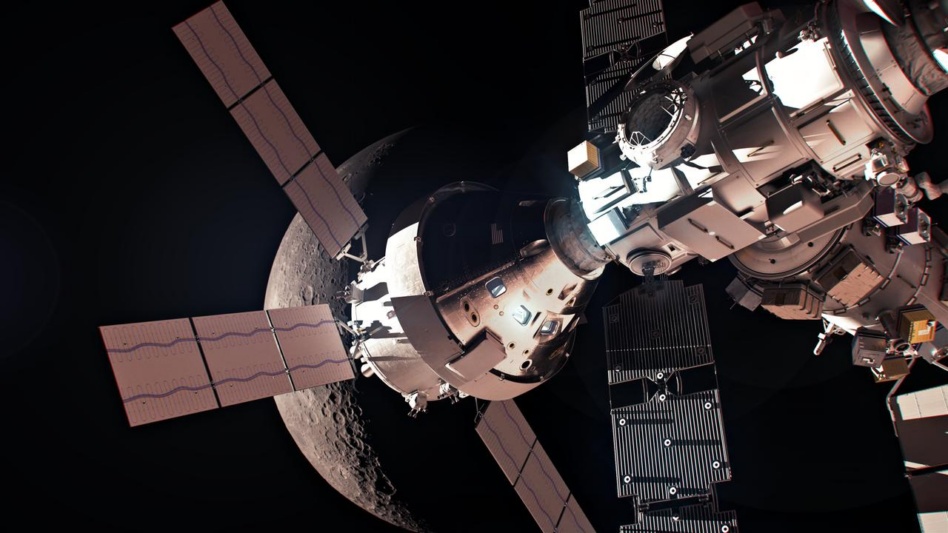
NASA Administrator Jared Isaacman this week proposed widespread changes to the Artemis program—at the expense of years of hard work, and millions of euros invested by the European space sector into the lunar Gateway station, which is now no longer part of the US lunar return plan.
While several international partners contributed hardware to Gateway, ESA and European space primes were developing many of the key components of the planned lunar orbiting station, including:
Collectively, these projects cost Europe hundreds of millions of euros—with big contracts going to Thales Alenia Space, Airbus, Redwire, and Beyond Gravity. Now, international partners are thinking about how their investments can contribute to NASA’s lunar base plans.
Keep reading