


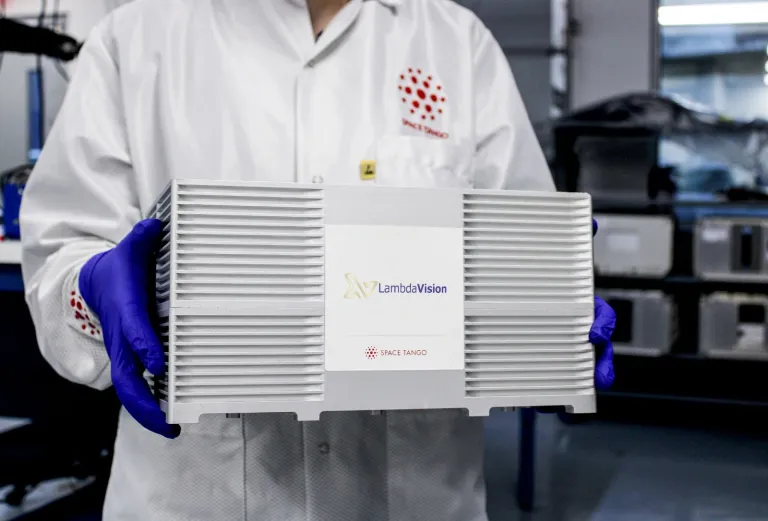
LambdaVision is preparing for its post-ISS future.
The company, which manufactures artificial retinas in LEO, announced on Tuesday that it had pre-booked manufacturing time and space onboard Starlab Space’s yet-to-be-launched commercial space station.
“Their reservation with Starlab enables the transition from demonstration to scalable, sustainable manufacturing, unlocking exponential growth while delivering meaningful benefits to patients on Earth,” Starlab Chief Scientist Luis Zea said in a statement.
LambdaVision 101: The company, which closed a $7M seed round in November, has flown nine missions to the ISS. On the orbiting lab, LambdaVision honed its process of manufacturing artificial retinas in zero gravity to help people on Earth. Working in microgravity allows the company to build a higher-performance membrane with increased stability, compared to what can be manufactured on the planet.
“This partnership with Starlab will allow us to continue to build on the significant momentum we have created toward our long- and short-term goals of leveraging LEO for both advancing our protein-based artificial retina toward commercialization and laying the groundwork for other potential commercial efforts in LEO,” LambdaVision CEO Nicole Wagner said in a statement.
Next steps: LambdaVision isn’t the first to announce it will fly on a future commercial space station (Vast announced the customers that would fly on Haven-1 last year). But as LambdaVision is a long-term experimenter on the ISS, and said it would sign up with a commercial station to scale its commercial product, the company’s commitment marks a significant step towards a future in LEO driven by private entities.
We still have a few years until the ISS meets its fiery demise, when it is set to deorbit around 2030. We’re expecting more and more companies to make post-ISS retirement plans to continue their research—thus moving from demos, to manufacturing market-ready products.
Voyager and Icarus Team Up on ISS Robotics Demo
The pages of the ISS manifest are starting to look a lot like those of a sci-fi novel.
Transporter-16 Sends 119 Payloads to Orbit
The latest cargo train to orbit has left the station.
Lawmakers Question NASA’s Shifting Vision for CLDs
NASA Administrator Jared Isaacman proposed a new plan for America’s human presence in LEO that left many lawmakers scratching their heads.
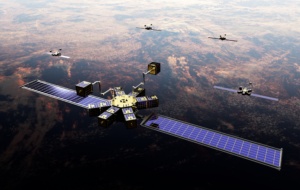
Symphony Space Unveils Adagio Hosted Payload Platform
Symphony Space is building a new model for hosting payloads—one where the satellite remains in orbit and the payloads come and go.

Sceye announced today a platform designed to merge the best of space and ground comms in the stratosphere.
SceyeCELL is a custom antenna aiming to work on long-duration, high-altitude missions that can cover broad swaths of the Earth. A press release described the tech as blending the flexibility of ground-based cell networks, with the precision of LEO sats.
“SceyeCELL provides a stable, persistent layer of coverage that protects and expands networks during crises, and provides new access where it has historically been too expensive or complicated to reach with conventional technology,” Sceye CEO Mikkel Vestergaard Frandsen said in the statement.
Keep reading