


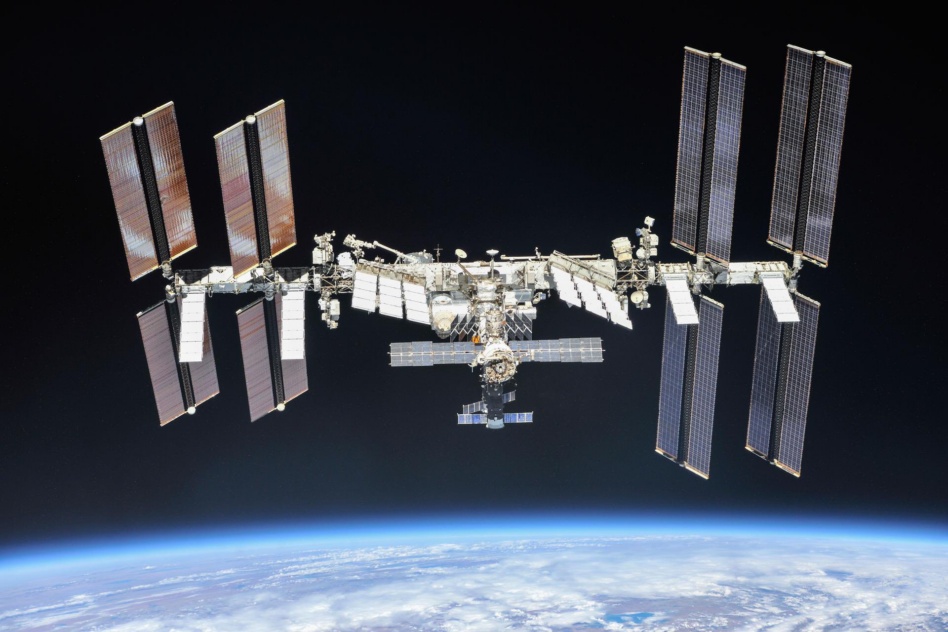
NASA Administrator Jared Isaacman proposed a new succession plan for America’s human presence in LEO that left many lawmakers scratching their heads.
During an event at NASA HQ this week, agency officials laid out a new vision for the transition from the ISS to Commercial LEO Destinations—one that could potentially upend many CLD deployment plans already underway.
It’s just a phase: NASA intends to acquire a new core module for the ISS that can provide power and life support to commercial segments that dock with it. The idea is to take a phased approach to the development of commercial modules, which could then detach with this core module at the end of the ISS’ life.
The aim of the new plan is to avoid a situation that ends with a single CLD provider, according to Joel Montalbano, NASA’s acting associate administrator for space operations. By providing a core module to host up to two commercial modules, NASA could help speed up the development of commercial capabilities and transition some of the science onboard the ISS to the modules before its demise, according to Montalbano.
But the proposal doesn’t seem to have many immediate fans in the commercial sector, nor in the halls of Congress. Yesterday, the House Committee on Science, Space, and Technology tried to get to the bottom of the new plan in a hearing that turned into a debate about the economic viability of a commercial LEO economy.
Facts and figures: The hearing began with criticism of NASA’s inability to articulate and stick to a clear vision for CLDs.
“[NASA’s announcement] is sowing concern, and really sowing confusion, among the commercial space companies I represent,” said Dave Cavossa, president of the Commercial Space Federation, a non-profit advocacy group representing many CLD providers. “[It] reminds me of sort of Lucy and Charlie Brown with the football.”
From NASA’s perspective, the LEO market that was predicted when the agency established the CLD program—including for space tourism and commercial research—hasn’t materialized.
“The path that we’re on results in a single provider being awarded the next CLD,” Montalabano said. “In our opinion, that’s a very risky approach.”
Montalbano also pointed to NASA experience with private astronaut missions and full-cost commercial payload programs on the ISS—both of which have struggled to fill up manifests due to cost. The commercial sector, however, disagrees, and Cavossa offered up ample evidence for CLD demand.
“In the last six months alone, the industry has raised over a billion dollars in private capital—and several billions of dollars over the last several years,” Cavossa said. “My member companies have shared recent news that they are already ‘sold out of commercial [rack space]’ on their future stations.”
Cost cutters: The hearing also surfaced opposing perspectives on the commercial sector’s ability to cut costs compared with the ISS, which runs the government ~$3B a year.
“Today, we spend approximately $2B a year on transportation alone. Any space station is going to have those same costs,” Montalbano said.
Rep. George Whitesides (D-CA) ultimately pushed back on this idea, pointing to SpaceX’s ability to decrease costs across the human spaceflight program, but the back-and-forth ended without a clear conclusion.
What’s next: NASA hasn’t cancelled its current CLD plans just yet. The agency will put out an RFI to explore its new approach, which could result in an RFP as early as June. But lawmakers remain concerned about what they see as a whiplash approach, by the Trump administration, for America’s space ambitions.
“Companies raised probably in excess of $2B in private capital, and did so on the expectation that NASA would kind of follow through,” Whitesides said. “My concern is that if NASA is not a reliable partner for private investors, we’re not going to get that money, and we’re not going to save them money by being able to cost-share with the private sector.”
Commerce Unveils One-Stop Licensing Proposal For Novel Space Missions
The plan is the latest step in the years-long saga surrounding mission authorization—or which agencies have regulatory authority over novel space missions that don’t fit into the existing framework.
Symphony Space Unveils Adagio Hosted Payload Platform
Symphony Space is building a new model for hosting payloads—one where the satellite remains in orbit and the payloads come and go.

SpaceX v. Amazon Heats Up at the FCC
In a world where regulatory filings can feel dull and dry, this case brings the drama—and the snark. Let’s walk through how these two satcom mega constellations are publicly dueling in a governmental arena.

FAA Ends Part 450 Transition Period
The FAA announced Tuesday that US launchers had all transitioned to the five-year-old licensing requirements, leaving no one still operating under legacy regulations.

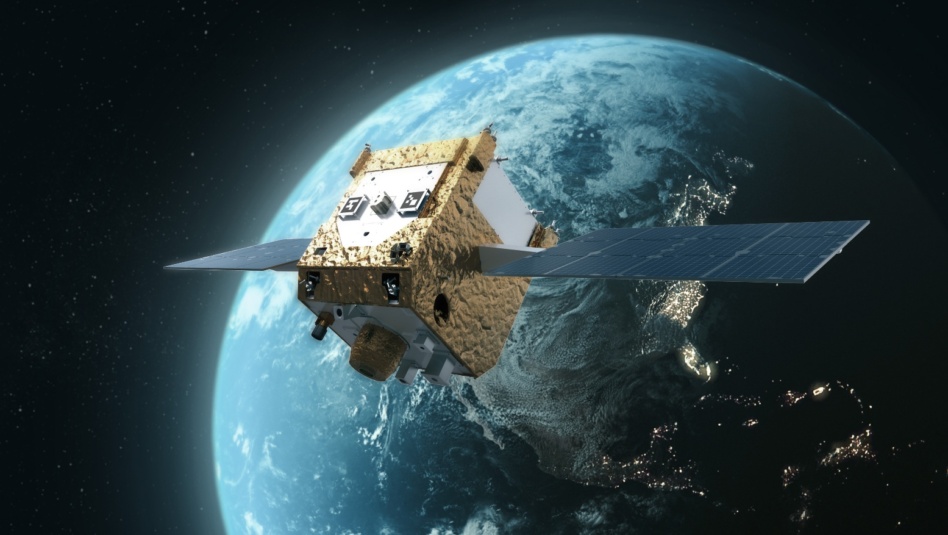
The Commerce Department unveiled its proposal for a streamlined licensing process, with a single application needed for those looking to reach orbit.
The plan is the latest step in the years-long saga surrounding mission authorization—or which agencies have regulatory authority over novel space missions that don’t fit into the existing framework.
How we got here: Multiple administrations have now tried to answer the question of mission authorization. In 2023, the Biden administration’s National Space Council released its proposal for regulating novel space activities, which split authorities between two departments.
Keep reading