


SDA startup LeoLabs will integrate its data on orbital objects within the Space Force’s “Unified Data Library,” under the terms of a new contract from the Office of Space Commerce (OSC) and the Space Force.
Under the agreement, LeoLabs will provide not only its full public catalog of orbital observations—which covers 99.3% of the objects tracked by the DoD’s public catalog—but also radar observations, object state updates, and maneuver detection data. OSC will evaluate how to integrate this data into its TraCSS space traffic management tool to extend LeoLabs’ orbital alert capabilities to the commercial sector.
Contract bonanza: The agreement is the latest in a string of contracts LeoLabs secured from the US government, to build out its SDA capabilities. In 2025, LeoLabs has won $29.4M in government contracts through September, according to LeoLabs, including:
- The TraCSS Commercial Collision Avoidance Gap Pathfinder initiative, which tasks SDA companies with tracking satellites immediately after launch when collision risks are higher.
- A Space Act Agreement to provide NASA with SDA and radar data to improve an agency program relating to conjunction risk analysis and assessment.
- Two SpaceWERX contracts to develop and deploy ground-based radar systems in the Indo-Pacific region, and to track orbital objects and foreign launches.
Buy, don’t build: These contracts are examples of the US government’s increasing willingness to lean on the commercial sector for critical space-based capabilities. An EO signed by President Donald Trump in April, directs federal government acquisition leaders to prioritize commercially available products over custom-developed alternatives.
Yet today’s announcement could also represent an about-face concerning the Trump administration’s perception of TraCSS. In July, the administration attempted to terminate the program entirely, but now it’s getting a leg up.
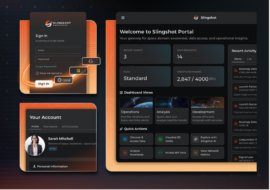
Slingshot Introduces AI-Powered Portal Platform
Slingshot Aerospace introduced a new platform today that will allow operators to spot anomalies—and make decisions—in an AI-powered, one-stop-shop.
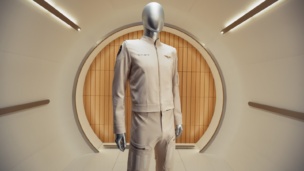
Exclusive: Vast Debuts Flight Suit For Haven-1, Private Astronaut Missions
Cargo pants are so back.
Transporter-16 Sends 119 Payloads to Orbit
The latest cargo train to orbit has left the station.
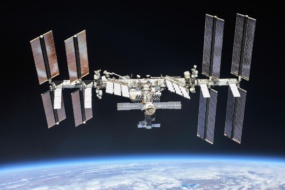
Lawmakers Question NASA’s Shifting Vision for CLDs
NASA Administrator Jared Isaacman proposed a new plan for America’s human presence in LEO that left many lawmakers scratching their heads.


No air on the Moon? No problem.
A multinational project aiming to extract oxygen from lunar soil received £410,000 (~$294,000) from UKSA last week.
The goal is not only to help astronauts breathe, but also to create rocket fuel. Should the tech prove out, future Artemis Moon missions can ship less air and fuel for astronauts—leaving more room for equipment for sustainable lunar living.
Keep reading