



No air on the Moon? No problem.
A multinational project aiming to extract oxygen from lunar soil received £410,000 (~$294,000) from UKSA last week.
The goal is not only to help astronauts breathe, but also to create rocket fuel. Should the tech prove out, future Artemis Moon missions can ship less air and fuel for astronauts—leaving more room for equipment for sustainable lunar living.
Gassing up. The project is called OXYGEN and includes a coalition of partners led by Added Value Solutions (AVS)-UK and the University of Glasgow. There are two goals:
- To get oxygen production working using “lunar-like materials” (which helps practice for the real stuff);
- To collect and transfer the samples using advanced systems.
Luckily, there’s expertise in the project based on previous work from ESA, which has a prototype oxygen plant in the Netherlands. In 2020, for example, ESA, Glasgow, and UK company Metalysis extracted oxygen from simulated Moon dust using “molten salt electrolysis” (also our new band name).
Simply put, the researchers placed regolith—laced with calcium-chloride salt—into a metal basket, heated the whole thing to 950 degrees Celsius, and used an electrical current for extraction. And work continues on the project in 2025: OXYGEN partner Carleton University in Canada is developing a new molten-salt electrolysis reactor to strip the oxygen from lunar soil, the university stated.
Building to stay: The program is part of many technologies aiming to help Artemis astronauts stay on the lunar surface for weeks. Other entities are working with nuclear power, comms tech, and waste recycling to bring “reduce, reuse, recycle” ideas Moonside.
If the oxygen tech works as planned, there’s a side benefit: breaking down regolith may give access to valuable elements like silicon, titanium, aluminum, and iron. Glasgow researchers previously said these elements could be used for lunar construction, such as in powders for 3-D printing on site.

European MNOs Join Forces to Explore Joint MSS Spectrum Bid
Deutsche Telekom, Telefónica, Orange, and Vodafone plan to establish ground network infrastructure across Europe, and partner with an as-yet undetermined satellite operator for the D2D connection.
National Academies Rank Nonpolar Moon Sites
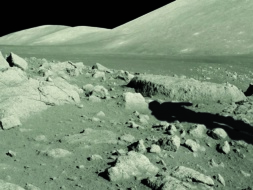
A new report from the National Academies ranks the top four non-polar sites for future crewed lunar missions.
Hewlett Packard Enterprise to Send AI Compute Module to the Moon
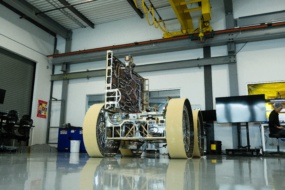
Hewlett Packard Enterprise ($HPE) is taking remote working to a whole new level.

Seraphim Space Investment Trust Doubled its Value in 2026
Seraphim’s major holdings—ICEYE, ALL.SPACE, D-Orbit, HawkEye 360, and Xona Space Systems, which together represent more than 75% of the firm’s portfolio—all had a great year, and that success has trickled upwards.


The next generation of companies heading to the Moon are going in search of water—a requirement for setting up shop long term on the lunar surface. Japanese lunar infrastructure company ispace has just notched a new partnership in service of that goal.
Last week, ispace announced a partnership with Kurita Water Industries, a company that focuses on water extraction and treatment.
“The search for and utilization of water resources on the lunar surface is essential to support the development of the cislunar economy that ispace envisions,” Takeshi Hakamada, CEO of ispace, said in a release. “We are confident that the fusion of ispace’s lunar transportation and operations technology with Kurita Water Industries’ advanced water resource and treatment technology will pioneer new possibilities for the space industry.”
Keep reading