


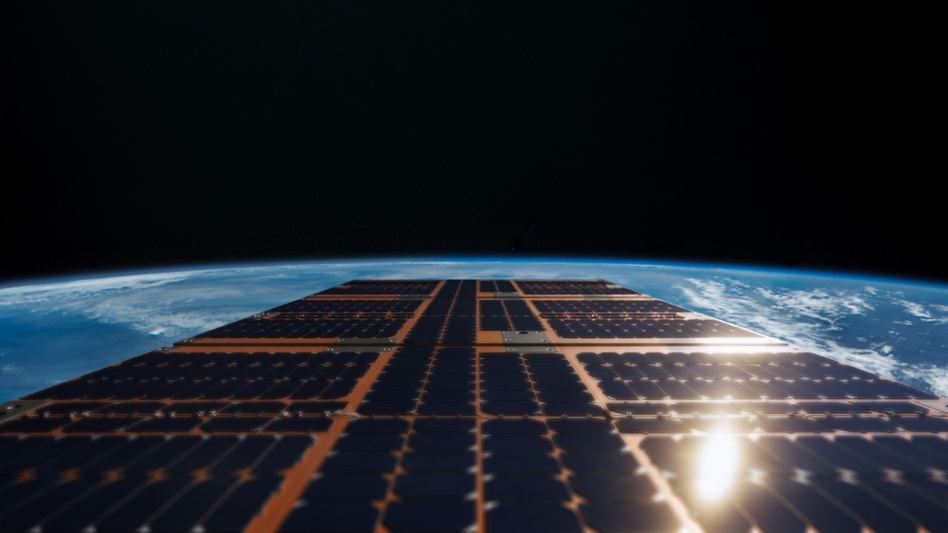
NanoAvionics signed a multi-million-euro contract with South Korean space energy startup Flexell Space to supply solar arrays for a Korean national security satellite program, the companies announced today.
Under the agreement:
- The Lithuanian satellite bus manufacturer will design and build deployable solar arrays.
- Flexell, which was originally an in-house venture of Hanwha Systems, will conduct the final technical validation and quality assurance before they’re integrated into LEO satellites, developed by Hanwha.
- Delivery of the solar cells is expected in the second half of 2027, according to Flexell CEO Taehun Ahn.
The agreement is much more than a transactional one, however. The companies are also exploring the integration of Flexell’s solar cells into NanoAvionics’ cubesat and microsat platforms, to reduce the cost of scalable, ultra-lightweight solar arrays.
Korean wave: For NanoAvionics, the deal represents the latest win in a strategy of global expansion— which has found an eager and willing partner in the South Korean space industry. In June, NanoAvionics was selected by South Korea’s Institute for Basic Science to build the first of five Venus-studying satellites, and NanoAvionics doesn’t plan to stop here.
“This contract also builds on our great track record working with Korean commercial space companies and scientific institutions,” NanoAvionics CEO Atle Woello said in a statement. “We are already seeing increased interest in our products and services from other domestic national security missions.”
Zooming out: Ever the deep-tech powerhouse, South Korea betting big on the future of its domestic space sector. At the beginning of 2025, the country’s space agency, KASA, unveiled a 43% increase in R&D funding aimed at building new capabilities—including a new reusable rocket, comms sats in GEO, lunar spacecraft, and a microsatellite swarm.
The country’s ultimate goal is to become one of the world’s top space powers by 2045—and to get off the ground they’re leaning heavily on international partnerships.
- South Korean officials met with their US counterparts last year to discuss projects like co-developing meteorological GEO sats, and collaborating on defensive space infrastructure.
- South Korea is even seeking non-member status in ESA.
Nvidia Unveils New Hardware to Unlock Orbital Data Centers
Orbital data centers may be just over the horizon, but we’re starting to get a better picture of what they’ll look like when they arrive.
Canadian Launchers and Spaceport Get Funding Boost
Canada will invest in a spaceport and three young rocket systems as part of its push to build up sovereign launch capabilities, officials announced Monday.
Leonardo’s Missile-Defense Demo in Ukraine Aims To Be a Blueprint for Other Nations
Leonardo is positioning itself to become a mass distributor of space-enabled missile defense shields.
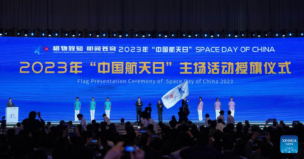
Who’s Working With China on Space?
“Africans don’t choose sides, at least for now…so these countries are typically not locked into one provider,” said Mustapha Iderawumi, a senior analyst at Space in Africa—a Lagos, Nigeria-based market research firm.


Space launch is officially in its Part 450 era.
The FAA announced Tuesday that US launchers had all transitioned to the five-year-old licensing requirements, leaving no one still operating under legacy regulations.
Context: The FAA established the Part 450 regulations in 2021 to streamline launch licensing for commercial space companies and to meet the Trump administration’s Space Policy Directive-2 requirements.
Keep reading