


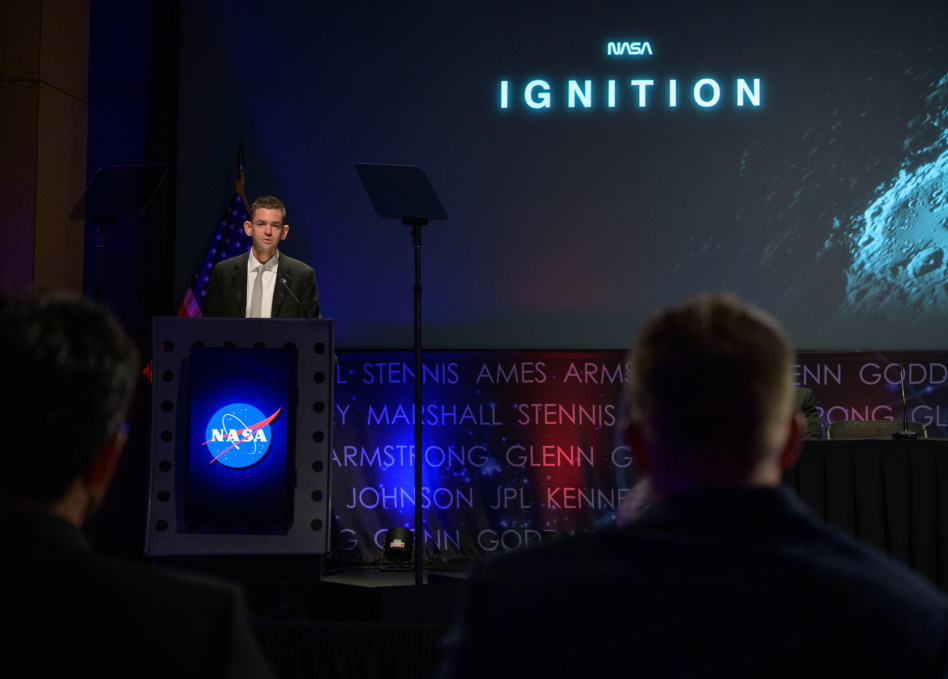
COLORADO SPRINGS, CO—Space-science advocates are already gearing up to fight the FY2027 NASA budget request, but Jared Isaacman—the agency’s administrator—stands by the budget the White House proposed for the space agency.
“There’s a lot of passionate people out here. They can do incredible things from a scientific perspective,” Isaacman told Payload. “I don’t know how many of them have ever pulled together a financial model, and driven execution on some of these things, to say what should or shouldn’t be the right budget.”
In a wide-ranging interview on the sidelines of Space Symposium, Isaacman also talked about early findings from Artemis II, his thoughts on the CLD business case, and how he’s working to ensure the plan he’s building today lasts through future political turbulence.
This transcript has been edited for length and clarity.
What were the most stressful moments for you watching the Artemis II mission?
You got astronauts walking up to a fully loaded rocket, which was normal course forever for us throughout the space program—until recent history with Falcon 9, where it was “load and go.”
Obviously, ascent—first time with crew on an extremely powerful, very complicated vehicle. Then the first 24 hours on orbit, to make sure Orion was healthy. That was where you start to breathe a little bit easier. Like, “Okay, the ECLSS is holding up really well.”
After that, it’s all the heat shield, thermal protection system. So you start truly breathing again once they’re under parachutes, and [the spacecraft is] in the water.
We certainly learned from the mission. There are going to be fixes that you would expect, throughout it all. But, relative to what we would have imagined before the launch, it was pretty clean.
I saw your early findings on the heat shield. Anything else you can share that you’ve already learned post mission?
I had seen the underwater photos of the heat shield as soon as the divers could transmit them. So I knew when that picture was going around on the internet. I was like, “No, there’s no chunk missing, that’s discoloration that got washed away.” The heat shield looked great. So a lot of credit to the JSC, and the folks at Ames, for doing the right work to get us to flight.
All that aside, if you’re going to wait three and a half years between missions, just replace the heat shield.
Other findings are super minor. Orion is a very robust vehicle, with lots of redundancy in systems. So a helium leak in ESM [the European Service Module, attached to Orion]—very, very minor.
We had a water-valve issue—one of four that didn’t perform as expected—but there was no issue accessing drinking water. With the data we’re getting right now, I don’t have the early read on why that primary wastewater line was clearly getting clogged. But these are all very fixable things.
How does Artemis II set up the lunar vision you put forth at Ignition?
We outline an achievable path. There’s a lot of changes here. But the NASA team, everybody gets it. That’s why there’s no walkouts or picketing. No one at NASA that I’ve spoken to, at any level of the organization, thought it was a good idea to fly Artemis II and wait three years to try and attempt a [Moon] landing. No one thought that was a good idea.
When I got there, we were going to buy one extremely expensive lunar rover. If we’re going to build a base, we need dozens of rovers. What were we thinking? We’re making it super hard on industry with these bespoke CLPS missions, two or three a year. No wonder our batting average isn’t good.
All these things that we’re putting in motion right now is what everybody believes is the right iterative approach, to achieve outcomes that we all care about.
What’s your response to lawmakers and advocates already criticizing the cuts in NASA’s fiscal 2027 budget proposal?
There’s a lot of passionate people out here. They can do incredible things, from a scientific perspective. I don’t know how many of them have ever pulled together a financial model, and driven execution on some of these things to say what should or shouldn’t be the right budget.
Now, all that said, of course, we will maximize every dollar that Congress affords to the agency. But it is not healthy, for the agency, to get in this mindset that we have to spend our way out of every problem. And I don’t think it’s good for the country to think we have to print our way out of every problem.
Have any arguments from CLD companies swayed you on the proposed changes to that program?
I’m not surprised that CLD providers didn’t like what we had to say. So prove that we got it wrong.
I have a different background, as administrator. I directly paid for two human space flight missions—that’s not going to a station, that’s just paying to get there [to space]. It’s extremely expensive, and there isn’t a long list of people waiting. So what they’re saying is that there’s plenty of people willing to pay that, not to mention they’re willing to pay even more to make use of a station.
I take my external experience. I take my interaction with every international partner and agency where I’ve had the opportunity to ask, “Are you prepared to pay on this?” Not because I don’t want them to succeed. I want to set them up for success. And that’s the difference here.
If we get this wrong, we give up our presence in low Earth orbit. So prove we have it wrong, that there is a lot of demand. I can tell you that if somebody wants to sign up today for the next private astronaut mission, there’s a seat available. That doesn’t support a robust demand signal,in my mind, but I hope we have it wrong.
How do you politics-proof your Moon plans?
That’s exactly what we are putting in place. Administrations past have thought the right approach was to make a program that is too big to fail. What they didn’t realize is that you can also make it too big to succeed.
This is the right approach—Phase 1, Phase 2, Phase 3. If the next administration wants to dial back a little bit of Moon-based spending, no problem. Instead of 10 landings, we’ll make it eight. We’ll make it six or something. You don’t like a six-month cadence for astronauts on the Moon? Make it an annual cadence.
We are doing things in a logical way, versus administrations past, where you try and create this giant animal that you think is going to endure over time. What happens is we wind up waiting a decade to see whether or not the damn thing even works.

UKSA Taps ClearSpace for Country’s First Debris Removal Mission
The UK Space Agency is dressing up as a waste-management company for Halloween.
NASA Signs Space Nuclear Pact, Says Moon Base Is Ahead of Schedule
Isaacman gave updates at the White House’s “Science: A New Golden Age Summit.”
Starliner Targets Uncrewed Flight NET December, Crewed Follow Up in 2028
NASA and Boeing officials announced Monday that they have upgraded and redesigned Starliner following a dicey crewed test flight in 2024, which left NASA astronauts Butch Wilmore and Sunita Williams stuck on ISS for nine months.
Isaacman Doubles Down on New NASA Model for International Partnerships
Isaacman is less than a year on the job, but he’s already upended the way the agency interacts with the rest of the world.
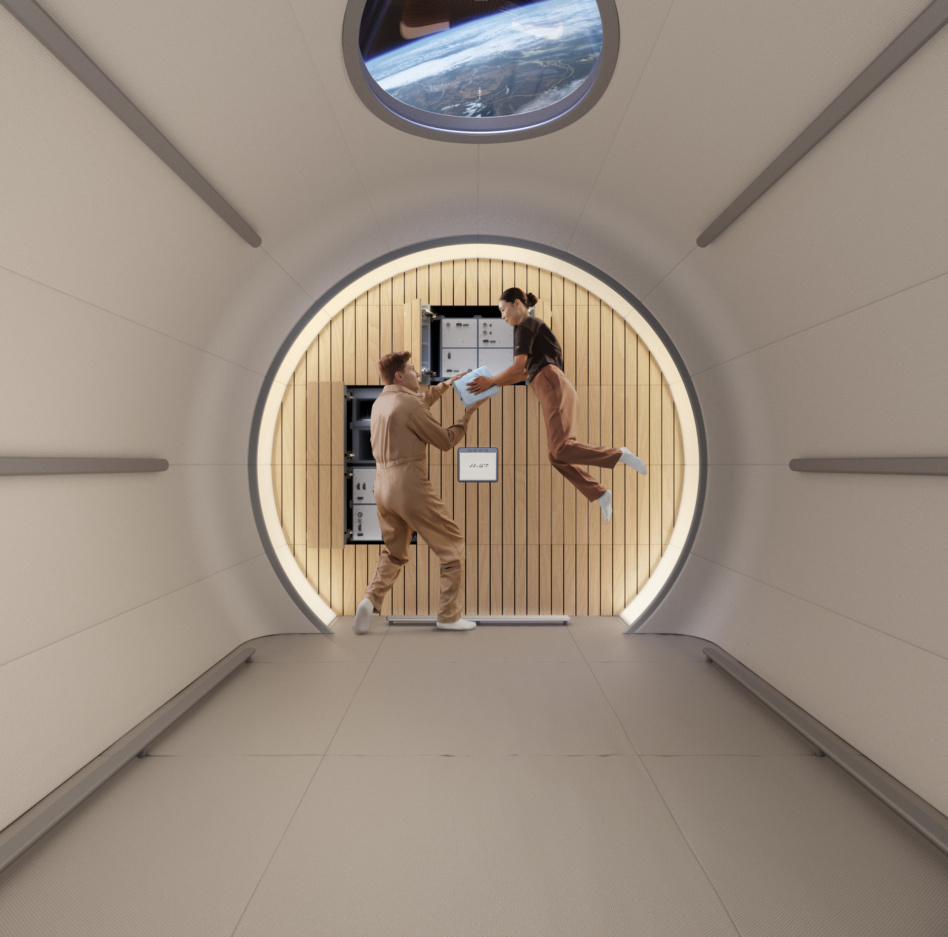
COLORADO SPRINGS, CO—Commercial space station builders say NASA’s wrong about the lack of commercial business case in LEO. NASA Administrator Jared Isaacman says, prove it.
“I’m not surprised that CLD providers didn’t like what we had to say,” Isaacman told Payload on the sidelines of the Space Symposium. “So, prove we got it wrong.”
Context: Last month, NASA announced a proposal to make major changes to the CLD acquisition, saying the market is not strong enough to sustain commercial stations—and that in any case, NASA did not have the money to provide more support.
Keep reading