



The House’s annual defense authorization bill would eliminate the two offices within the Pentagon designed to speed up space acquisition.
The chair’s version of the House FY27 National Defense Authorization Act would axe the Space Development Agency (SDA) and Space Rapid Capabilities Office (RCO). The bill is far from a done deal. Members of the House Armed Services Committee will meet on Thursday to mark up the bill, which will also need to be considered and approved by the full House and Senate.
On the chopping block: SDA was established in 2019 as an independent agency. Since then, it’s been working to quickly field commercially built satellites in tranches to boost comms, tracking, and missile-defense capabilities for the military. The office most recently launched Tranche 1 of the Proliferated Warfighter Space Architecture transport layer in October, before announcing in March a strategic pause for launching missions while the office worked out some kinks.
The chair’s bill would eliminate the office, and its director, instead giving those authorities to the Space Force portfolio acquisition executive in charge of missile warning and tracking.
The Space RCO, which was established by the FY18 National Defense Authorization Act, is a ~200 person office tasked with getting space systems into troops’ hands quickly.
The bill did not explain the reason for cutting the offices. But it could become a topic of debate when lawmakers mark up the bill this week.
Bonus material: The bill also includes report language—a set of non-binding requests from lawmakers, mostly asking agencies for briefings or reports on specific topics. Space priorities highlighted in the report language include briefings on:
- Cislunar situational awareness;
- Dissemination of commercial EO imagery;
- Partnerships with the commercial space sector;
- Benefits of distributed ground infrastructure;
- Projected natsec launch cadence through 2035;
- Mobility and logistics in orbit.
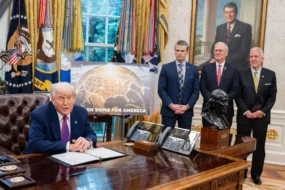
Colorado Springs, Huntsville Team Up on Golden Dome
“It’s a transformed relationship between Colorado Springs and Huntsville,” Rep. Jeff Crank (R-CO) told Payload. “When I took office, I don’t think it was a bad relationship, but it was one where both communities were kind of looking over their shoulder at the other. That wasn’t good for America, and I don’t think it was good for Colorado Springs or Huntsville either.”

Artemis Accords To Meet on Lunar Debris, Emerging Space Help
The Artemis Accords Principals’ Meeting in Turkey will be led by NASA Deputy Administrator Matt Anderson and Maj. Gen. Roberto Melgar Sheen, director of the Peruvian Space Agency.
FCC to Vote on Waiving NEPA Review for Space Ops
The FCC will vote Sept. 30 on whether to narrow which commission activities face environmental review, and streamline the process for the ones that require assessment.

State Department Launches New Space-Diplomacy Effort
Alongside the announcement, Rubio also unveiled the SCP’s first project—a two-year, $6.5M effort to bring satellite internet to rural southern Peru.


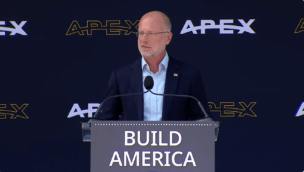
Northrop Grumman ($NOC) announced a partnership with Apex yesterday to collaborate on the development of space-based interceptor (SBI) satellites as part of the US Golden Dome missile-defense shield.
Having demonstrated key capabilities through ground tests this year, Northrop Grumman is on track to deliver on-orbit missile defense capabilities with Apex in 2027, according to the announcement.
Autobots, assemble: Northrop Grumman—one of 12 companies selected to build the SBI component of Golden Dome—is the latest defense prime to announce a partnership with the space industry to field its proposal. In May:
Keep reading