


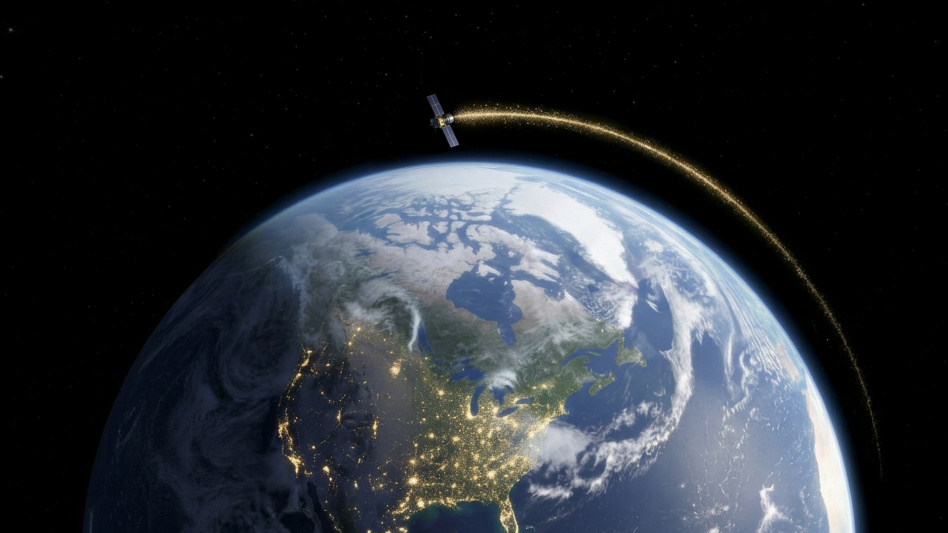
Orbital data centers may be just over the horizon, but we’re starting to get a better picture of what they’ll look like when they arrive.
Nvidia unveiled a new piece of tech yesterday—the Space-1 Vera Rubin Module—aimed at providing the computing power necessary to fuel future in-space computing applications.
As the name suggests, the Space-1 Module is purpose-built to perform in the harsh, low-SWaP environment of space—but it’s not scaled back in its performance. Compared with the company’s H100 GPU, it’s designed to deliver up to 25x more AI-compute—enough to enable orbital data centers, according to the company.
Who’s buyin’: The Space-1 module isn’t yet commercially available. However, Nvidia is fielding other platforms that are fueling near-term in-space computing applications, such as its IGX Thor and Jetson Orin. And customers aren’t waiting around for Space-1 to get started on their rising in-space data needs.
Alongside the announcement, Nvidia revealed six customers—Aetherflux, Axiom Space, Kepler Communications, Planet Labs, Sophia Space, and Starcloud—who are using Nvidia tech to advance in-space computing applications from on-orbit data processing to real-time satellite connectivity.
“Space computing, the final frontier, has arrived,” Nvidia CEO Jensen Huang said in a statement. “As we deploy satellite constellations and explore deeper into space, intelligence must live wherever data is generated.”
Why it matters: Put simply, the space industry collects and transmits a mind-boggling amount of data every day. Today, all of that data needs to be sent down to Earth, stored, and processed— a task that requires a lot of computing power, energy, and time.
Moving that computing power to space allows data to be processed with less latency, and with power generated by the Sun. This would free up vital terrestrial data processing power, while also making space-based data more actionable—think quicker decisions made by EO satellites, faster communications, and new applications in autonomous space operations such as RPO.
Unfinished business: While the news of Space-1 suggests the space industry has moved one step closer on its path to viable in-space data centers, there remains at least one big hurdle to get over before the vision can become a technological reality.
“Of course, in space there’s no conduction, there’s no convection, there’s just radiation, and so we have to figure out how to cool these systems out in space but we’ve got lots of great engineers working on it,” Huang said at the GTC 2026 conference.
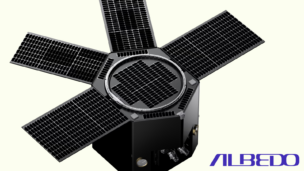
Albedo Ratchets Up the Power for its Second VLEO Flight
Albedo announced a new VLEO capable satellite bus today that’s aiming to fly the company’s second orbital mission in 2027.
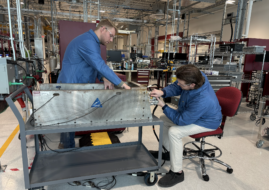
Moog’s “Tip to Tail” Contributions to the Artemis II Flight
“Moog supplies more than 100 different pieces of hardware that go from tip to tail of the rocket, [and] into the Orion system.”

Insurance is Commercial Space Nuclear’s Biggest Headache
Lots of challenges face commercial space nuclear missions—but experts at an industry seminar on Thursday only called one a “show stopper”—insurance.
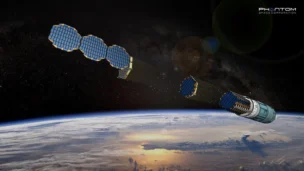
Phantom Space Acquires Thermal Management Technologies
Thermal Management Technologies builds advanced satellite thermal components for in-space applications.

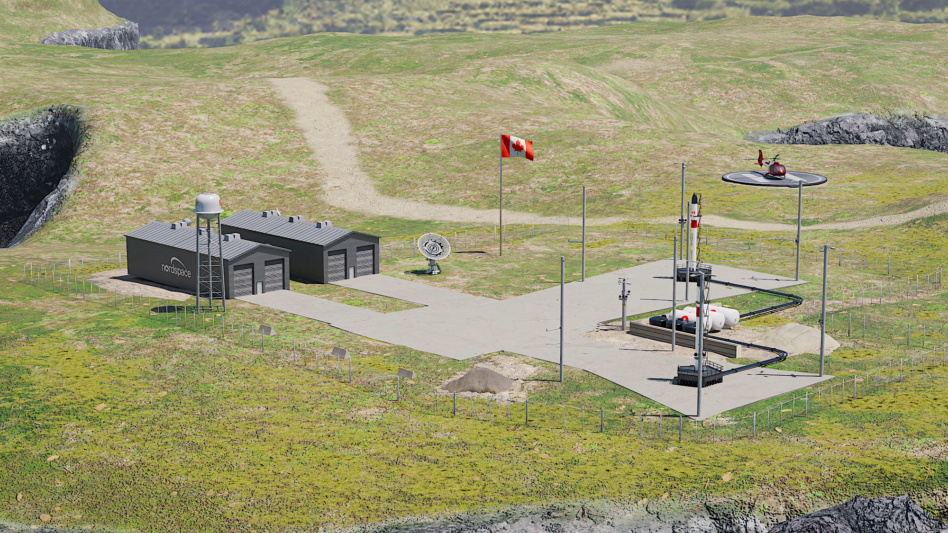
Canada will invest in a spaceport and three young rocket systems as part of its push to build up sovereign launch capabilities, officials announced Monday.
Citing defense needs, the country will spend $200M CDN ($146M) over the next 10 years to lease a launch pad at a startup spaceport, operated by Maritime Launch Services (MLS). Canada also revealed the first-phase winners of its Launch the North competition for sovereign launchers.
Start me up: MLS will receive the first $20M CDN ($14.6M) in government cash by March 31, as the lease is retroactive to 2025, the company said in a separate statement. “The timing of payments supports near-term cash flow as the spaceport advances toward operations,” MLS officials added.
Keep reading