


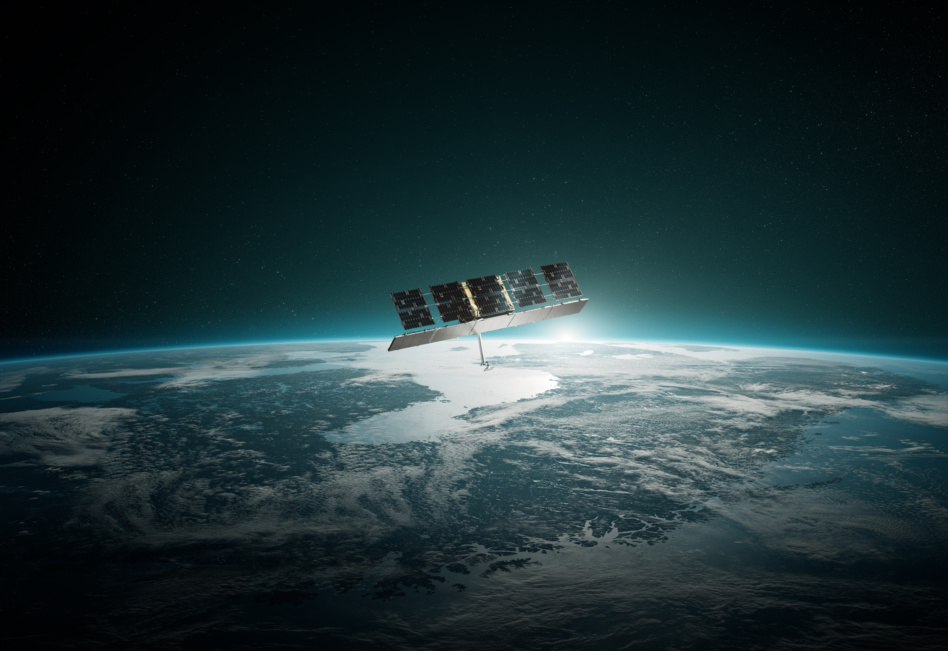
2025 was a year that reinforced a simple truth: The orbital economy is no longer an experiment. It’s accelerating, it’s hardware-led, it’s strategically important, and it’s increasingly shaped by venture-backed companies translating technical ambition into commercial and geopolitical reality.
Rear view: The year delivered a range of SpaceTech stories underlining the sector’s momentum towards a multi-trillion-dollar industry.
- Funding: Q3’s $3.5B surge in capital investment pushed the trailing 12-month total to $10.4B, putting 2025 just shy of the 2021 peak. Most of the focus remained on hardware-heavy infrastructure, with software, analytics, and platforms cooling down.
- Geopolitics: We believed the return of US President Donald Trump would push space back to the center of the US agenda, and intensify the competitive dynamic with China. Sure enough, the US space industry retained roughly 55% of global funding, while China made a strong Q3 showing on the back of state-aligned mega-rounds.
- Tech success:Firefly Aerospace pulled off the first commercial soft lunar landing, and Isar Aerospace inched Europe closer to orbital independence with a continental launch attempt.
- Markets: In public markets, we witnessed a cautious but heating-up environment where high-quality operators like Voyager Technologies and Firefly Aerospace reopened the IPO window. Meanwhile, private markets were busy: seed activity was everywhere, and growth rounds concentrated on the emerging scale-ups we’ve been tracking—although exits are still rare, despite growing M&A interest from primes and Big Tech.
Looking forward: 2026 has a chance to become something even bigger—an inflection point where commercial expansion, AI integration, and sovereign partnerships could collide to redefine what the next decade of space looks like. Here are the Top 5 SpaceTech trends to watch in the new year:
1. Space as the hub for intel and defense
2026 will cement space as the backbone of modern defence. As geopolitical tensions escalate, nations are pouring billions into the space sector, from Europe’s €800B defence push to the US’ Golden Dome initiative. Sovereign satellite constellations, space-enabled communication systems, and orbital ISR systems are no longer optional; they are essential.
Recent conflicts have shown the power of dual-use SpaceTech. SpaceX Starlink kept Ukraine connected under siege, commercial EO constellations provided actionable intelligence, and satellites continued to counter electronic warfare. Both current and future military operations will increasingly rely on space for secure comms, navigation, drone operations, and real-time threat monitoring.
In 2026, space won’t just support defence. It will orchestrate it. The convergence of technology, sovereign investment, and commercial capability is making SpaceTech the backbone of global security, shaping how nations protect, project, and operate in an increasingly contested world.
2. AI becomes the central nervous system of space
Space holds an impact analogous to AI, which is arguably one of the most transformative forces of our era. Yes, it’s a bold claim, but the potential is staggering: space is poised to create a $1T-plus investment opportunity, with implications for virtually every corner of the $100T global economy.
Going forward, AI will be the central nervous system running the orbital ecosystem. Autonomous satellite constellations and edge-computing platforms will manage bandwidth, prevent collisions, and optimize operations at a planetary scale. AI will orchestrate satellite networks for logistics and defence, provide real-time intelligence on potential threats, and model climate, disaster, and ESG data with greater accuracy than ever before.
This scale of ambition is why some of the world’s most successful entrepreneurs—SpaceX CEO Elon Musk, Amazon/Blue Origin founder Jeff Bezos, and others—are investing billions of their own wealth into space initiatives. In 2026, space will increasingly function as a global data and analytics platform, powering both industry and defence.
AI won’t just make orbital operations smarter, but it will also integrate space into the fabric of the global economy, by transforming how we produce, protect, and understand the planet. The era of SpaceTech, fuelled by AI, is just beginning—and its reach will be nothing short of universal.
3. Sovereign capabilities and commercial partnerships
2026 will see governments, defence primes, and private operators collaborating and competing like never before in-orbit. Mergers, acquisitions, and dual-use innovations are accelerating as incumbents respond to the surge of private-sector ingenuity.
Space is no longer the domain of either governments or commercial players working alone. Sovereign capabilities are being built hand-in-hand with commercial platforms. For example, ICEYE’s SAR constellation delivers images to governments and insurance providers alike. This collaboration strengthens national security while fuelling new market opportunities, driving faster deployment of critical infrastructure and unlocking unprecedented commercial scale.
The winners will be those who can navigate both worlds: delivering capabilities that meet government priorities, while capturing the value of a rapidly growing orbital economy. In 2026, partnerships in space won’t just be strategic. They’ll be the engine powering the next era of global defence, commerce, and innovation.
4. Financial markets and investment rebound
2026 will be the year investors increasingly back the space economy with confidence. A record-breaking SpaceX IPO will inject unprecedented liquidity into the space sector. This IPO would validate space as a mainstream asset class, attracting institutional investors who previously viewed it as niche or high-risk. It would also free up capital for early investors and employees, creating a ripple effect where funds are redeployed into new SpaceTech ventures and secondary markets.
5. Space infrastructure becomes foundational
2026 is the year orbital infrastructure starts being deployed at significant scale. Sectors such as refueling stations, secure communications, AI-driven logistics, and in-space manufacturing/servicing will graduate from demonstrations to operational assets that are relied upon day to day. This infrastructure will no longer be optional or experimental. It will be essential to how space systems function.
This infrastructure will power industry, defence, and commercial operations in orbit. Satellites, orbital factories, and servicing platforms will create a resilient ecosystem capable of supporting multiple missions simultaneously, by reducing risk and increasing operational efficiency. The orbital economy is moving fast, and its infrastructure will be as critical to the planet’s economy as ports, highways, and data centres are on Earth.
Mark Boggett is the CEO of Seraphim Space.
With Artemis Changes, Europe is Left Holding the Bag
ESA and European space primes were developing many of the key components of the planned lunar orbiting station.
Arkadia Space Secures €14.5M to Develop New Biprop Engine
Spanish propulsion startup Arkadia Space just secured a stamp of approval from the European Investment Council.
PAVE Space Raises $40M for In-Space Propulsion Tech
PAVE’s propulsion systems rely on a storable rocket bipropellant, which aims to make launch operations simpler and more cost-effective, compared with cryogenic fuels.

Inside Austria’s Small But Mighty Space Ecosystem
Austria’s space industry is in the midst of a renaissance, with bigger funding deals and more startup activity.

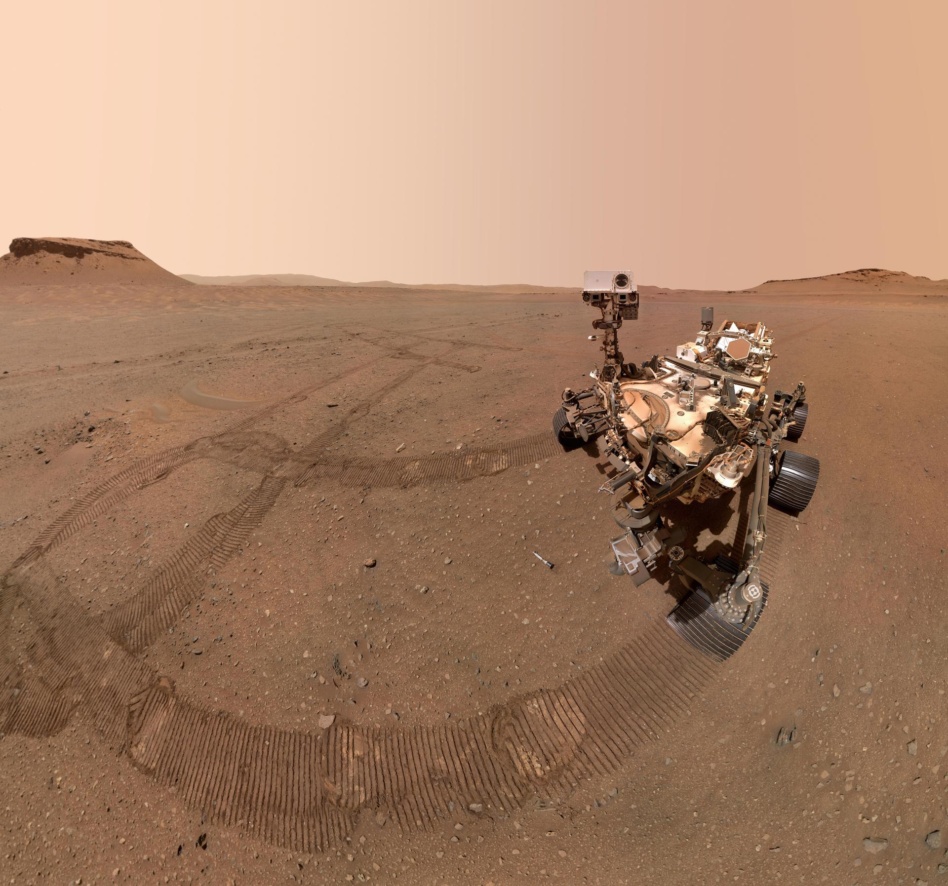
The dozens of tubes of Martian dust collected so far by the Perseverance rover are waiting for a ride that may never come.
The House minibus appropriations bill governing NASA spending in FY2026, which was released this week, doesn’t mince words. “The agreement does not support the existing Mars Sample Return (MSR) program,” lawmakers wrote in an accompanying report explaining why lawmakers structured the bill the way they did.
How we got here: The Perseverance rover landed on Mars in February 2021, gradually collecting at least 33 samples for later pick up and return. It was expected to be the first in a three-part journey to return the samples to Earth.
Keep reading