


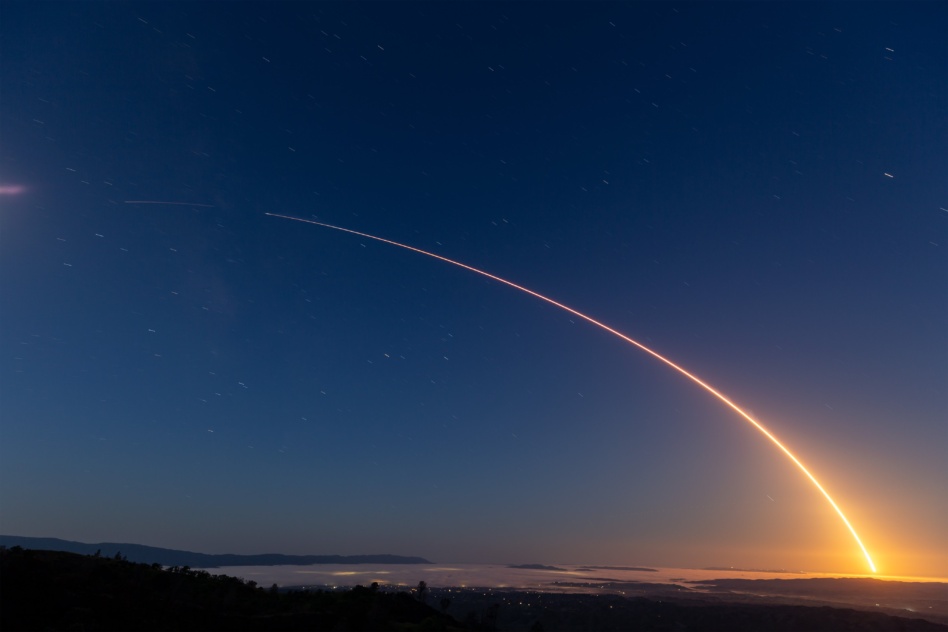
The Space Force added two new companies to its stable of launchers on July 8, bringing the military’s launch acquisition program to seven companies.
What: The National Security Space Launch program allows the military to block buy launches to get defense payloads to orbit, both giving the Pentagon assured access to space and promoting competition in the industry by pre-ordering rides to space from multiple providers. A different form of the program dates back to the ‘90s, though the NSSL in its current iteration and name came to be in 2019.
The process: The Pentagon onboards companies into the launch program and awards IDIQ contracts for missions to be launched over a set time period. That makes pre-vetted companies eligible to compete for task orders to launch specific missions.
The Pentagon is expected to award 84 missions between FY25 and FY29 as part of the third phase of the program, which is broken into two pieces:
- Lane 1 is intended to bring new launchers in the door, and handles missions where the department can tolerate more risk. These are awarded to companies with a credible pathway to launch.
- Lane 2 is for established launchers to fly the military’s most demanding, critical payloads. These are companies with certified, more reliable rockets.
Rolodex: The Pentagon now has seven companies that can compete for missions across the two lanes.
Companies eligible for Lane 1 include:
- Blue Origin
- Impulse Space
- Relativity Space
- Rocket Lab
- SpaceX
- Stoke Space
- ULA
Companies eligible for Lane 2 are:
- Blue Origin
- SpaceX
- ULA

Colorado Springs, Huntsville Team Up on Golden Dome
“It’s a transformed relationship between Colorado Springs and Huntsville,” Rep. Jeff Crank (R-CO) told Payload. “When I took office, I don’t think it was a bad relationship, but it was one where both communities were kind of looking over their shoulder at the other. That wasn’t good for America, and I don’t think it was good for Colorado Springs or Huntsville either.”

Artemis Accords To Meet on Lunar Debris, Emerging Space Help
The Artemis Accords Principals’ Meeting in Turkey will be led by NASA Deputy Administrator Matt Anderson and Maj. Gen. Roberto Melgar Sheen, director of the Peruvian Space Agency.
FCC to Vote on Waiving NEPA Review for Space Ops
The FCC will vote Sept. 30 on whether to narrow which commission activities face environmental review, and streamline the process for the ones that require assessment.

State Department Launches New Space-Diplomacy Effort
Alongside the announcement, Rubio also unveiled the SCP’s first project—a two-year, $6.5M effort to bring satellite internet to rural southern Peru.


Spinifex Space was established Monday to provide end-to-end suborbital launch campaigns, private range access, and test and evaluation (T&E) infrastructure from facilities in southwestern Queensland, Australia.
Spinifex says its team spun out of Black Sky Industries, an Australian developer and supplier of solid rocket propellant and solid rocket motors The Spinifex site names no executives and does not describe the ownership structure. Neither company responded to questions about who holds the range licenses.
The offering: Spinifex itself does not build rockets. Instead, its products are the land and the licenses required for flight. Spinifex operates out of two primary facilities:
Keep reading