


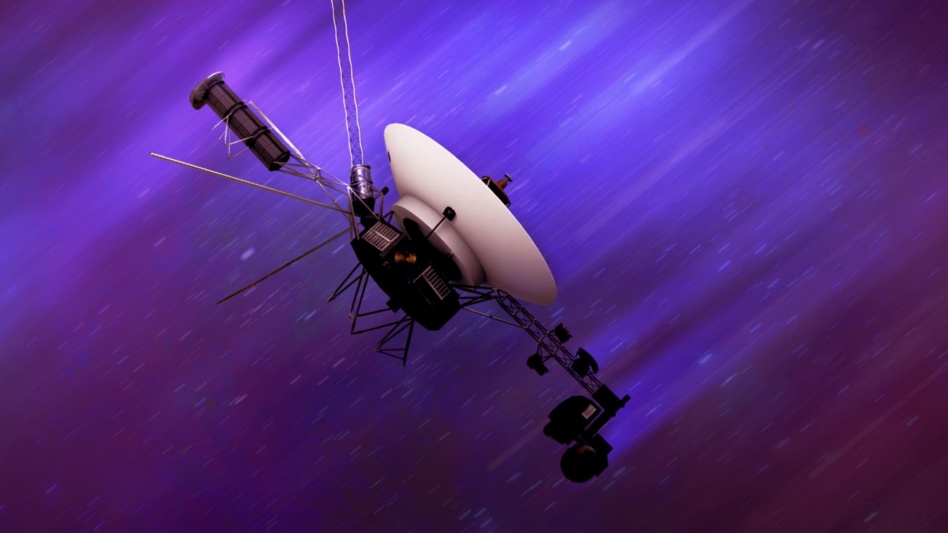
Last week, the White House OSTP released a sweeping vision for the nation’s R&D enterprise.
The report—Science: A New Golden Age—argues the federal research system has fallen out of balance, and offers remedies (more on that in a moment). It names space science a priority, but the framing is narrow.
The document ties space and planetary physics to how “space systems operate,” a nod to space weather and national security rather than the astrophysics, planetary science, and heliophysics, which most scientists have in mind. Earth and climate science don’t appear at all.
“My initial reactions are very mixed,” said Casey Dreier, chief of space policy at The Planetary Society. “It correctly identifies issues like bureaucratic paperwork requirements, uncertain funding…those are all legitimate. But you can’t interpret this in a vacuum of what the administration itself is doing to science.”
Shrinking pie: The White House has made repeated attempts to cut science funding. The FY27 request has much of the same feel as the proposed FY26 cuts rejected by lawmakers, with sweeping cuts contradicting several of the priorities the document names, including:
- A 23% decrease in NASA’s topline budget to $18.8B;
- Reduction of NASA’s Science Mission Directorate by ~47% to $3.8B;
- Astrophysics takes a 65% cut, heliophysics 52%, and planetary science 26%.
Where’s industry? The report pushes to fund individual researchers over institutions, on the logic that legacy institutions carry too much bureaucracy and reward known names over the best ideas.
Taylor Sargent, a partner at Industrious Ventures and a former DARPA advisor, sees promise in the signaling. Naming priorities “can catalyze a whole lot more funding,” he told Payload. But even he doubted it would reach the hardest science, where individuals often lack access to the infrastructure needed to push the envelope.
Dreier challenged the report’s thesis that private enterprise would become the primary engine of discovery. “We have seen no commercial companies actively pursue serious science missions beyond Earth,” he said. “Where is the industry?”
Discovery via algorithm: The report bets big on AI, framing it as a new instrument of discovery—a way to generate hypotheses and run the research enterprise itself. Yet its flagship AI effort, the Genesis Mission, is centered at the Department of Energy and targets materials, fusion, and semiconductors. NASA supports Genesis, but space science barely figures in.
Where AI does enter the field, it may arrive less as a tool than as a substitute for the institutions that do the work. Take the decadal survey, the process astronomers use to set priorities for the coming decade. NASA leadership has signaled interest in reconsidering the decadal process: a 2025 planning document Jared Isaacman wrote as nominee, later leaked, called to “reevaluate decadal prioritization.” (Isaacman later framed that document as very early-stage thinking, however.)
What to watch: Still, the report addresses legitimate needs identified by researchers: faster proposal-to-funding timelines, better early-career support, and less red tape.
Its full impact remains to be seen. Its OMB annex sets priorities for agencies to implement in their FY28 budgets. The ones most relevant to space science:
- Rebalancing portfolios toward foundational research, the physical sciences, and engineering;
- Advancing national science and technology missions;
- Applying AI and emerging tech to accelerate research;
- Weighing new funding mechanisms and institutional models.
As agencies turn priorities on paper into budget decisions, Sargent said the risk is that an application-focused model optimizes away the undirected science that has historically produced the most valuable surprises.
“If you try to centrally plan too much, then you might miss out on the kind of randomness of discovery,” Sargent said.

Congress Seeks Answers On Starlink Disruptions in Ukraine
“The United States government has a fundamental obligation to protect American personnel serving overseas,” the senators wrote. “The possibility that American personnel were endangered by preventable disruptions, inadequate coordination, or decisions made by their own government demands immediate scrutiny and accountability.”
Velos’ Election Day Tracker for Space
Space may not be top of mind when voters head to the ballot box, but Election Day outcomes still have a big impact on US policy and funding above the Kármán line.
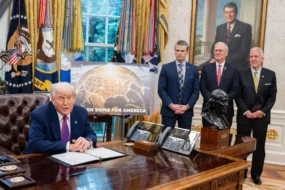
Colorado Springs, Huntsville Team Up on Golden Dome
“It’s a transformed relationship between Colorado Springs and Huntsville,” Rep. Jeff Crank (R-CO) told Payload. “When I took office, I don’t think it was a bad relationship, but it was one where both communities were kind of looking over their shoulder at the other. That wasn’t good for America, and I don’t think it was good for Colorado Springs or Huntsville either.”

DOE Announces $400M for Frontier Science Research
The Department of Energy is super-charging research into bleeding edge energy tech.
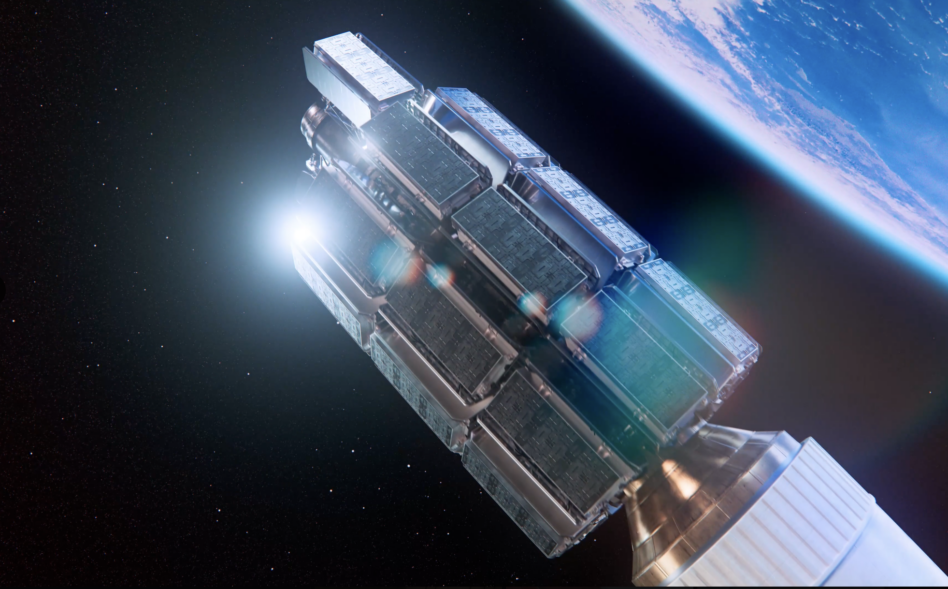
Amazon ($AMZN) is entering the D2D game after filing a request with the FCC on July 24 to launch up to 5,105 LEO satellites to beam voice, text, and data directly to smartphones.
The constellation—officially known as the Amazon Leo Direct-to-Device System—would run on spectrum from Globalstar ($GSAT), which Amazon is buying for $11B+ in a deal not expected to close until 2027. Amazon is asking regulators to sign off before it owns the airwaves, which is the same move SpaceX ($SPCX) made with its own D2D filing last year.
The details: Amazon’s FCC filing lays out the shape of the constellation:
Keep reading